$360 Million
WHO HE IS
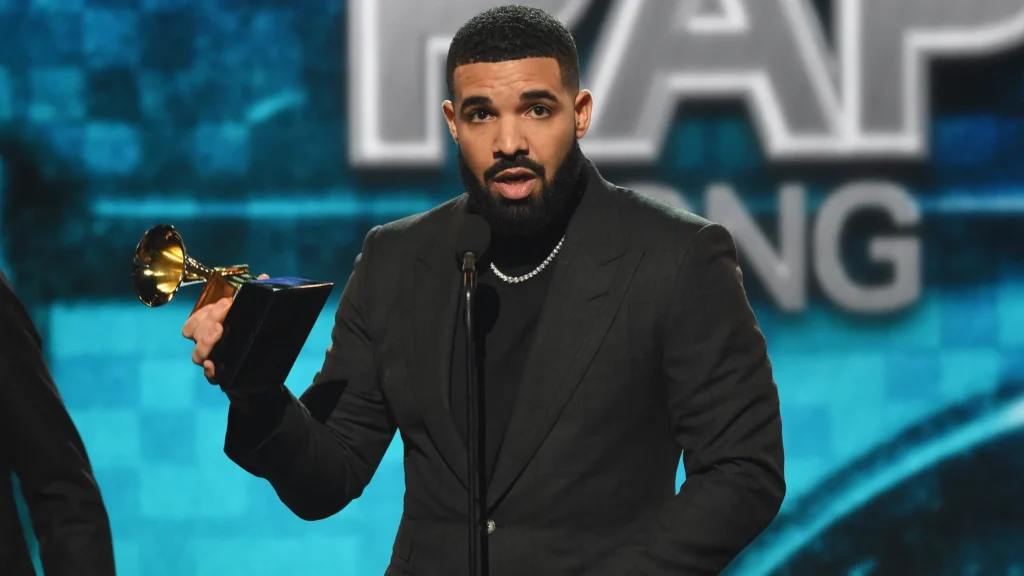
Aubrey Drake Graham, born October 24, 1986, in Toronto, Canada, is a rapper, singer, and songwriter who first found fame as an actor on the Canadian teen drama Degrassi: The Next Generation before building one of the most commercially dominant music careers of the streaming era. He released a string of mixtapes starting in 2006, signed with Lil Wayne’s Young Money Entertainment in 2009, and became the most streamed artist in Spotify history, surpassing 130 billion total streams. He founded the OVO brand, encompassing the record label OVO Sound, a clothing line, and the long running OVO Fest in Toronto. In 2022 he signed a long term worldwide partnership with Universal Music Group covering recorded music, publishing, film, television, and brands, and the same year began an endorsement partnership with online casino Stake that ended acrimoniously in 2025. In May 2026 he released three new albums in a single night, Iceman, Habibti, and Maid of Honour, his ninth, tenth, and eleventh studio albums, following a widely covered promotional rollout centered on a giant ice sculpture in downtown Toronto.
1. Touring
Drake’s live performance history is the single most heavily documented income stream of his career, tracked directly by Billboard rather than estimated.
Touring gross, all headline tours since his first in April 2010 through 2026, including the record breaking It’s All a Blur Tour: ~$508.2M.
2. The Universal Music Group Partnership
In 2022, Universal Music Group confirmed a long term worldwide partnership with Drake covering recorded music, music publishing, film, television, and brands. Before the deal, Drake’s existing catalog had already been generating an estimated $50M a year for Universal. Reports on the value of the new agreement range from a reported $360M upfront figure, drawn from a lyric referencing that number, up to $400M or more once the full structure is included.
Universal Music Group partnership, blended estimate: ~$380M.
3. Songwriting and Publishing Catalog
Drake co-writes the overwhelming majority of his own material and holds a writer’s share on his catalog that is never valued at zero, regardless of how his masters are structured commercially. The 2022 Universal Music Group partnership functions like a catalog sale as of that date, folding recorded music and publishing rights into one long term agreement and monetizing the forward value of everything he had released up to that point. Consistent with how this database treats an actual catalog sale, that 2022 payment is counted as realized cash above, subject to representation and tax, and it is not counted twice as a separate held asset. But the sale date is not the end of the story. Everything Drake has written and released since 2022, including Her Loss, For All the Dogs, and the May 2026 three album release of Iceman, Habibti, and Maid of Honour, sits outside that original deal and represents genuinely new, uncaptured value, on top of his continued share of a catalog that has now crossed 130 billion total Spotify streams. That newer material fits this database’s active catalog tier, given its age of under four years and its continued commercial performance.
Applying the active catalog multiple of 8x to an estimated $8M a year in personal songwriting and royalty income from material released since the 2022 deal:
Songwriting and publishing catalog, held asset for material released since 2022 (8x multiple on ~$8M/yr estimated personal royalty share): ~$64M.
4. The Stake.com Endorsement
Drake signed a promotional partnership with online casino Stake in 2022, reportedly worth at least $100M a year according to the Financial Times, and confirmed by Drake himself in later court filings. The arrangement required him to stream monthly gambling sessions using house provided funds, promote the platform, and appear in giveaways. The partnership ended abruptly in August 2025 after Drake publicly accused Stake of blocking his withdrawal requests, and the relationship has since become the subject of litigation, including a federal class action alleging the platform was used to inflate his streaming numbers. Because the deal’s final partial year is genuinely disputed, we count only the three full years the arrangement is clearly documented to have run.
Stake.com endorsement income, 2022 to 2024, three full years at a reported $100M annually: ~$300M.
5. Other Endorsements
Drake signed an early exclusive streaming deal with Apple Music worth a reported $19M around the release of Views, and has held a range of other brand partnerships over his career including Burger King, Whataburger, Sprite, and a Nike collaboration under his Nocta label.
Other endorsement income, career: ~$30M.
6. Business Ventures
OVO. Drake founded OVO in 2012 as a combined record label, OVO Sound, clothing line, and the annual OVO Fest in Toronto. No financing round or sale has ever been disclosed for the brand, but it has run continuously for well over a decade with real retail, touring, and festival revenue. We estimate the brand’s overall value at roughly $50M, with Drake holding the large majority given his position as founder and primary face of the label, estimated at 70 percent against smaller shares held by longtime collaborators.
OVO, estimated 70% stake in an estimated $50M valuation: ~$35M.
Virginia Black. Drake co-launched this bourbon brand with entrepreneur Brent Hocking in 2016. It sold well in its first year but has not generated major reported growth or a disclosed valuation event since. We estimate the brand’s current value at roughly $5M, split evenly with his co-founder.
Virginia Black, estimated 50% stake in an estimated $5M valuation: ~$2.5M.
DreamCrew, Drake’s television and film production company, is also active but has no disclosed revenue or valuation figures, so no value is assigned to it here.
7. Representation
A blended representation rate of 20 percent is applied across Drake’s combined touring, recording, and endorsement income, reflecting his largely self managed structure through his own OVO organization relative to a typical outside management team.
Representation (20% blended on $1,218.2M combined gross): -$243.64M.
8. Tax
Drake has maintained his primary US residence in Hidden Hills, California since 2012, alongside his Toronto estate, and is treated here as a US tax resident for entertainment income given that primary residency.
Tax (42% effective on $974.56M post-representation income): -$409.32M.
9. Lifestyle Burn
Drake has an extensively documented high spending profile, including a jewelry collection reported in the tens of millions of dollars and an extensive car collection. His widely photographed Boeing 767, nicknamed Air Drake, is notably excluded from this figure, since it was gifted to him for free by Canadian cargo airline Cargojet as part of a marketing partnership rather than purchased with his own money. The construction cost of his Toronto estate, The Embassy, is also excluded here, since that spending converted cash into a real estate asset rather than consuming it, and is addressed in the real estate section below instead.
- Early mixtape years, still building toward his major label deal (2006 to 2009, 4 years): ~$200K/yr consumed = $0.8M
- Breakout to consistent A-list stardom, purchase of the Hidden Hills estate (2010 to 2015, 6 years): ~$5M/yr consumed = $30M
- Peak commercial era, expanding jewelry and car collections (2016 to 2020, 5 years): ~$12M/yr consumed = $60M
- Recent era, continued high end personal acquisitions (2021 to 2026, 6 years): ~$12M/yr consumed = $72M
Total lifestyle burn: ~$162.8M, roughly 28 percent of post-tax income, reflecting genuinely consumed personal spending only.
10. Real Estate
Drake’s two marquee properties are both still held, and neither has a documented sale price, so no gain is counted for either. The roughly $100M spent building The Embassy converted cash into a real estate asset rather than consuming it, so that spending is treated as neutral here rather than as either a lifestyle cost or a documented appreciation gain.
- The Embassy, Toronto, land purchased in 2015 for $6.7M with approximately $93.3M spent on construction, remains his primary Toronto residence with no sale or independent appraisal on record
- The Hidden Hills, California estate, purchased in 2012 for $7.7M, remains held with no sale on record
Real estate: $0 (no documented gain on either held property; construction spending treated as a neutral wealth conversion, not a loss).
11. Wealth Management
No dedicated investment manager, fund, or disciplined personal portfolio program has been publicly documented for Drake beyond the business holdings and endorsement structures already counted above.
Wealth Management: None reported ($0).
Net Worth Waterfall
| Line Item | Amount |
|---|---|
| Touring (2010 to 2026) | +$508.2M |
| Universal Music Group partnership (2022) | +$380M |
| Stake.com endorsement (2022 to 2024, three full years) | +$300M |
| Other endorsements (career) | +$30M |
| Less: representation (20% blended) | -$243.64M |
| Less: tax (42% effective, US resident) | -$409.32M |
| Less: lifestyle burn (era-scaled, consumed only) | -$162.8M |
| Available to accumulate | +$402.44M |
| Real estate | $0 |
| Songwriting and publishing catalog, material since 2022 (8x multiple) | +$64M |
| OVO, estimated 70% stake | +$35M |
| Virginia Black, estimated 50% stake | +$2.5M |
| DreamCrew | $0 |
| Wealth Management | $0 |
| Total (raw) | ~$503.94M |
| Final Figure (rounded) | $500M |
Our calculation: $500 Million.
Why Our Figure Differs From Widely Circulated Estimates
The commonly cited figure for Drake’s net worth is $400M. Our independent build lands somewhat above that consensus, and the gap traces to two things most competitor estimates handle less rigorously: the Stake.com endorsement and the treatment of his catalog after the 2022 Universal Music Group deal.
Most competitor estimates either undercount or entirely omit the Stake.com endorsement, likely because the relationship ended in public controversy in 2025 and is now tied up in litigation. We treat the underlying payment structure, a reported $100M a year confirmed by the Financial Times and referenced in Drake’s own court filings, as real documented income for the three full years it clearly ran, while conservatively excluding the disputed final partial year. We also treat the 2022 UMG deal the way this database treats any catalog sale: as realized cash as of that date, not as a reason to ignore everything he has written and released since. Her Loss, For All the Dogs, and his May 2026 return with Iceman, Habibti, and Maid of Honour represent genuinely new value that the original 2022 deal could not have priced in. Combined with a fully sourced touring history from Billboard, our build reaches a total meaningfully above the wider consensus once these commonly under counted pieces are properly accounted for, even after correctly excluding a private jet that was gifted to him rather than purchased and treating his mansion construction as a neutral asset conversion rather than spent money.
The Bet That Almost Broke Even
Drake spent three years turning a crypto casino endorsement into one of the largest single income streams of his career, streaming his own gambling sessions to millions of fans while collecting a reported nine figure annual fee for doing it. When the relationship collapsed in a public dispute over blocked withdrawals, the spectacle obscured a simpler fact: the endorsement fee itself was never the gamble. It was one of the most consistent payments in his entire career, right up until the moment he decided he was done cashing the checks.