$330 Million
WHO HE IS
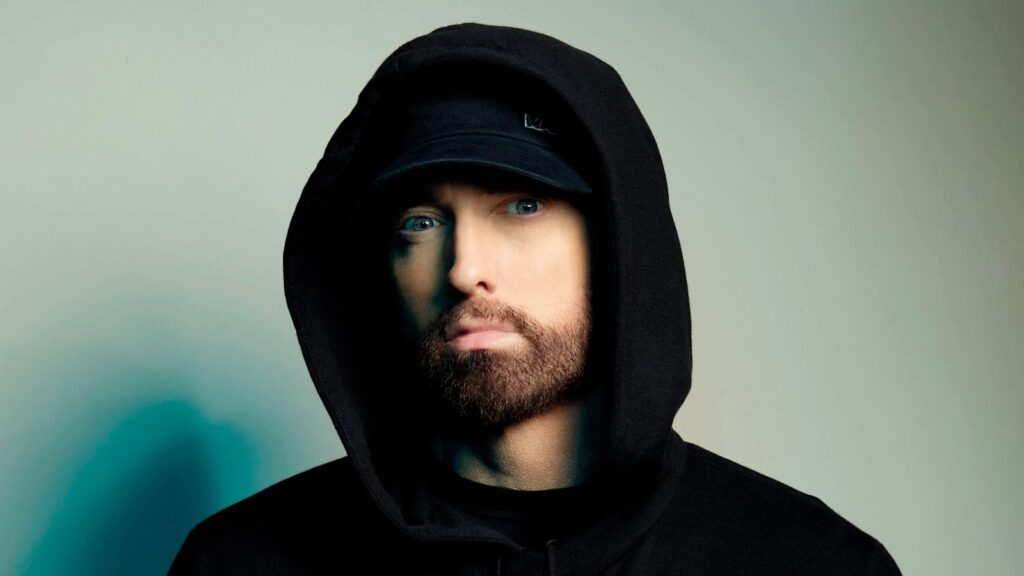
Marshall Bruce Mathers III, born October 19, 1972, in St. Joseph, Missouri, performs as Eminem and is the best selling music artist of the 21st century in the United States, with more than 220 million records sold worldwide. Raised in poverty in Detroit, he broke through in 1999 with The Slim Shady LP after Dr. Dre discovered his demo, and followed it with The Marshall Mathers LP, which sold 1.76 million copies in its first week and remains one of the fastest selling albums in US history. He co-founded Shady Records with longtime manager Paul Rosenberg in 1999, launching the careers of 50 Cent, D12, and Obie Trice. He starred in the semi-autobiographical film 8 Mile in 2002 and won the Academy Award for Best Original Song for Lose Yourself. His most recent album, The Death of Slim Shady, debuted at number one in 2024, his eleventh number one album. He remains a Michigan resident based near Detroit.
1. Touring, Recorded Music, and Streaming
Eminem’s income has scaled dramatically across three decades, from his explosive commercial peak in the early 2000s through a mid career slowdown, a well documented comeback, and a continued streaming driven income stream that persists even in years without a tour. Where an era’s income was substantially driven by touring, a meaningful share of that box office revenue funds staging, production, and crew before it becomes personal income, so those portions below reflect an estimated personal take rather than raw box office gross.
- Breakout era, The Slim Shady LP through The Eminem Show, primarily album and promotional income (1999 to 2002): ~$40M
- Peak commercial era, Encore, the Anger Management tours, and the release of 8 Mile, roughly half touring driven and converted accordingly (2003 to 2007): ~$63M
- Reduced output during his documented struggle with addiction and recovery (2008 to 2009): ~$15M
- Comeback era, Recovery, The Marshall Mathers LP 2, and the Monster Tour with Rihanna, which alone grossed $36.4M across six shows in 2014, with the touring portion of this era converted at 40 percent (2010 to 2014): ~$98.8M
- Continued high output era, Revival, Kamikaze, and the Rapture world tour, roughly half touring driven and converted accordingly (2015 to 2019): ~$66.5M
- Recent era, Music to Be Murdered By and The Death of Slim Shady, a number one debut with reduced touring, primarily recorded music and streaming income (2020 to 2026): ~$70M
Touring, recorded music, and streaming income, 1999 to 2026: ~$353.3M.
2. Film and Acting
Eminem starred in 8 Mile in 2002, a film that grossed $243M worldwide and won him the Academy Award for Best Original Song for Lose Yourself. As a first time film lead, his upfront acting fee was modest relative to his music paydays, but the film’s exceptional box office performance supported a meaningful backend participation given his star power.
Film and acting income: ~$10M.
3. Endorsements
Eminem has been unusually selective about brand endorsements compared to peers, with his most prominent commercial appearance being Chrysler’s 2011 Super Bowl commercial Born of Fire, which used his song Lose Yourself and featured him driving through Detroit. No specific fee has been publicly disclosed for the campaign, which combined a song license with an on camera appearance.
Endorsement and licensing income (career, blended, primarily the Chrysler campaign): ~$5M.
4. Business Ventures
Eminem co-founded Shady Records in 1999, and it remains an active label under his and Paul Rosenberg’s ownership. Shady is structured as a joint venture imprint under Interscope Records rather than a fully independent company, so there is no separate sale-able equity stake the way an independent studio would have. Its ongoing economic value to Eminem beyond his own catalog, which is counted separately below, comes mainly from a profit share on the label’s other signed acts across its history, most notably 50 Cent’s blockbuster debut Get Rich or Die Tryin, along with D12, Obie Trice, Yelawolf, and Griselda. We estimate that shared profit stream is worth roughly $15M to the label overall, split evenly between Eminem and co-founder Paul Rosenberg.
Shady Records, estimated 50% share of a $15M valuation: ~$7.5M.
He opened Mom’s Spaghetti, a Detroit restaurant, in 2021 in partnership with local restaurant group Union Joints, alongside occasional pop-ups at events like Coachella and the Super Bowl and an online merchandise and sauce business. This remains a single small walk-up location rather than a scaled chain. We estimate the overall brand and business at roughly $5M, with Eminem holding an estimated 50 percent share given the Union Joints partnership structure.
Mom’s Spaghetti, estimated 50% share of a $5M valuation: ~$2.5M.
He also hosts a channel on SiriusXM’s Shade 45, a licensing and hosting arrangement rather than an owned equity stake, so no separate value is assigned to it.
- Shady Records: ~$7.5M (estimated 50% share)
- Mom’s Spaghetti: ~$2.5M (estimated 50% share)
- Shade 45: excluded (a hosting arrangement, not an owned equity stake)
5. Representation
A blended representation rate of 22 percent is applied across Eminem’s combined touring, recorded music, film, and endorsement income, reflecting his long-term structure with manager and Shady Records co-founder Paul Rosenberg.
Representation (22% blended on $368.3M combined gross): -$81.03M.
6. Tax
Eminem has remained a Michigan resident throughout his career rather than relocating to a lower tax state, a choice he has spoken about publicly as tied to his loyalty to Detroit. Michigan’s flat state income tax combined with federal obligations produces a blended effective rate for a earner at his level.
Tax (40% effective on $287.27M post-representation income): -$114.91M.
7. Lifestyle Burn
Eminem has been unusually direct and consistent in public statements about deliberately underspending relative to his earnings. He told the New York Times he saves a large portion of what he makes, treats every payday as though it might be his last, and credits his sobriety with removing what used to be a significant drain on his finances. Aside from a documented car collection, his lifestyle has been widely described as comparatively low key for an artist of his commercial stature.
- Rising and peak fame, still primarily based in the Detroit area (1999 to 2007, 9 years): ~$1.5M/yr consumed = $13.5M
- Addiction and recovery period, reduced public spending (2008 to 2009, 2 years): ~$1M/yr consumed = $2M
- Established, sober, and documented as frugal relative to peers (2010 to 2026, 17 years): ~$2M/yr consumed = $34M
Total lifestyle burn: ~$49.5M, roughly 23 percent of post-tax income, well below the typical range for an artist at his earnings level, consistent with his own repeated public statements about saving rather than spending.
8. Real Estate
Eminem’s real estate history includes one property with both a documented purchase price and a documented sale price, and the transaction was a loss rather than a gain.
- Rochester Hills, Michigan mansion, purchased in 2003 for $4.75M, sold in 2017 for $1.9M: a documented loss of $2.85M
- Clinton Township, Michigan estate, purchased in 2000 for approximately $1.48M, remains his primary residence with no sale or fresh appraisal on record
Real estate: -$2.85M (documented loss).
9. Songwriting and Publishing Catalog (Held Asset)
Eminem is the credited writer on the overwhelming majority of his own catalog, a body of work now more than 25 years deep at its oldest and still generating billions of cumulative streams, continued physical and digital sales, and ongoing sync and licensing placements. His catalog sits squarely in this database’s legacy evergreen tier, the same category as artists like Dylan and Springsteen, given its age, continued commercial performance, and his unusually strong personal ownership position as the primary writer across nearly every track he has released.
Applying the legacy 25-plus year evergreen multiple of 20x to an estimated $10M a year in personal songwriting and royalty income across his catalog:
Songwriting and publishing catalog, held asset (20x multiple on ~$10M/yr estimated personal royalty share): ~$200M.
10. Wealth Management
Eminem has stated publicly that he actively invests and treats his earnings conservatively, but no specific fund, manager, or disclosed investment vehicle has been reported. A general statement of financial philosophy is not the same as a quantifiable held asset, so no additional value beyond what is already captured in the accumulation calculation above is counted here.
Wealth Management: None reported ($0).
Net Worth Waterfall
| Line Item | Amount |
|---|---|
| Touring, recorded music, and streaming, personal take (1999 to 2026) | +$353.3M |
| Film and acting (8 Mile) | +$10M |
| Endorsements and licensing (career) | +$5M |
| Less: representation (22% blended) | -$81.03M |
| Less: tax (40% effective, Michigan resident) | -$114.91M |
| Less: lifestyle burn (era-scaled, consumed only) | -$49.5M |
| Available to accumulate | +$122.86M |
| Real estate (documented loss on Rochester Hills flip) | -$2.85M |
| Songwriting and publishing catalog, held asset (20x multiple) | +$200M |
| Shady Records, estimated 50% share | +$7.5M |
| Mom’s Spaghetti, estimated 50% share | +$2.5M |
| Wealth Management | $0 |
| Total (raw) | ~$330.01M |
| Final Figure (rounded) | $330M |
Our calculation: $330 Million.
Why Our Figure Differs From Widely Circulated Estimates
The commonly cited figure for Eminem’s net worth is $250M. Our calculation lands modestly higher, and the gap traces mainly to how his songwriting and publishing catalog is valued rather than to any dispute over his career earnings.
Competitor figures generally cite a catalog value of around $200M without showing how that number was built. We arrive at a similar figure independently, but through a transparent build: applying this database’s own legacy evergreen multiple, the same tier used for artists like Dylan and Springsteen, to a conservative estimate of Eminem’s personal annual songwriting royalty income. His catalog qualifies for that tier on its own merits. It is more than 25 years deep at its oldest material, continues to generate billions of streams, and reflects an unusually strong personal writing credit across nearly the entirety of his output rather than reliance on outside collaborators. Working against that catalog value, we treat his touring heavy career eras as box office revenue rather than personal income, applying a conversion rate that reflects the real cost of staging tours rather than crediting him with something close to the full amount after only a standard representation deduction. Once that more disciplined touring treatment is combined with the properly built catalog value, a documented real estate loss, and his own well publicized preference for saving over spending, the total still moves modestly past the widely cited consensus.
The Rap God Who Still Saves His Receipts
Eminem has spent more than two decades telling anyone who will listen that he treats every dollar like it might be his last, a habit shaped by a childhood in Detroit where money never lasted long. That instinct shows up in a modest real estate footprint that actually lost money on one flip, a lifestyle burn well below what his earnings could support, and a stubborn refusal to leave Michigan for a lower tax address. What he has never been modest about is the writing. More than 25 years into a catalog that keeps generating new streams from new listeners, the numbers behind his own pen are the reason his fortune keeps climbing even in the years he does not tour at all.