

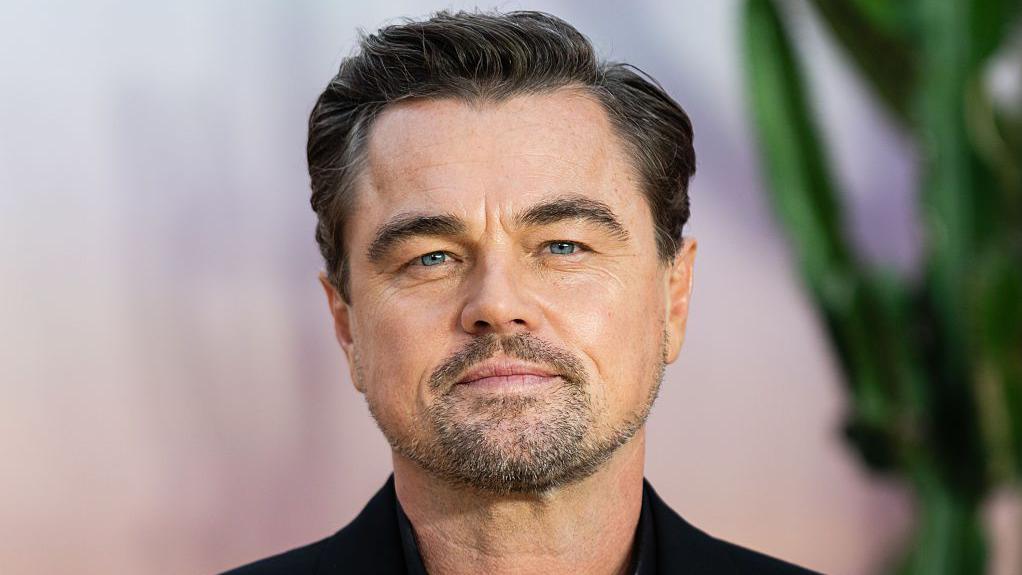
$220 Million
WHO HE IS
Leonardo Wilhelm DiCaprio was born on November 11, 1974, in Los Angeles, California, and began acting as a child in commercials and television before landing his breakout film role in 1993’s This Boy’s Life. His performance in the same year’s What’s Eating Gilbert Grape earned him his first Academy Award nomination at just nineteen, and he spent the mid 1990s building a reputation as one of his generation’s most serious young actors in The Basketball Diaries and Romeo and Juliet. Everything changed in 1997 with Titanic, which became the highest grossing film ever made at the time and turned DiCaprio into the biggest movie star in the world virtually overnight. He spent the following two decades building one of Hollywood’s most consistently acclaimed filmographies, working repeatedly with Martin Scorsese on The Aviator, The Departed, Shutter Island, and The Wolf of Wall Street, before finally winning his long awaited Academy Award for Best Actor for 2015’s The Revenant. Alongside his acting career, DiCaprio founded production company Appian Way in 2004 and has become one of Hollywood’s most prolific environmental philanthropists and venture investors, backing early stage companies in plant based food, clean energy, and sustainable materials.
1. Film Career, Early Years
DiCaprio’s fee climbed from scale wages to seven figures within just a few years, as his early acclaimed performances built toward global stardom.
- This Boy’s Life, television work, and early roles (1989-1992): ~$0.5M
- What’s Eating Gilbert Grape, confirmed salary (1993): $75K
- The Basketball Diaries, confirmed salary (1995): $1M
- Romeo and Juliet and other mid 1990s roles: ~$1.4M
Phase total: ~$3M.
2. Film Career, Titanic
DiCaprio’s base salary for Titanic was modest, but a shrewdly negotiated 1.8 percent cut of the film’s gross backend points, unlike his co-star Kate Winslet, who took no backend, turned it into the most lucrative single project of his career at the time.
- Titanic, base salary plus 1.8% backend on a film that grossed over $2.2 billion worldwide (1997): $40M
Phase total: $40M.
3. Film Career, 2000s
DiCaprio’s fee stabilized in the $20 million range through most of the 2000s as he built his reputation as one of Hollywood’s most reliable dramatic leads, working repeatedly with Martin Scorsese.
- The Beach (2000): $20M
- Gangs of New York (2002): $10M
- Catch Me If You Can (2002): $20M
- The Aviator (2004): $20M
- The Departed (2006): $20M
- Blood Diamond (2006): $20M
- Shutter Island (2010): $20M
Phase total: ~$130M.
4. Film Career, 2010s
This decade produced DiCaprio’s highest single film payday and his long awaited first competitive Academy Award, alongside a notable deferred salary on The Wolf of Wall Street due to the film going over budget.
- Inception, salary plus backend on an $839M global gross (2010): $59M
- J. Edgar (2011): ~$15M
- Django Unchained (2012): ~$20M
- The Great Gatsby (2013): ~$20M
- The Wolf of Wall Street, reduced take after deferring part of a $25M deal due to budget overruns (2013): $10M
- The Revenant (2015): $20M
- Once Upon a Time in Hollywood, reduced fee for Tarantino (2019): $10M
Phase total: ~$154M.
5. Film Career, Recent Era
DiCaprio’s streaming era paydays have kept pace with his theatrical rate, and his most recent Scorsese collaboration commanded one of the largest fees of his career.
- Don’t Look Up, Netflix (2021): $30M
- Killers of the Flower Moon, Apple TV Plus (2023): $35M
- One Battle After Another (2025): ~$20M
Phase total: ~$85M.
6. Endorsements
DiCaprio has kept traditional brand endorsement work to a minimum relative to his fame, generally favoring direct investment stakes in companies he believes in over standard spokesperson deals.
- Selective global brand partnerships across the career: ~$15M
Phase total: ~$15M.
7. Combined Entertainment Gross
Early years ($3M) plus Titanic ($40M) plus 2000s ($130M) plus 2010s ($154M) plus recent era ($85M) plus endorsements ($15M) equals $427M gross entertainment income.
8. Representation
Representation across DiCaprio’s acting and endorsement income, covering agent, manager, and legal fees, is applied at a blended 13 percent, standard for a full Hollywood team.
Representation (13% on $427M): -$55.51M.
9. Tax
DiCaprio is a longtime California resident. Established entertainment talent typically achieves an effective tax rate below California’s roughly 50 percent combined marginal rate through loan-out company structures, bringing the effective rate to approximately 42 percent.
Tax (42% on $371.49M post-representation income): -$156.03M.
Post-tax entertainment income: ~$215.46M.
10. Lifestyle Burn
DiCaprio has never married and has no children, and multiple decades of reporting have documented an active social and travel lifestyle, particularly through the 2000s and early 2010s, alongside extensive personal environmental philanthropy conducted primarily through his separate foundation rather than personal after tax spending.
- Early career (1989-1996, 8 years): ~$150K/yr consumed = $1.2M
- Post-Titanic fame, documented active travel and social lifestyle (1997-2010, 14 years): ~$1.5M/yr consumed = $21M
- Established career, continued travel and residences (2011-2026, 16 years): ~$1.2M/yr consumed = $19.2M
Total lifestyle burn: ~$41.4M. Available to accumulate: ~$174.06M.
11. Real Estate
DiCaprio has bought and sold roughly a dozen properties over his career, but only one carries both a documented purchase price and a documented sale price sufficient to calculate a real gain.
- Malibu beachfront home, purchased $1.6M (1998), sold $10.3M (2021): realized gain of $8.7M
- Malibu beachfront home, current holding, purchased $13.75M (2021), listed for sale but not yet sold: held at cost, no gain claimed
- Los Feliz Spanish Colonial, purchased $7.1M (2021): no current appraisal disclosed, held at cost, no gain claimed
- Beverly Hills traditional, purchased $9.9M (2021): no current appraisal disclosed, held at cost, no gain claimed
- Hollywood Hills Bird Streets compound, assembled from two properties purchased for a combined approximately $4M in the 1990s and extensively developed since: no current appraisal sufficiently documented to a specific figure, held at cost, no gain claimed
- Blackadore Caye, a 104 acre private island in Belize being developed as an eco-resort: no disclosed purchase price or current valuation, not quantified
Real estate appreciation: ~$8.7M.
12. Business Equity Held
Appian Way Productions, DiCaprio’s production company founded in 2004, has produced The Aviator, Shutter Island, The Wolf of Wall Street, and a range of environmental documentaries including Before the Flood. The company has never taken on outside investment or been independently valued in a public transaction.
Applying the standard 6x to 8x earnings multiple used for independent production studios with a stable ongoing output, and estimating Appian Way’s annual company earnings in the mid single digit millions given its output cadence of roughly one major theatrical release every one to two years alongside documentary work, values the company at approximately $40M. DiCaprio is understood to hold full or controlling ownership of the company.
Appian Way equity, held stake: +$40M.
13. Venture Portfolio
DiCaprio has made more than 35 documented early stage investments since the mid 2010s, concentrated in plant based food, clean energy, and sustainable materials companies, including an early stake in Beyond Meat ahead of its 2019 IPO at a peak valuation near $4 billion, along with stakes in Diamond Foundry, Champagne Telmont, Aspiration, and Casper, among others. None of these individual stake sizes has been publicly disclosed, and reporting consistently describes his exact holdings as undisclosed even in cases with confirmed exits. This is a real and in at least the Beyond Meat case likely substantial pool of value that cannot be responsibly estimated without a single disclosed stake size to anchor a calculation, and it is excluded from the total below rather than assigned a placeholder value.
Venture portfolio: not quantified.
14. Wealth Management
No disciplined outside wealth management program separate from DiCaprio’s direct venture investing has been publicly documented. Default applies.
Wealth Management: None reported ($0).
Net Worth Waterfall
| Line Item | Amount |
|---|---|
| Early career (1989-1996) | +$3M |
| Titanic (1997) | +$40M |
| 2000s film career | +$130M |
| 2010s film career | +$154M |
| Recent era film career (2021-2025) | +$85M |
| Endorsements | +$15M |
| Less: representation (13% on $427M entertainment gross) | -$55.51M |
| Less: tax (42% blended, California resident) | -$156.03M |
| Less: lifestyle burn (era-scaled, consumed only) | -$41.4M |
| Available to accumulate | +$174.06M |
| Real estate appreciation | +$8.7M |
| Appian Way equity, held stake | +$40M |
| Venture portfolio | not quantified |
| Wealth Management | $0 |
| Total Net Worth | $222.76M → $220M |
Our calculation: $220 Million.
Why Our Figure Differs From Consensus
Celebrity Net Worth places Leonardo DiCaprio at $300 million. Our independent calculation lands at $220 million, a meaningful gap that traces almost entirely to two categories this calculation deliberately declines to estimate without a documented anchor point. The venture portfolio is the largest of these: DiCaprio was an early investor in Beyond Meat ahead of a 2019 IPO that valued the company near $4 billion, and reporting consistently confirms the investment without ever disclosing the size of his stake, a pattern that repeats across more than 35 other early stage investments. Even a modest confirmed stake in a single winner like that could meaningfully move this figure. The second category is real estate held outside the one property with both a documented purchase and sale price. The Hollywood Hills Bird Streets compound, described in property reporting as DiCaprio’s crown jewel after nearly three decades of expansion and development from an original combined purchase price near $4M, almost certainly carries a current value well above its documented cost, but no source pairs a specific current figure with that history precisely enough to support a calculated gain. Working in the other direction, this figure already counts one of DiCaprio’s largest paydays, The Wolf of Wall Street, at the reduced amount he actually received after deferring part of his fee, rather than the full disclosed deal value.
The Star Who Turned Restraint Into a Business Model
Leonardo DiCaprio’s career has followed an unusual pattern for an actor of his fame: extraordinary paydays on the films that mattered most, paired with a documented willingness to defer or reduce his fee when a project needed it, from Titanic’s original modest base salary to a voluntary pay cut on The Wolf of Wall Street when the budget ran over. That same instinct now shows up in his investment portfolio, where he has spent a decade quietly building stakes in companies solving the kind of environmental problems he has spent his public life advocating against, long before those categories became mainstream investment themes. The Beyond Meat position alone, undisclosed in size but confirmed well before the company’s multibillion dollar public debut, is a reminder that DiCaprio’s real financial story may not be fully visible in any single filmography or box office tally. What is measurable, a three decade run of $20 million-plus paydays anchored by one of the most famous backend deals in film history, remains one of the most durable individual earning records in modern Hollywood.


[…] paid $276,000 for a Tyrannosaurus bataar skull at a Beverly Hills gallery, reportedly outbidding Leonardo DiCaprio for it in the process. Seven years later, federal prosecutors in Manhattan filed a civil forfeiture […]