$550 Million
WHO HE IS
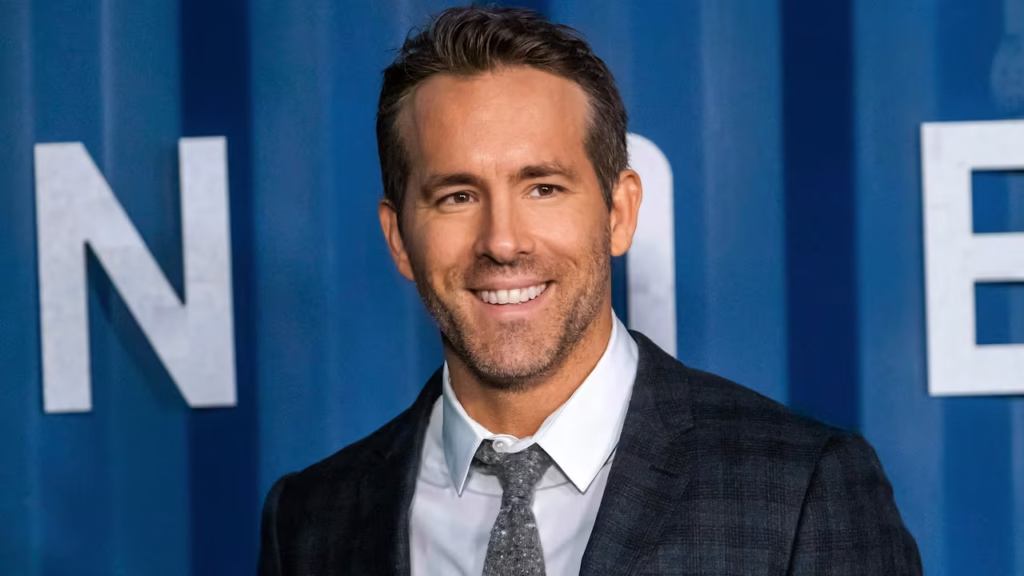
Ryan Rodney Reynolds, born October 23, 1976, in Vancouver, British Columbia, is a Canadian and American actor, entrepreneur, and film producer who began his career at thirteen with small Canadian television roles before landing the Nickelodeon teen soap Fifteen. He spent the late 1990s building visibility on the ABC sitcom Two Guys and a Girl, then moved through a run of comedies and rom-coms in the 2000s, including National Lampoon’s Van Wilder and The Proposal, before an underperforming turn as Green Lantern in 2011 nearly stalled his leading-man career. He rebuilt it almost entirely around one character: after championing a faithful, R-rated take on Deadpool for nearly a decade, the 2016 film became a franchise that has grossed well over $2 billion worldwide across three installments, the last of which, 2024’s Deadpool & Wolverine, stands as the highest-grossing R-rated film ever made. Alongside acting, Reynolds has become one of Hollywood’s most successful outside investors, taking minority stakes in Aviation American Gin and Mint Mobile and steering both to nine-figure exits through his marketing agency Maximum Effort, then co-purchasing fifth-tier Welsh football club Wrexham AFC with Rob McElhenney in 2020 and turning it into a globally recognized brand chronicled in the Emmy-winning docuseries Welcome to Wrexham. He has been married to actress Blake Lively since 2012, and the couple have four children.
1. Film Career
Reynolds’ film paydays span three distinct eras: a modest apprenticeship through the 2000s, a mid-tier leading-man stretch in the early 2010s, and a post-Deadpool run in which he has consistently commanded $20 million or more per picture, with rare backend eligibility that has meaningfully boosted his biggest hits. His base salary for the original 2016 Deadpool was a reported $2 million, but The Hollywood Reporter noted he was the only actor eligible for box office bonuses and backend compensation on the film, which pushed his total take to roughly $22 million on a movie that grossed $780 million against a $58 million budget. Deadpool 2 (2018) paid a confirmed $20 million base with backend points that reporting places in the $30 to $40 million range given the film’s $785 million worldwide gross. Netflix paid him $27 million for 2019’s 6 Underground, his highest confirmed single salary at the time, and reporting places his fees for Free Guy (2021), Red Notice (2021), The Adam Project (2022), and Spirited (2022) in the same $20 to $25 million tier that became his post-Deadpool baseline. His confirmed salary for 2024’s Deadpool & Wolverine was $20 million, though the same rare backend structure applied on a film that ultimately grossed $1.34 billion worldwide, and industry reporting puts his total take for that film meaningfully higher.
- Early career, Two Guys and a Girl through Van Wilder (1991-2004): ~$5M
- Mid-career comedies and Green Lantern, combined (2005-2015): ~$45M
- Deadpool, base plus confirmed backend (2016): ~$22M
- Deadpool 2, base plus reported backend (2018): ~$35M
- 6 Underground, confirmed Netflix salary (2019): ~$27M
- Free Guy, acting and producing (2021): ~$25M
- Red Notice, confirmed Netflix-tier salary (2021): ~$23M
- The Adam Project (2022): ~$20M
- Spirited (2022): ~$20M
- Deadpool & Wolverine, confirmed base plus backend on a $1.34B gross (2024): ~$45M
- Animated voice work, The Croods franchise, Turbo, Detective Pikachu (2013-2020): ~$15M
- Other film and producing credits, various (2013-2026): ~$15M
Phase total: ~$297M, rounded to $300M.
2. Endorsements
Reynolds has done relatively little traditional celebrity endorsement work compared to peers at his fame level, a gap largely explained by his preference for taking equity in brands rather than simply fronting them. His most notable pure endorsement relationship was as the face of Giorgio Armani’s Armani Code fragrance beginning in 2019, alongside smaller regional campaigns over the years.
- Armani Code, global brand ambassador (2019-present): ~$5M
- Miscellaneous regional and licensing endorsements (various years): ~$3M
Phase total: ~$8M.
3. Business Ventures: Realized Exits
This is where the bulk of Reynolds’ fortune actually comes from. He acquired an undisclosed minority stake, reported at roughly 20 percent, in Aviation American Gin in 2018 and became its creative face; Diageo acquired the brand in 2020 in a deal worth up to $610 million, with $335 million paid upfront, and Reynolds’ stake was reported by Yahoo Finance to have netted him approximately $122 million. In November 2019 he acquired a stake reported at roughly 25 percent in wireless carrier Mint Mobile, and in March 2023 T-Mobile acquired Mint’s parent company Ka’ena Corp in a deal worth up to $1.35 billion; Forbes and CBS News both placed Reynolds’ resulting payout above $300 million, with Forbes citing a figure around $337.5 million. These figures represent Reynolds’ gross pretax stake value at the time of sale rather than after-tax cash in hand, so a capital gains tax is applied separately below rather than the entertainment representation and tax rates used elsewhere in this calculation, since business dealmaking of this kind does not typically run through a talent agency.
Open item for review: no outlet discloses what Reynolds actually paid to acquire either stake. If he bought in with meaningful cash rather than receiving equity primarily for his creative and marketing involvement, the true new wealth from these exits is the gain above that cost basis, not the full sale value, the same principle applied to real estate elsewhere in this methodology. Both deals are widely reported as stakes tied to his role as creative director and pitchman rather than a pure financial investment, and this kind of celebrity brand equity deal typically involves a modest cash outlay relative to the eventual sale price, but no source puts a number on either purchase. Absent a disclosed figure, the calculation below treats the full reported stake value as realized proceeds. This is flagged as an assumption rather than a confirmed fact.
- Aviation American Gin stake, sold to Diageo (2020): ~$122M gross
- Mint Mobile stake, sold to T-Mobile via Ka’ena Corp (2023): ~$320M gross
Combined gross business exit proceeds: ~$442M.
Capital gains tax (approximately 35% combined federal, NIIT, and New York State on realized gains): -$154.7M.
Net after-tax business exit proceeds: ~$287.3M.
4. Representation
Representation on Reynolds’ entertainment income, covering agent, manager, and legal fees, is applied at a blended 13 percent, standard for a full Hollywood team. This rate is not applied to the business exit proceeds above, which reflect personal investment dealmaking rather than entertainment representation.
Representation (13% blended on $308M combined film and endorsement gross): -$40.04M.
5. Tax
Reynolds and his family are New York residents, based in Westchester County. Established entertainment talent typically achieves an effective tax rate well below New York’s roughly 50 percent combined marginal rate through loan-out company structures, bringing the effective rate on entertainment income to approximately 42 percent.
Tax (42% blended on $267.96M post-representation entertainment income): -$112.54M.
Combined entertainment income (film plus endorsements) of $308M, after representation (-$40.04M) and tax (-$112.54M), leaves approximately $155.42M. Adding the after-tax business exit proceeds of $287.3M brings the total pre-lifestyle-burn accumulation to approximately $442.72M.
6. Lifestyle Burn
Reynolds’ documented personal spending has scaled with both his family and his fame, but multiple sources describe a couple who, despite constant tabloid attention, keep a comparatively low-key domestic life centered on two homes in Westchester County rather than a sprawling property portfolio. The family has grown to include four children since 2014, which has increased staffing, security, and travel costs over the past decade, and Reynolds has been notably active in philanthropic giving, including matched donations tied to disaster relief.
- Early career, Fifteen through Two Guys and a Girl (1991-2010, 19 years): ~$150K/yr consumed = $2.85M
- Rising fame, Green Lantern and early Deadpool development (2011-2015, 5 years): ~$500K/yr consumed = $2.5M
- Peak fame era, post-Deadpool with growing family (2016-2026, 10 years): ~$3M/yr consumed = $30M
Total lifestyle burn: ~$35.35M, rounded to $35M. Available to accumulate: ~$407.72M.
This burn figure represents roughly 8 percent of Reynolds’ combined post-tax entertainment and business exit income, comparatively low for an entertainer and business owner at his earnings tier but consistent with reporting that describes the family’s Westchester lifestyle as relatively restrained.
7. Real Estate
Reynolds and Lively own two documented properties: an 11-acre Pound Ridge, New York estate purchased for $5.7 million in 2012, and a Tribeca loft in Manhattan purchased in 2017 for an undisclosed sum. No resale or independent current appraisal has been publicly disclosed for either property, so both are held at documented cost with no additional appreciation claimed. An earlier Bedford, New York home was purchased for $2.3 million in 2012 and sold for $2.4 million in 2013, a modest realized gain that predates the current property portfolio.
- Pound Ridge, New York estate, held at documented $5.7M purchase price (2012): no gain claimed
- Tribeca, New York loft, held at documented cost (2017): no gain claimed
- Bedford, New York home, realized gain on sale (2012-2013): ~$0.1M
Real estate appreciation: ~$0.1M (both current properties held at cost, no disclosed current appraisal).
8. Business Equity Held
Beyond the realized Aviation Gin and Mint Mobile exits, Reynolds retains a substantial ongoing equity stake in Wrexham AFC, the Welsh football club he purchased with Rob McElhenney in November 2020 for approximately £2 million, taking a combined 85 percent stake split evenly between the two owners. Wrexham has since achieved four consecutive promotions and become one of the most commercially successful clubs outside Europe’s top leagues, and the club sold a 15 percent minority stake to the Allyn Family Office in 2024 and a further stake reported at under 10 percent to Apollo Sports Capital in December 2025, diluting the founders’ combined holding to roughly 61 percent, or approximately 30 percent each. Bloomberg reported the club’s valuation at £350 million, or approximately $475 million, in February 2026. Reynolds also holds stakes in Alpine’s Formula 1 team as part of a 2023 investor consortium and in fintech company Nuvei, but neither stake size has been publicly disclosed, and Nuvei’s value has fluctuated significantly since his 2023 investment, so neither is quantified here.
- Wrexham AFC, approximately 30% stake at February 2026 valuation of $475M: ~$142.5M
- Alpine F1 consortium stake and Nuvei stake: undisclosed, not quantified
Business equity held: ~$142.5M.
9. Wealth Management
No disciplined investment program or wealth manager has been publicly documented for Reynolds beyond his direct operating stakes in businesses he actively works with. Default applies.
Wealth Management: None reported ($0).
Net Worth Waterfall
| Line Item | Amount |
|---|---|
| Film career (1991-2026) | +$300M |
| Endorsements (Armani Code and other brand deals) | +$8M |
| Less: representation (13% blended on $308M entertainment gross) | -$40.04M |
| Less: tax (42% blended, New York resident) | -$112.54M |
| Business exits, after capital gains tax (Aviation Gin, Mint Mobile) | +$287.3M |
| Less: lifestyle burn (era-scaled, consumed only) | -$35M |
| Available to accumulate | +$407.72M |
| Wrexham AFC equity, held stake | +$142.5M |
| Real estate | +$0.1M |
| Wealth Management | $0 |
| Total Net Worth | ~$550.22M → $550M |
Our calculation: $550 Million.
Why Our Figure Differs From Consensus
Celebrity Net Worth places Ryan Reynolds at $350 million. Our independent calculation produces approximately $550 million, meaningfully above consensus, and the gap traces to two things that have moved faster than most public estimates. First, the after-tax cash from Reynolds’ two realized business exits, Aviation Gin and Mint Mobile, alone totals roughly $287 million even after applying a full capital gains tax rate, nearly matching CNW’s entire stated net worth before a single film salary is counted. Second, Wrexham AFC’s valuation has grown explosively in the past two years, reaching $475 million as of Bloomberg’s February 2026 reporting, up from roughly $100 to $136 million just a year earlier; a stale valuation on Reynolds’ roughly 30 percent stake alone would understate his fortune by well over $100 million. Working against an even higher figure: this calculation applies New York’s meaningful effective tax rate for established entertainment talent, both New York properties are counted only at documented purchase price given the absence of any resale or current appraisal, and Reynolds’ undisclosed stakes in Alpine’s F1 team and fintech company Nuvei are excluded entirely rather than estimated. If Wrexham completes its push toward the Premier League, a promotion that would likely drive another step change in valuation, or if the Nuvei and Alpine stakes are ever disclosed, this figure would move higher still.
The Actor Who Turned Marketing Into His Biggest Franchise
For most of the 2000s, Ryan Reynolds was a working actor who seemed destined to stay one tier below true stardom, charming in comedies but unable to open a blockbuster on his own. Then he did something unusual for an actor of his generation: instead of simply cashing endorsement checks, he started buying pieces of the companies he was pitching, and turned his gift for self-deprecating, internet-native marketing into an operating skill that a gin brand and a budget wireless carrier were both willing to pay nine figures for. The instinct to treat this as a side hustle to his acting career misses the scale of what actually happened. Aviation Gin and Mint Mobile alone generated more after-tax cash than most working actors see across an entire filmography, and Wrexham, bought for the price of a nice apartment, is now worth nearly half a billion dollars and climbing. Reynolds still shows up for $20 million-plus paydays as Deadpool, but at this point the movies may be the smaller business.