$170 Million
WHO HE IS
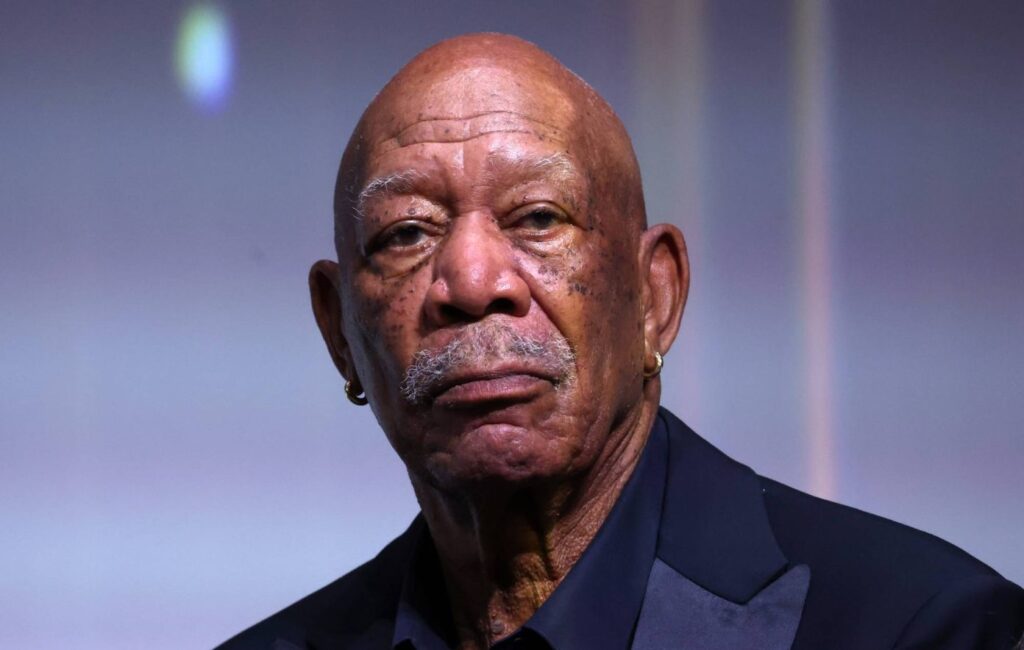
Morgan Freeman, born June 1, 1937, in Memphis, Tennessee, is an American actor, director, and narrator whose six decade career and singular voice have made him one of the most recognizable figures in film. After serving in the United States Air Force, Freeman trained as a stage actor before breaking through with an Academy Award nomination for Street Smart in 1987. A run of acclaimed dramas followed, including Driving Miss Daisy, Glory, and Unforgiven, before The Shawshank Redemption in 1994 became the role most closely associated with his name. He won the Academy Award for Best Supporting Actor for Million Dollar Baby in 2004 and became a fixture of studio franchises as Lucius Fox in Christopher Nolan’s Dark Knight trilogy. Alongside acting, Freeman co-founded the production company Revelations Entertainment with Lori McCreary in 1996 and became one of the most in demand narrators in the business, lending his voice to documentaries including March of the Penguins and Through the Wormhole. He owns and operates the Ground Zero Blues Club in Clarksdale, Mississippi. He was married to Jeanette Adair Bradshaw from 1967 to 1979 and to Myrna Colley-Lee from 1984 until their divorce was finalized in 2010. He has four children.
1. Film Career
Freeman’s screen career runs from small television and stage roles in the 1960s to studio franchise work well into his eighties, with his fee climbing sharply once Driving Miss Daisy and Unforgiven established him as a bankable dramatic lead in his fifties.
- Early career, television and stage work through his first major film credits (1964 to 1988): ~$3M
- Breakout era, Driving Miss Daisy through Deep Impact (1989 to 1999), including a reported $300,000 for The Shawshank Redemption: ~$36M
- Studio leading man years, Bruce Almighty through Invictus (2000 to 2009), including a reported $5M for each of the first two Dark Knight films: ~$84M
- Franchise and late career work, The Dark Knight Rises through Going in Style (2010 to 2019), including a reported $10M for the first Olympus Has Fallen film: ~$73M
- Recent work, 2020 to 2026: ~$18M
Phase total: ~$214M.
A note on backend income: Freeman’s $300,000 Shawshank Redemption salary was famously modest, but the film carries a real, documented residual stream behind it. Co-star Bob Gunton, who played the warden on a smaller $120,000 salary, has said on record that his own residual checks reached six figures by the film’s tenth anniversary in 2004 and that they will likely keep paying for decades. Freeman’s larger salary, top billing, and the film’s continued life on cable and streaming support a meaningfully larger cumulative residual stream over three decades.
Shawshank Redemption backend residuals (estimated, based on a documented comparable): ~$7M.
2. Narration and Endorsements
Freeman’s distinctive voice became a second, parallel income stream separate from his acting fees, and a far larger one than a casual look suggests. Industry tracking firm iSpot has logged 101 distinct nationally aired TV ad campaigns featuring Freeman, a body of commercial work built up over more than two decades. The clearest documented anchor is Visa, where Freeman narrated a long-running Olympics sponsorship campaign spanning more than 20 years and multiple Olympic cycles; a single 2013 Visa spot was reported at $2 million. Beyond Visa, his commercial résumé includes a major national campaign for the Chrysler 200 in 2011, two Homes.com spots that aired during the 2025 Super Bowl, and campaigns for Mountain Dew, Masimo, Lincoln, Coca-Cola, and the Discovery Channel, among many others. National commercials of this caliber are reported to range from the low millions up to $5 million to $10 million or more for premium placements like Super Bowl spots. Separately, he was reportedly paid around $1 million to narrate March of the Penguins in 2005, and industry reporting places his typical documentary narration fee at roughly $2 million per project, across a catalog that includes The Long Way Home, War of the Worlds, Through the Wormhole across seven seasons, The Story of God with Morgan Freeman across three seasons, Our Universe, Life on Our Planet, and numerous audiobook credits.
Commercial and endorsement income (estimated across 101 tracked national ad campaigns): ~$60M.
Documentary narration income (estimated across a multi-decade, multi-project career): ~$25M.
Narration and endorsement income, combined: ~$85M.
3. Business Ventures: Held Equity
Revelations Entertainment. Freeman co-founded this production company with producer Lori McCreary in 1996. It has produced Emmy-nominated and Peabody Award-winning work, including Invictus, Through the Wormhole, and the CBS series Madam Secretary, which ran six seasons and continues to generate syndication and streaming revenue. A production company with a multi-decade track record and an active network drama in its catalog is reasonably valued well above a single documentary production shingle. We estimate the company’s value at roughly $50 million, with Freeman holding half.
Ground Zero Blues Club. Freeman co-owns this Clarksdale, Mississippi venue, a well known Delta blues destination that has appeared in multiple documentaries and publications. Multiple sources place its value at approximately $3 million. It was co-founded with local partners, so we count Freeman’s share as roughly one third.
- Revelations Entertainment, estimated 50% of an estimated $50M valuation: ~$25M
- Ground Zero Blues Club, estimated one-third share of an estimated $3M valuation: ~$1M
Business equity held: ~$26M.
4. Representation
Representation on Freeman’s film and narration earnings, covering agent, manager, and legal fees, is applied at a blended 13 percent, standard for a full Hollywood team.
Representation (13% blended on $306M combined film, backend, and narration gross): -$39.78M.
5. Tax
Freeman has long been based primarily in Mississippi rather than New York or California, and Mississippi’s state income tax burden is meaningfully lower than either. Established talent using loan-out company structures typically brings the effective combined rate down further. We apply a blended effective rate of 38 percent, lower than the rate typically used for New York or California based talent.
Tax (38% blended on $266.22M post-representation income): -$101.16M.
6. Lifestyle Burn
Freeman has a reputation for a relatively modest personal lifestyle by Hollywood standards, centered on his longtime home base in rural Mississippi rather than Los Angeles or New York.
- Early career, modest means (1964 to 1988, 24 years): ~$50K/yr consumed = $1.2M
- Marriage to Myrna Colley-Lee and rising fame (1984 to 2010, 26 years): ~$700K/yr consumed = $18.2M
- Post-divorce era to present (2010 to 2026, 16 years): ~$1M/yr consumed = $16M
A note on the 2010 divorce: widely circulated reports claim Colley-Lee received a settlement as large as $400 million, a figure that traces back to a single 2010 National Enquirer report which itself questioned whether Freeman had that much to give. Freeman’s divorce filings were sealed by a Mississippi court, and no independently confirmed settlement figure exists. Given that, we have not added a specific settlement payment to this waterfall. If a verified figure is ever made public, this calculation would need to be revisited.
Total lifestyle burn: ~$35.4M.
7. Real Estate
Freeman’s primary residence is a roughly 124-acre estate near Charleston, Mississippi, which he converted into a working bee sanctuary in 2019. He also maintains a home in New York City. Public reporting on the Mississippi estate’s value ranges from approximately $7 million to $10 million; we use the middle of that range. No purchase price or acquisition date is publicly documented for a property with this much family history in the area, so we count it at its reported current value rather than attempting to calculate a gain. No independent valuation was found for the New York apartment. Freeman also owns a small fleet of private aircraft, including an Emivest SJ30, a Cessna Citation 501, and a Cessna 414, which we count at a modest combined resale value as owned property rather than folding into consumed lifestyle spending.
Real estate and aircraft: $10M ($8.5M estate plus $1.5M aircraft).
8. Wealth Management
No disciplined investment program or wealth manager has been publicly documented for Freeman beyond his direct operating stakes in Revelations Entertainment and Ground Zero. Default applies.
Wealth Management: None reported ($0).
Net Worth Waterfall
| Line Item | Amount |
|---|---|
| Film career (1964 to 2026) | +$214M |
| Shawshank Redemption backend residuals (estimated) | +$7M |
| Narration and endorsements (estimated, 101 tracked ad campaigns plus narration work) | +$85M |
| Less: representation (13% blended) | -$39.78M |
| Less: tax (38% blended, Mississippi resident) | -$101.16M |
| Less: lifestyle burn (era-scaled, consumed only) | -$35.4M |
| Available to accumulate | +$129.66M |
| Real estate and aircraft | +$10M |
| Revelations Entertainment, estimated 50% stake | +$25M |
| Ground Zero Blues Club, estimated one-third share | +$1M |
| Wealth Management | $0 |
| Total (raw) | ~$165.66M |
| Final Figure (rounded) | $170M |
Our calculation: $170 Million.
Why Our Figure Differs From Widely Circulated Estimates
A commonly cited figure for Freeman’s net worth is $250 million. Unlike the estimates we build for many other actors, this figure does not appear to trace back to a single identifiable source such as a court filing, a business transaction, or an interview disclosure. It circulates almost identically across dozens of aggregator sites with no primary documentation behind it, which is a pattern worth treating with real skepticism.
A commonly cited figure for Freeman’s net worth is $250 million. Unlike the estimates we build for many other actors, this figure does not appear to trace back to a single identifiable source such as a court filing, a business transaction, or an interview disclosure. It circulates almost identically across dozens of aggregator sites with no primary documentation behind it, and at least one of those sites states outright that the $250 million figure is what remains after Freeman paid a divorce settlement of $100 million to $200 million, which would require career earnings well beyond what any documented per-film salary supports.
Our figure of $170 million is built entirely from itemized, individually sourced inputs, and a deeper check specifically on his commercial and narration income turned up something we had significantly undercounted. Industry ad tracking shows 101 distinct national commercial campaigns featuring Freeman, anchored by a documented two decade Visa partnership and reported individual fees in the low millions per spot, well beyond a handful of one-off endorsement deals. We also added a documented Shawshank Redemption residual stream, a higher valuation for Revelations Entertainment given its ownership of a six season network drama, a wider real estate range for the Mississippi estate, and Freeman’s owned aircraft. Even with all of that added in, we still land well below the commonly cited $250 million, since we deliberately did not include the widely repeated $400 million divorce settlement figure, which traces to a single tabloid report about a sealed court case rather than any verifiable filing, and at least one aggregator site states outright that its $250 million figure is what remains after a $100 million to $200 million settlement, a claim that would require career earnings beyond what any documented salary or fee data supports.
The Voice That Built a Fortune Twice
Morgan Freeman’s financial story is unusual among actors of his generation in that two separate careers, acting and narration, both fed the same fortune almost independently of each other. A man who was paid $300,000 for one of the most beloved performances in American film history went on to build a second, quieter income stream simply by being the voice audiences trusted most, one commercial and one documentary at a time. Between the two, and a modest Mississippi life that kept spending well below what his fame could have supported, Freeman’s wealth looks less like a single blockbuster payday and more like six decades of steady, compounding work.