$535 Million
WHO HE IS
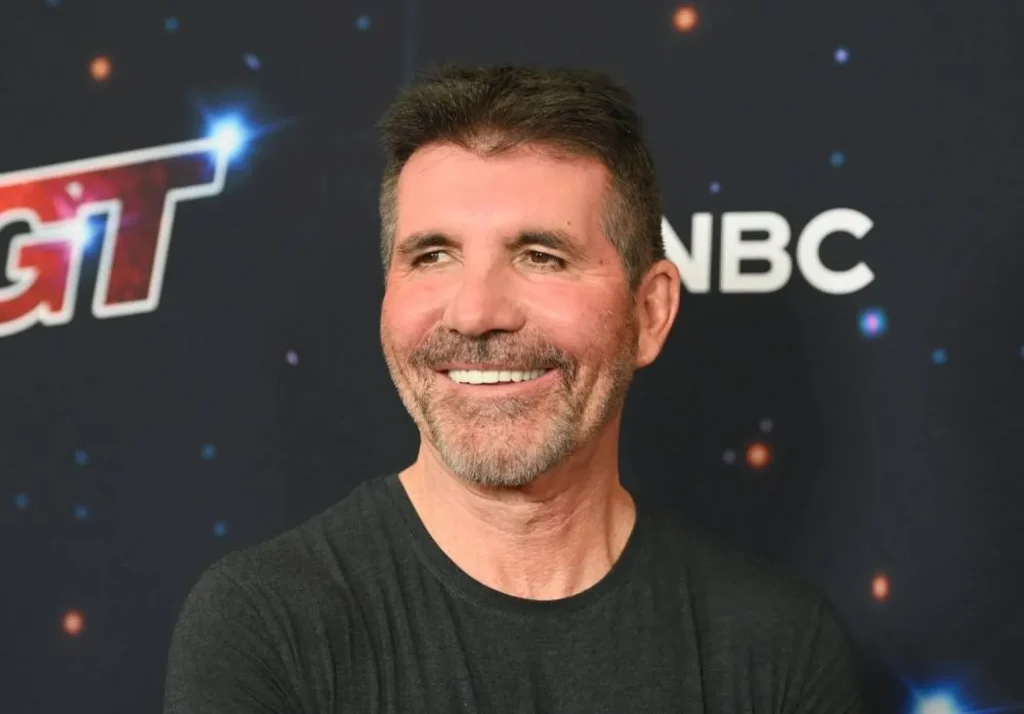
Simon Phillip Cowell, born October 7, 1959, in Lambeth, London, is an English television personality, record executive, and entrepreneur. Raised in Elstree, Hertfordshire, the son of an EMI music executive father, he dropped out of Dover College at 16 and worked a series of odd jobs, including as a runner on Stanley Kubrick’s The Shining, before landing a job in EMI’s mailroom with his father’s help. He built a career in the music industry through the 1980s and 1990s as an A&R executive and record producer, including a notable early venture that went bankrupt, before founding S Records under BMG and scoring a number one UK hit with actors Robson Green and Jerome Flynn in 1995. He came to public prominence in 2001 as a judge on Pop Idol, which he and creator Simon Fuller pitched to ITV, and became an international star the following year on American Idol. He went on to create and judge The X Factor (UK and US versions) and the Got Talent franchise, including Britain’s Got Talent and America’s Got Talent. He sold his stake in his record label, then called Syco Music and Syco Television, to Sony BMG in the mid-2000s, before re-entering a 50/50 joint venture with Sony Music in 2009 covering the X Factor and Got Talent television formats specifically, not the music assets, which Sony retained outright. That joint venture stake was diluted further in 2016 before Cowell bought out Sony’s remaining share entirely in 2020, giving him full ownership of both formats. He is engaged to Lauren Silverman, with whom he has a son, Eric, and has stated he does not intend to leave his fortune to his son, preferring to donate to charity.
1. Television Judging and Producer Fees (2001-2026)
Cowell’s on-screen judging fees, combined with his personal producer compensation, are unusually well documented for a media figure, with specific annual figures reported by the New York Times, CNN, Forbes, and other outlets across several individual years. His American Idol salary reportedly peaked at approximately $36M per season under a 2005 renewal deal.
- Pop Idol era, UK breakout (2001-2004): ~£1M/yr = £3M (~$3.81M)
- American Idol, nine seasons (2002-2010): a New York Times report, corroborated by CNN and multiple other outlets, documented Cowell’s salary progression precisely: $8M per season initially, rising to $36M per season under a 2005 five-year renewal, with a $45M-per-season offer for a further renewal that he declined in favor of leaving the show. Multiple independent outlets converge on a total of approximately $204M across his nine seasons: $204M
- X Factor US, Britain’s Got Talent, and X Factor UK transition years (2010-2016): ~$18M/yr = $108M
- America’s Got Talent era, using documented annual figures ($35M estimated 2016-17, $45M in 2017-18, $41M in 2018-19, $50M in 2019-20): $171M
- Post-accident recovery, continued AGT and BGT judging, Netflix specials including 2025’s Simon Cowell: The Next Act (2020-2026): ~$25M/yr = $150M
Television judging and producer fees: $636.81M gross.
2. Syco Format Licensing Income, Ownership Share (2009-2026)
Distinct from his personal on-screen fees, Cowell has held an ownership stake in Syco Entertainment, the company that owns the Got Talent and X Factor television formats, which are licensed to broadcasters in 76 and more than 130 countries respectively. His ownership share shifted over time: 50% from the 2009 joint venture with Sony Music, reduced to roughly 25% after a further 2016 stake sale, before he bought out Sony’s remaining interest entirely in 2020.
- 50% ownership era (2009-2016): ~$8M/yr = $56M
- Diluted, roughly 25% ownership era (2016-2020): ~$5M/yr = $20M
- Full, 100% ownership era, post-2020 buyback (2020-2026): ~$15M/yr = $90M
Syco format licensing income: $166M gross.
3. Syco Equity Sale Proceeds (Documented Transactions)
These are separate, one-time realized transactions distinct from Cowell’s ongoing income. In the mid-2000s, Sony BMG purchased Cowell’s stake in what was then Syco Music and Syco Television for approximately £27M. In 2016, Sony Music paid Cowell approximately £45M for a further reduction in his Syco Entertainment stake, from 50% down to roughly 25%. Notably, Cowell has not held an ownership stake in the actual music label side of the business, Syco Music, since Sony’s original mid-2000s purchase; artists signed through his TV shows, including One Direction and Little Mix, were signed to Sony-owned labels, meaning their record sales did not generate direct equity profit participation for Cowell the way his TV format ownership did.
- Mid-2000s Syco Music and Television sale to Sony BMG: £27M (~$34.29M)
- 2016 further Syco Entertainment stake sale to Sony Music: £45M (~$57.15M)
Syco equity sale proceeds: $91.44M gross (realized).
4. The 2020 Syco Buyback (Documented, Cost Not Counted)
In July 2020, Cowell personally acquired Sony Music’s remaining stake in Syco Entertainment, giving him sole ownership of the Got Talent and X Factor formats going forward. This is a real, well-documented transaction, but no purchase price has been publicly disclosed. Because the actual cost to Cowell is unknown, it is not deducted from the waterfall as a specific figure, though it should be understood as a real capital outlay that took place during this period.
2020 Syco buyback cost: not counted (undisclosed purchase price).
5. Representation and Deal Costs
Cowell operates primarily as an owner-executive and dealmaker rather than a conventionally repped performer, so standard 10% talent representation does not apply cleanly to most of his income. We apply a lower rate reflecting occasional legal and advisory costs.
- Representation on television judging and producer fees (5% x $636.81M): -$31.84M
- Representation on Syco format licensing income (5% x $166M): -$8.3M
- Deal costs on Syco equity sale proceeds (3% x $91.44M): -$2.74M
Total representation and deal costs: -$42.88M.
6. Tax
Cowell has been a UK resident for most of his career, though he has also spent significant time in Los Angeles. We use the UK’s approximately 47% effective rate on ordinary television and licensing income, and a more favorable approximately 25% rate on the documented equity sale proceeds, consistent with capital-asset tax treatment.
- Tax on television fees net of representation (47% x $604.97M): -$284.34M
- Tax on Syco format licensing income net of representation (45% x $157.7M): -$70.97M
- Tax on Syco equity sale proceeds net of deal costs (25% x $88.7M): -$22.18M
Total tax: -$377.49M.
7. Lifestyle Burn
Cowell’s spending history includes a well-documented near-bankruptcy in his late 20s, before any of his television fortune existed, followed by a famously high-end lifestyle once his television career took off, including homes in the UK and Malibu, California, and a serious car collection.
- Pre-fame era, including the early bankruptcy (1980-2001, 21 years): ~£50K/yr = £1.05M
- Early Idol-era fame (2001-2010, 9 years): ~£2M/yr = £18M
- Established mega-wealth era, including the Malibu home where he was injured in a 2020 motorcycle accident (2010-2020, 10 years): ~£4M/yr = £40M
- Post-accident, continued high-end lifestyle (2020-2026, 6 years): ~£3M/yr = £18M
Total lifestyle burn: ~£77.05M (~-$97.85M).
8. Real Estate
Cowell has owned a number of high-value properties across the UK and US. His longtime Beverly Hills mansion, sold in the summer of 2020 for exactly $25M, is consistently reported at that sale price across multiple outlets, but the original purchase price is genuinely disputed in the sourcing: Robb Report cites $8M at the 2004 purchase, while Hello! and The List separately cite figures of $18M and $15.5M respectively. Given this conflict, we use the more conservative, higher-end purchase estimate of $18M rather than the lowest figure, to avoid overstating the gain. He also owns a Malibu, California, beach house bought for £18.3M in 2017, where he recovered after a 2020 motorcycle accident, and previously owned a second London home in Wimbledon, bought around 2019 for roughly £15M and listed for sale in late 2021 at £17M, a likely but not fully confirmed additional gain not counted here given ambiguity over whether the sale actually completed at that price.
- Beverly Hills mansion: purchased $18M, conservative estimate given source conflict (2004), sold $25M (2020)
Real estate gain: +$7M (realized, conservative estimate).
9. Business Equity
Following the 2020 buyback, Cowell holds full, 100% ownership of Syco Entertainment, the company behind the Got Talent format (76 local versions worldwide) and The X Factor format (licensed in more than 130 countries). In September 2022, Syco raised $125M through a securitization of the Got Talent franchise’s intellectual property specifically, its production margins, digital income, franchise sales, and sponsorship income, arranged by ACF Investment Bank with institutional investor Nuveen. This is a debt-like financing structure repaid from future Got Talent royalties, not a personal payout, and is not counted as income here to avoid double-counting against the ongoing format licensing income already included above. It is, however, a real, market-tested signal of underlying value: institutional investors were willing to advance $125M against the Got Talent IP alone, and securitization deals typically advance only a portion of an asset’s full estimated value. This suggests the going-concern value of the wholly owned Syco Entertainment, spanning both Got Talent and X Factor, is substantially higher than a typical chef-owned or single-format media business.
- Syco Entertainment, wholly owned, estimated standing value informed by the 2022 securitization: +$150M
Business equity: +$150M.
10. Wealth Management
No independently documented wealth management program has been found for Cowell beyond the business interests already priced above.
Wealth Management: None reported ($0).
Net Worth Waterfall
| Line Item | Amount |
|---|---|
| Television judging and producer fees (2001-2026) | +$636.81M |
| Syco format licensing income (2009-2026) | +$166M |
| Syco equity sale proceeds (documented transactions) | +$91.44M |
| Less: representation and deal costs | -$42.88M |
| Less: tax | -$377.49M |
| Less: lifestyle burn (era-scaled, consumed only) | -$97.85M |
| Real estate gain (Beverly Hills mansion, conservative estimate) | +$7M |
| 2020 Syco buyback cost | not counted |
| Syco Entertainment business equity (informed by 2022 securitization) | +$150M |
| Wealth Management | $0 |
| Raw Total | $533.03M |
| Total Net Worth (rounded) | $535M |
Why Our Figure Differs From Consensus
Our build lands at $535M, closer to both major consensus figures than it initially appeared: the $600M widely cited by Celebrity Net Worth, and the Sunday Times Rich List’s reported £430M (roughly $546M) for 2025. A meaningful part of this build rests on a well-corroborated American Idol salary progression, $8M per season initially, rising to $36M per season under a 2005 renewal, for a documented total of approximately $204M across nine seasons, confirmed independently by CNN, the New York Times, and several other outlets. The business equity valuation is also informed by a real, dated data point most competitor write-ups do not appear to reference: a September 2022 institutional securitization deal in which investors advanced $125M against the Got Talent franchise’s future royalties alone, a strong signal that the wholly owned Syco Entertainment business is worth substantially more than a typical single-format media company. The remaining structural distinction worth noting is that Cowell has not held direct equity or royalty participation in the actual record label side of his business, Syco Music, since Sony BMG purchased it outright in the mid-2000s; artists discovered through his shows, including One Direction, were signed to Sony-owned labels, and their record sales did not generate direct profit participation for Cowell the way his television format ownership did. If a more specific figure for the undisclosed 2020 Syco buyback price becomes available, or if Cowell held some other form of music-side participation not captured in public reporting, this number could move further in either direction.
The Judge Who Owned the Format, Not the Song
Simon Cowell’s fortune is built on a distinction that is easy to miss and important to get right: he made his money owning the machine that finds pop stars, not owning the pop stars’ music itself. Sony held the actual record label and its catalog, including One Direction’s, for the entire run of his biggest shows. What Cowell kept, and eventually bought back outright in 2020, was the format: the rights to Got Talent and The X Factor as television products that other countries’ broadcasters pay to license, year after year, regardless of which artists come and go. It is a less flashy story than owning a chart-topping boy band’s royalties, but it is the more durable one, and it is why his fortune kept compounding long after the specific singers he discovered stopped being famous.