$115 Million
WHO SHE IS
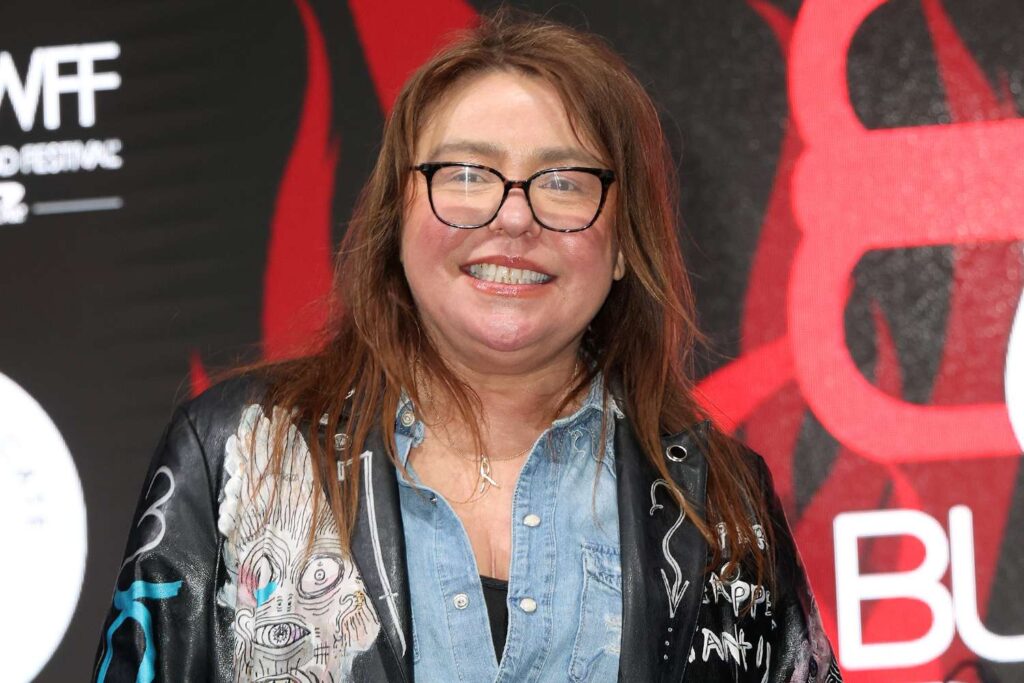
Rachael Domenica Ray, born August 25, 1968, in Glens Falls, New York, is an American television personality, cookbook author, and businesswoman. Raised partly in upstate New York, where her Sicilian-American mother managed several restaurants in Albany, Ray began her food industry career as a food buyer and manager at Macy’s Marketplace Gourmet before working as a cooking instructor at Cowan & Lobel, a gourmet market, where she developed the concept that would become her signature: 30-minute meals. A local CBS affiliate picked up the segment, which led to a Food Network deal, and 30 Minute Meals premiered in 2001, running for 11 seasons. She went on to host $40 a Day, Tasty Travels, and other Food Network programs before launching her own syndicated daytime talk show, Rachael Ray, in 2006 through Oprah Winfrey’s Harpo Productions; it ran for 17 seasons through 2023 and won three Daytime Emmy Awards. She has published 28 cookbooks since 1999, launched Every Day with Rachael Ray magazine in 2006, and founded the pet food brand Nutrish in 2008, whose parent company, Ainsworth Pet Nutrition, was acquired by J.M. Smucker in a $1.9 billion deal in 2018. She founded her own production company, Free Food Studios, in 2023 and continues to produce and host new programming, including Rachael Ray in Tuscany. She has been married to musician and entertainment attorney John M. Cusimano since 2005; the couple has no children by choice.
1. Television Earnings (2001-2026)
Ray’s television career spans 25 years and includes both Food Network programming and her own long-running syndicated talk show, which was the primary driver of her television income for nearly two decades.
- Early Food Network era, 30 Minute Meals and $40 a Day establishing her name (2001-2006): ~$500K/yr = $2.5M
- Rachael Ray Show launch through establishment, three Daytime Emmy wins (2006-2015): ~$8M/yr = $72M
- Peak syndication era, established host fees before the show’s 2023 conclusion (2015-2023): ~$10M/yr = $80M
- Free Food Studios and Rachael Ray in Tuscany, post-talk-show era (2023-2026): ~$3M/yr = $9M
Television earnings: $163.5M gross.
2. Nutrish Pet Food Brand Royalties (2008-2026)
Ray launched Nutrish in 2008, and it grew into the fastest-growing pet food brand in the category by 2016, eventually accounting for roughly two-thirds of parent company Ainsworth Pet Nutrition’s total sales. Ray has been consistently described as the brand’s licensor and spokesperson rather than an operating owner of Ainsworth itself, which manufactured and marketed the product. This distinction matters: when J.M. Smucker acquired Ainsworth for $1.9 billion in 2018, and Post Holdings later acquired the Nutrish brand from Smucker for $1.2 billion in 2023, these were sales of the manufacturing company, not a disclosed personal payout to Ray. Her actual personal proceeds from either transaction have never been made public. What is documented is her ongoing brand licensing royalty, which continued under both Smucker and, currently, Post Holdings’ ownership.
- Brand-building era, before the 2018 Ainsworth sale (2008-2018): ~$2M/yr = $20M
- Established brand era, continued licensing royalty under new corporate ownership (2018-2026): ~$3M/yr = $24M
Nutrish royalty income: $44M gross.
3. Cookbook Royalties (1999-2026)
Ray has published 28 cookbooks since her 1999 debut, covering everything from 30-minute meals to burgers to cooking for children, making her one of the most prolific cookbook authors among working television chefs.
- Early cookbook era, before major television fame (1999-2006): ~$300K/yr = $2.1M
- Established bestseller era, alongside the Rachael Ray Show’s peak (2006-2020): ~$1.5M/yr = $21M
- Recent era, continued output (2020-2026): ~$800K/yr = $4.8M
Cookbook royalties: $27.9M gross.
4. Every Day with Rachael Ray Magazine (2006-2017)
Ray launched Every Day with Rachael Ray magazine in 2006 in partnership with Reader’s Digest Association, and it published for roughly a decade, contributing advertising, licensing, and editorial fees before the publisher moved to sell the title.
- Magazine licensing and editorial fees (2006-2017, 11 years): ~$500K/yr = $5.5M
Magazine income: $5.5M gross.
5. Product Endorsements (2006-2026)
Beyond Nutrish, Ray has held a series of brand endorsement and licensing deals, including a 2006 partnership with Nabisco, a 2007 spokesperson deal with Dunkin’ Donuts, a 2007 bed linens collaboration with WestPoint Home, a recipe partnership with AT&T Wireless, and a 2016 home decor collaboration with PulteGroup, alongside a branded cookware and kitchen products line sold through mass retail.
- Endorsement and licensing income (2006-2026, 20 years): ~$700K/yr = $14M
Product endorsements: $14M gross.
6. Staple Gin (2024-2026)
In 2024, Ray extended her personal brand into spirits with the launch of Staple Gin, which she has actively promoted through 2025 and 2026.
- Staple Gin royalty and business income (2024-2026, 3 years): ~$300K/yr = $900K
Staple Gin: $900K gross.
7. Representation
Standard entertainment and licensing representation applies across Ray’s television, publishing, magazine, endorsement, and brand income.
- Representation on television earnings (10% x $163.5M): -$16.35M
- Representation on Nutrish royalty income (10% x $44M): -$4.4M
- Representation on cookbook royalties (10% x $27.9M): -$2.79M
- Representation on magazine income (10% x $5.5M): -$0.55M
- Representation on product endorsements (10% x $14M): -$1.4M
- Representation on Staple Gin (10% x $900K): -$0.09M
Total representation: -$25.58M.
8. Tax
Ray splits her time between an upstate New York primary residence and a Manhattan apartment. We use approximately 44% effective, reflecting high New York state tax exposure with somewhat less than full New York City tax burden given her upstate primary residence.
- Tax on all income net of representation (44% x $230.22M): -$101.30M
Total tax: -$101.30M.
9. Lifestyle Burn
Ray has been married since 2005 and has no children. Her spending history includes two significant disaster-related setbacks: a 2020 fire that destroyed her upstate New York home, which she rebuilt as closely as possible to the original, and 2021 flood damage to her Manhattan apartment from Hurricane Ida, both of which represent real, if non-recurring, costs layered on top of her ordinary lifestyle spending.
- Early career, modest spending (1995-2006, 11 years): ~$150K/yr = $1.65M
- Peak fame, expanding lifestyle (2006-2018, 12 years): ~$800K/yr = $9.6M
- Established wealth era, including fire rebuild and flood repair costs, plus a Tuscany property (2018-2026, 8 years): ~$1.2M/yr = $9.6M
Total lifestyle burn: ~$20.85M.
10. Real Estate
Ray and her husband bought a small cabin near Lake Luzerne, New York, in 2002 for $118,000, later expanding the property to roughly 200 acres. The original house was destroyed in a 2020 fire and rebuilt, not sold, so no purchase-to-sale gain applies. She also owns a Manhattan apartment, damaged by flooding in 2021 and since repaired, and has purchased a villa in Tuscany, Italy, featured in her show Rachael Ray in Tuscany, with no disclosed purchase price. No source provides a clean purchase-to-sale price pair for any property she currently owns, so no real estate gain is counted here.
Real estate: $0 counted (documented, unvalued).
11. The Nutrish Company Sale (Documented, Not Counted)
Ainsworth Pet Nutrition, the manufacturer of Ray’s Nutrish brand, was sold to J.M. Smucker for $1.9 billion in 2018, and the Nutrish brand itself was later sold again by Smucker to Post Holdings for $1.2 billion in 2023. Both are real, fully documented corporate transactions. What is not documented, and what we decline to estimate, is Ray’s personal financial participation in either sale. She has been consistently described as the brand’s licensor rather than an Ainsworth equity holder, and no source discloses what she personally received from either deal. This is deliberately excluded from the waterfall rather than assigned a speculative number.
Nutrish company sale proceeds: not counted (undisclosed personal participation).
12. Business Equity
Beyond the Nutrish royalty stream already counted, Ray’s personal brand and trademark, licensed across cookware and kitchen products, represents a standing asset with value distinct from any single year’s income. Her production company, Free Food Studios, founded in 2023 with longtime collaborators at Intentional Content, is not solely hers; A+E Networks later took a 50% stake in the studio in exchange for producing a slate of new programming, further diluting her personal ownership. This estimate is held conservatively to reflect that shared structure.
- Rachael Ray personal brand and partial production company stake, estimated value: +$8M
Business equity: +$8M.
13. Wealth Management
No independently documented wealth management program has been found for Ray beyond the business interests already priced above.
Wealth Management: None reported ($0).
Net Worth Waterfall
| Line Item | Amount |
|---|---|
| Television earnings (2001-2026) | +$163.5M |
| Nutrish royalty income (2008-2026) | +$44M |
| Cookbook royalties (1999-2026) | +$27.9M |
| Every Day with Rachael Ray magazine (2006-2017) | +$5.5M |
| Product endorsements (2006-2026) | +$14M |
| Staple Gin (2024-2026) | +$900K |
| Less: representation | -$25.58M |
| Less: tax | -$101.30M |
| Less: lifestyle burn (era-scaled, consumed only) | -$20.85M |
| Real estate | $0 |
| Nutrish company sale proceeds | not counted |
| Rachael Ray brand and production company equity (estimated) | +$8M |
| Wealth Management | $0 |
| Raw Total | $116.07M |
| Total Net Worth (rounded) | $115M |
Why Our Figure Differs From Consensus
Our build lands at $115M, above the $100M figure widely cited by Celebrity Net Worth and repeated across most outlets. The gap comes primarily from weighting her 17-season syndicated talk show more heavily than most write-ups do, alongside an ongoing Nutrish licensing royalty that most competitor figures appear to fold into a single vague “pet food brand” line rather than pricing across two distinct corporate ownership eras. Notably, our figure does not include any personal proceeds from either the $1.9 billion Ainsworth sale in 2018 or the $1.2 billion Nutrish brand sale in 2023, both of which are real, sizable, fully documented transactions whose effect on Ray’s personal wealth remains genuinely unknown. If her personal participation in either sale were ever disclosed, this number could move significantly higher.
The Talk Show Host Whose Biggest Deal Was Never Disclosed
Rachael Ray’s financial story is defined less by any single number than by an unusual gap in the record: the pet food brand she built from scratch changed corporate hands twice, for a combined $3.1 billion in enterprise value, and neither time did anyone disclose what she personally walked away with. What is documented is steadier and less dramatic, 17 years of a syndicated talk show, 28 cookbooks, and a licensing royalty that survived two changes of corporate ownership without interruption. It is a career built on being reliably, consistently everywhere, television, bookshelves, the pet food aisle, rather than on any one transaction the public ever got to see the full number on.ur, was enormous and underserved, and she understood them because she was one of them. The cookbooks kept selling because the recipes worked, not because of her credentials. The show ran for 17 years because she was good company, not because she intimidated anyone. In a field where formal pedigree has long been treated as a prerequisite for commercial success, she is the strongest possible argument for the opposite.