$150 Million
WHO HE IS
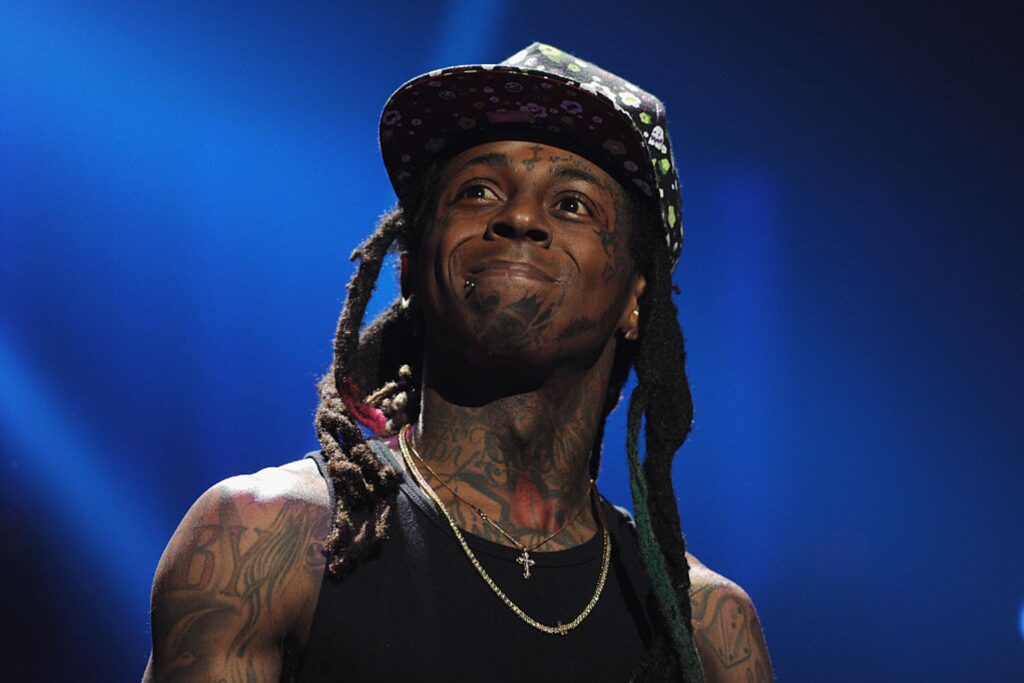
Born Dwayne Michael Carter Jr. on September 27, 1982 in New Orleans, Louisiana, Lil Wayne began rapping at eight years old and signed to Cash Money Records at nine after leaving a message on Birdman’s answering machine. He was performing professionally at eleven. By the mid-2000s, during what he called his mixtape era, he released so many free projects — Dedication, No Ceilings, Da Drought 3 — that he became widely regarded as the best rapper alive before his commercial breakthrough Tha Carter III even arrived. When it did, in June 2008, it sold over a million copies in its first week, the first rap album to achieve that in years. He is credited with discovering and launching Drake and Nicki Minaj through Young Money Entertainment, two artists who became among the most commercially successful musicians of the following decade. His subsequent years were defined as much by litigation as by music: a public and devastating falling out with Cash Money and Birdman consumed much of 2012 to 2018. The resolution of that dispute, and the subsequent sale of Young Money to Universal Music Group, transformed his financial position. Tha Carter VI, released June 2025, marked his return as a solo force.
1. MUSIC SALES, STREAMING, AND PUBLISHING
Wayne’s catalog spans 14 studio albums, dozens of mixtapes, and hundreds of feature appearances across nearly four decades. Tha Carter III sold 2.8 million copies in 2008 and remains one of the bestselling rap albums of the streaming era in catalog terms. Lollipop reached number one on the Billboard Hot 100. His feature output has been prolific and financially significant throughout his career.
However, the Cash Money dispute materially impacted the royalty income he received on his catalog during 2012–2018, as the litigation meant withheld royalties were contested rather than paid. The 2018 settlement restored a material portion of those rights.
Estimated lifetime music sales, streaming, and publishing income: approximately $100M gross. This figure is moderated by the Cash Money royalty withholding during the litigation years.
2. TOURING
Wayne has been a consistent touring force across his career, with particularly strong periods in 2008–2012 at the peak of his commercial dominance. His career lifetime touring gross is estimated at approximately $150M across solo and co-headlining dates, festival appearances, and international shows.
Personal net at approximately 35% of gross: approximately $52M.
3. YOUNG MONEY AND THE $100M CATALOG SALE
This is the load-bearing event in Wayne’s financial story. Young Money Entertainment, which he founded and built into one of the most commercially significant labels in hip-hop — home to Drake and Nicki Minaj during their breakthrough years — was sold to Universal Music Group in June 2020 for a reported sum in excess of $100M, confirmed by Music Business Worldwide. The sale included the masters of his own music and the pre-2018 recordings of artists signed to Young Money.
However, a significant portion of the proceeds were used to settle a $20M+ lawsuit from his former manager Ronald Sweeney, and to finalize his financial separation from Birdman and Cash Money. Net proceeds to Wayne personally after legal settlements: approximately $75M.
4. GKUA CANNABIS
Wayne launched GKUA Ultra Premium cannabis in California in 2019, positioned as a luxury product targeting the premium legal cannabis market. While specific revenue figures are not publicly disclosed, the brand has maintained a presence in California dispensaries.
Estimated value/income from GKUA to date: approximately $5M.
5. YOUNG MONEY APAA SPORTS
Wayne’s sports agency represents professional athletes and earns management fees on athlete contracts. A growing and underreported business.
Estimated income to date: approximately $5M.
6. CATALOG VALUATION
Wayne’s catalog is among the deepest in hip-hop: 40 years of recorded output, hundreds of features, and a mixtape archive that defined an era. The Carter series, No Ceilings, and the feature catalog collectively generate consistent streaming income. However, his personal publishing ownership is complicated by the Cash Money structure and the Young Money sale — the pre-2018 masters were part of the UMG transaction. His remaining personal publishing rights and post-2018 catalog generate the ongoing royalty base.
We apply 18x for a catalog of this depth and proven longevity, on an estimated $4M per year in personal royalties from remaining owned rights.
Catalog value: $4M × 18 = $72M. After 25% illiquidity discount: $54M
Note: Wayne sold the pre-2021 Young Money masters to UMG in June 2020 for $100M+ — that is realized cash already in the waterfall. The remaining catalog covers post-2020 recordings through Republic/UMG where he does not own masters outright. The 18x multiple reflects his proven legacy status and the quality of the remaining catalog.
7. REPRESENTATION
Standard management and booking. We model 12% on touring and endorsement income.
Estimated lifetime representation: approximately $20M.
8. TAX
Wayne is a Louisiana resident, based in New Orleans. Louisiana has a relatively low state income tax rate. Combined federal and Louisiana effective rate: approximately 40%.
Estimated lifetime taxes: approximately $102M.
9. REAL ESTATE
Wayne purchased a Hidden Hills, California mansion for $15.4M in 2021. He sold a Miami Beach property for $22.6M in 2023, having purchased it years earlier. Net gain on Miami sale: approximately +$8M. Hidden Hills purchased 2021 — minimal appreciation to date.
10. LIFESTYLE
Wayne is known as a genuine spender: skating, luxury lifestyle, and personal expression through fashion and entertainment are documented aspects of his spending. He also had significant legal fees across the Cash Money and Sweeney litigation periods.
Era-scaled consumed expenditure plus legal costs:
- 2000–2007 (rising star, building): approximately $300K/year
- 2008–2012 (peak commercial era, heavy spend): approximately $2M/year
- 2013–2018 (litigation era, legal costs dominant): approximately $3M/year (including legal fees)
- 2019–2026 (post-settlement, established): approximately $1.5M/year
Total: ($300K × 8) + ($2M × 5) + ($3M × 6) + ($1.5M × 7) = $2.4M + $10M + $18M + $10.5M = approximately $41M.
RICHPEEK ESTIMATE: $150 Million
| Calculation | Amount |
|---|---|
| Lifetime music sales, streaming, and publishing | ~$100M |
| Lifetime touring income (personal gross ~35%) | ~$52M |
| Young Money sale (net after legal settlements) | ~$75M |
| GKUA cannabis and APAA Sports | ~$10M |
| Total gross income | ~$237M |
| Minus representation (~12% on touring) | -$20M |
| Minus tax (~40%, Louisiana) | -$102M |
| Minus lifestyle and legal costs (era-scaled) | -$41M |
| Net cash accumulated | ~$74M |
| Plus publishing catalog value (18x × $4M, 25% illiquidity discount) | +$54M |
| Plus real estate (Miami gain + Hidden Hills) | +$8M |
| Plus investment compounding (~6% real on retained cash) | +$15M |
| Total Net Worth | ~$151M → rounded to $150M |
We land at $150 million. Sources ranging to $200M are typically applying full catalog value without the legal settlement deductions; sources below $150M typically exclude the catalog asset and the Young Money sale proceeds net figure. Our build at $150M reflects the honest waterfall.
The years Cash Money cost him:
The most significant financial fact about Lil Wayne that most analyses miss is the opportunity cost of the Cash Money litigation. From roughly 2012 to 2018, he was locked in a dispute that withheld royalties, prevented album releases on his preferred timeline, and consumed his creative and legal energy during what should have been the most productive compounding years of his career. He lost six years of catalog accumulation at peak streaming growth. The Young Money sale in 2020 was partly a correction of that: converting an illiquid, contested asset into $100M in immediate liquidity. He had the right idea. He just executed it several years later than the dispute allowed.
The voice that defined a decade:
Between 2005 and 2011, Lil Wayne appeared on more songs, logged more mixtape hours, and coined more phrases that entered the cultural vocabulary than any other artist in any genre. The commercial peak with Tha Carter III simply confirmed what the streets already knew. His financial story is messier than his artistic legacy — defined by a betrayal from the label that raised him, years of legal battle, and the complicated arithmetic of building an empire under someone else’s roof. But the Young Money sale, and the $72M catalog still generating royalties in 2026, are the proof that the empire was real even if the ownership fight was brutal.