$40 Million
Who She Is
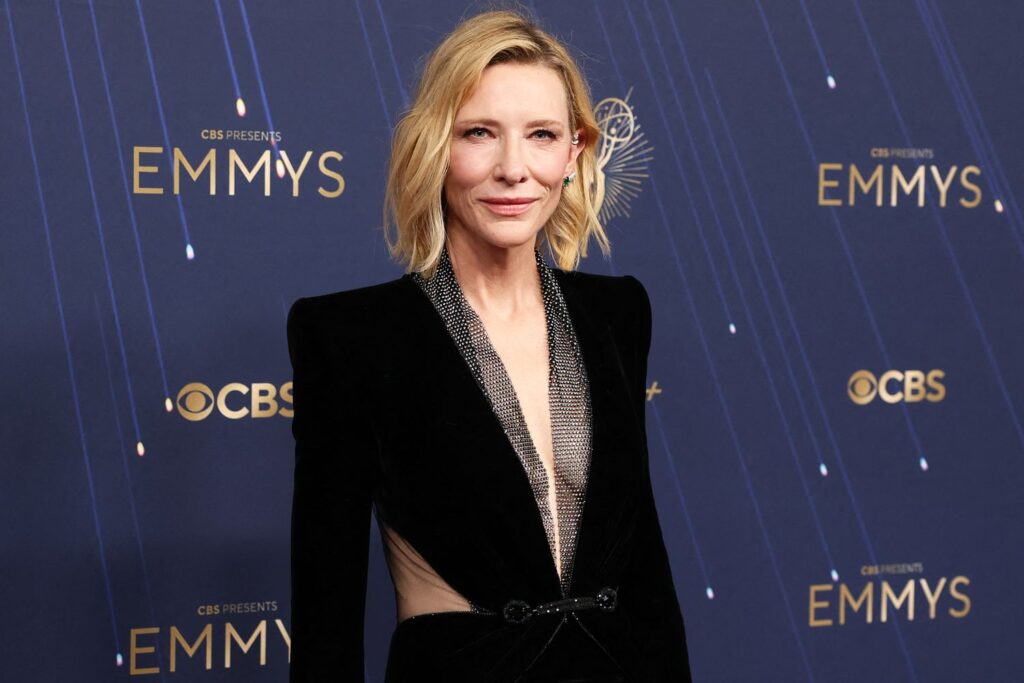
Catherine Élise Blanchett, born May 14, 1969, in Melbourne, Australia, is an Australian actress widely regarded as one of the most versatile performers of her generation. She trained at Sydney’s National Institute of Dramatic Art, graduating in 1992, and built her early career on the Australian stage before her breakthrough as Queen Elizabeth I in 1998’s Elizabeth earned her first Academy Award nomination. She won her first Oscar, Best Supporting Actress, for playing Katharine Hepburn in 2004’s The Aviator, and a second, Best Actress, for 2013’s Blue Jasmine, making her one of only four actors to win Best Actress after previously winning Best Supporting Actress. She has since accumulated a total of eight Academy Award nominations, the most of any Australian actor in history, spanning work with directors including Martin Scorsese, Peter Jackson, Todd Haynes, Terrence Malick, and Pedro Almodóvar. Her best-known commercial roles include Galadriel across the Lord of the Rings and Hobbit trilogies, Hela in Marvel’s Thor: Ragnarok, and an ensemble lead in Ocean’s 8. She co-founded the production company Dirty Films with her husband, playwright and director Andrew Upton, in 2008, the same year the couple began a five-year run as co-artistic directors of the Sydney Theatre Company. She has been married to Upton since 1997, and the couple have four children. She announced in April 2025 that she intends to retire from acting. She has lived across Australia, England, and Los Angeles over the course of her career.
1. Film Career
Blanchett’s film salary history is unusually well-documented for an actress of her stature, and the documentation reveals a career built more around artistic collaboration than maximizing individual paychecks. She has stated directly, in a televised interview, that she was paid essentially nothing for the Lord of the Rings trilogy, joking that she “basically got free sandwiches” and received no backend participation despite the trilogy grossing nearly $3 billion worldwide, a choice she made specifically to work with director Peter Jackson. Her own account page on Celebrity Net Worth lists a similarly nominal $10,000 fee for 2010’s Robin Hood, alongside a confirmed $750,000 for 2005’s Little Fish and a standout $7 million for 2011’s Hanna, by far her best-documented single-project payday from that stretch of her career.
Her later-career blockbuster work commanded more typical studio rates: reported figures put her fee at approximately $6 million each for 2017’s Thor: Ragnarok and 2018’s Ocean’s 8, and industry reports place her total earnings at $13 million across the twelve months spanning August 2017 to August 2018, a period covering both films. Her return to Middle-earth for the Hobbit trilogy came on improved terms relative to the original Lord of the Rings deal, reflecting her elevated stature as a two-time Oscar winner by that point.
- Early career, pre-stardom through The Aviator (1992-2004): ~$10M
- Lord of the Rings trilogy, confirmed minimal to no salary (2001-2003): ~$0.5M
- Little Fish, confirmed salary (2005): ~$0.75M
- Robin Hood, confirmed nominal fee (2010): ~$0.01M
- Hanna, confirmed salary (2011): ~$7M
- Other film work, 2004-2012 (Notes on a Scandal, Elizabeth: The Golden Age, I’m Not There, Indiana Jones and the Kingdom of the Crystal Skull, The Curious Case of Benjamin Button): ~$15M
- Hobbit trilogy, improved terms from original deal (2012-2014): ~$3M
- Established blockbuster and prestige era, including confirmed Thor: Ragnarok and Ocean’s 8 fees (2013-2019): ~$27M
- Stateless and Mrs. America, television lead and executive producer roles (2020): ~$4M
- Don’t Look Up and Nightmare Alley (2021): ~$4M
- Tár, lead role and executive producer (2022): ~$5M
- Guillermo del Toro’s Pinocchio and The School for Good and Evil, voice roles (2022): ~$1.5M
- A Manual for Cleaning Women and The New Boy, lead and producer (2023): ~$2.5M
- Borderlands (2024): ~$5M
- Rumours, lead and executive producer (2024): ~$1.5M
- Disclaimer, Apple TV+ limited series, lead role and executive producer across seven episodes, comparable to prestige-tier per-episode rates commanded by other Oscar-winning leads on the platform (2024): ~$7M
- Black Bag, Steven Soderbergh spy thriller for Focus Features (2025): ~$5M
- Father Mother Sister Brother and other 2025 film and stage work, including her Barbican stage run in The Seagull: ~$1.8M
Phase total: ~$100.3M.
2. Endorsements
Blanchett signed a reported $10 million deal with Giorgio Armani in 2013, confirmed by The Hollywood Reporter, and has also maintained a long-running relationship with Japanese skincare brand SK-II. No individual figures beyond the confirmed Armani deal have been publicly disclosed for her other brand partnerships.
- Giorgio Armani, confirmed deal (2013): ~$10M
- SK-II and other endorsement relationships: ~$8M
Phase total: ~$18M.
3. Sydney Theatre Company
Blanchett and her husband Andrew Upton served as co-artistic directors of the Sydney Theatre Company from 2008 to 2013, a nonprofit arts leadership role that paid substantially less than her film work but represented a significant multi-year commitment during which she also performed on stage in productions including A Streetcar Named Desire.
- Sydney Theatre Company co-artistic director salary (2008-2013): ~$2M
4. Business Assets
Blanchett co-founded the production company Dirty Films with Andrew Upton in 2008, alongside business partner Coco Francini, which has backed films including Little Fish, Hanna, Truth, Carol, Manifesto, and Mrs. Harris Goes to Paris. Acting income from Dirty Films-produced projects in which Blanchett appeared is already reflected in Section 1. No standalone revenue, profit, or valuation figures for the company itself have been publicly disclosed, so it is excluded from the waterfall rather than assigned a speculative figure.
Blanchett is also, per a confirmed Forbes interview, the Creative Director and an investor in Toku Saké, a Japanese sake brand, describing a long-standing personal interest in sake production dating back roughly fifteen years before the investment came together. No investment amount, ownership percentage, or company valuation has been publicly disclosed for her stake, so this position is flagged here as a real but unpriced asset rather than assigned a speculative figure.
- Dirty Films, standalone company valuation: excluded (no disclosed figure)
- Toku Saké, confirmed Creative Director role and investor stake: excluded (no disclosed investment size or valuation)
5. Representation
Blanchett’s career has been managed through standard international talent representation across her film, television, and endorsement income for more than three decades. A blended representation rate of 13 percent, covering agent, manager, and legal fees, is applied across her combined career earnings.
Representation (13% blended on $120.3M combined gross): -$15.64M.
6. Tax
Blanchett has held tax residency across multiple high-tax jurisdictions over her career, including Australia and the United Kingdom, where the family lived in Brighton and later East Sussex for extended periods. Neither jurisdiction offers the loan-out company advantages available to US-based talent, resulting in a blended effective rate toward the higher end of the range typically seen for major entertainment talent.
Tax (45% blended on $104.66M post-representation): -$47.1M.
Combined gross across film ($100.3M), endorsements ($18M), and Sydney Theatre Company salary ($2M) totals $120.3M. After representation (-$15.64M) and tax (-$47.1M), approximately $57.56M remains before lifestyle burn.
7. Lifestyle Burn
Blanchett has raised four children while relocating internationally multiple times, from Sydney to Brighton, England, back to Sydney, and later to East Sussex, England, with reported consideration of a further move to Los Angeles. Her role as a UNHCR Goodwill Ambassador since 2016 involves substantial personal travel to refugee-affected regions as part of her advocacy work, a genuine documented cost beyond ordinary celebrity lifestyle spending.
- Early career (1992-2004, 12 years): ~$150K/yr consumed = $1.8M
- Rising fame and Sydney Theatre Company era (2005-2012, 8 years): ~$500K/yr consumed = $4M
- Established era, including UNHCR ambassador travel and multiple international relocations (2013-2025, 12 years): ~$900K/yr consumed = $10.8M
Total lifestyle burn: ~$16.6M. Available to accumulate: ~$40.96M.
This burn figure represents approximately 16 percent of Blanchett’s post-representation, post-tax income, comfortably within a documented and justified range given her family size and multiple international moves.
8. Real Estate
Blanchett and Upton purchased Bulwarra, a historic 1877 Hunters Hill estate on Sydney’s harbor, in 2004 for $10 million from merchant banker Jim Dominguez. They spent more than $8 million over a three-year rebuild completed in 2010, nearly doubling the property’s internal size while preserving its sandstone facade, bringing their total documented investment to $18 million. A first sale attempt in 2015 fell through when a Chinese buyer, who had agreed to pay $19.8 million, defaulted after Chinese capital-outflow restrictions blocked the funds from leaving the country. The property returned to market and finally sold in January 2017 for approximately $19.9 million, a price that set a new record for the suburb, giving the couple a documented gain of roughly $1.9 million AUD, or approximately $1.4 million USD, once the renovation cost is weighed against the eventual sale price. The family subsequently purchased Highwell House, a historic manor near Crowborough in East Sussex, England, in 2015 for a reported £3 million, later adding an adjoining roughly 100-acre farm property nearby for a separately reported sum in the same range. No resale or independent current appraisal has been publicly disclosed for either East Sussex property, so both are held at documented cost with no additional gain claimed.
- Bulwarra, Hunters Hill, Sydney, documented gain after renovation cost (2004 purchase $10M plus $8M renovation vs. 2017 sale ~$19.9M, all AUD): +$1.4M USD
- Highwell House and adjoining farm property, East Sussex, held at documented cost (2015-present): no gain claimed
Real estate appreciation: +$1.4M (documented gain only, after accounting for renovation cost).
9. Wealth Management
No disciplined investment program or wealth manager has been publicly documented for Blanchett. Default applies.
Wealth Management: None reported ($0).
Net Worth Waterfall
| Line Item | Amount |
|---|---|
| Film career (1992-2025) | +$100.3M |
| Endorsements (Armani, SK-II, and others) | +$18M |
| Sydney Theatre Company salary (2008-2013) | +$2M |
| Less: representation (13% blended on $120.3M combined gross) | -$15.64M |
| Less: tax (45% blended, Australia/UK resident) | -$47.1M |
| Less: lifestyle burn (era-scaled, consumed only) | -$16.6M |
| Available to accumulate | +$40.96M |
| Real estate appreciation (Bulwarra, Sydney, documented gain net of renovation cost) | +$1.4M |
| Dirty Films (standalone company valuation) | $0 (undisclosed) |
| Toku Saké (Creative Director role and investor stake) | $0 (undisclosed) |
| Wealth Management | $0 |
| Total Net Worth | ~$42.36M → $40M |
Our calculation: $40 Million.
Why Our Figure Differs From Consensus
Celebrity Net Worth places Cate Blanchett at $95 million. Our independent calculation produces approximately $40 million, substantially below consensus, and the gap is unusually well-supported by Blanchett’s own public statements and by figures published directly on CNW’s own page. Blanchett has stated on the record that she was paid effectively nothing for the Lord of the Rings trilogy, one of the highest-grossing franchises in film history, and CNW’s own career-earnings table lists a nominal $10,000 fee for 2010’s Robin Hood alongside a confirmed $750,000 for Little Fish, figures that reflect a working pattern of prioritizing artistic collaborators over maximizing individual paychecks across a meaningful share of her filmography. This pattern is consistent with her public advocacy on Hollywood’s gender pay gap, in which she has described turning down roles rather than accept less than a male co-star, behavior that only makes sense for someone not simply chasing every available dollar. This figure also fully accounts for her more recent, higher-paying work: her 2024 Apple TV+ limited series Disclaimer, on which she served as both lead and executive producer across seven episodes, is valued here at a per-episode rate comparable to other Oscar-winning leads on the platform, and her 2025 Soderbergh spy thriller Black Bag is counted at a full studio-scale fee. Two additional factors pull the total down relative to a simpler estimate: Blanchett has spent much of her career as a tax resident of Australia and the United Kingdom, neither of which offers the loan-out company advantages available to Hollywood talent based in the United States, and her role as a UNHCR Goodwill Ambassador involves genuine, ongoing personal travel costs tied to her advocacy work. Working in the other direction: her Hobbit-era and post-2013 blockbuster fees, including confirmed Thor: Ragnarok and Ocean’s 8 paydays, show she has commanded conventional studio rates when the project called for it, her Sydney real estate transaction was considerably larger in nominal terms than CNW’s own page suggests, with her Bulwarra estate selling for nearly $20 million AUD in 2017 after a failed sale attempt two years earlier, and her confirmed role as Creative Director and investor in Toku Saké, a Japanese sake brand, carries no disclosed valuation and is excluded here rather than estimated. If either that position or Dirty Films’ standalone value were ever disclosed, this figure would move higher.
The Star Who Worked for Sandwiches
Cate Blanchett has spent three decades as one of the most decorated actresses alive, and the single detail that best explains the distance between the commonly cited $95 million and this calculation’s $40 million is a joke she made on live television about getting paid almost nothing for one of the highest-grossing trilogies ever made. Most actors who helped gross nearly $3 billion at the box office would point to a fortune built on that franchise alone. Blanchett points to sandwiches. That choice, repeated in smaller ways across a filmography stacked with Terrence Malick meditations, Todd Haynes period pieces, and festival films that paid a fraction of what her name could have commanded elsewhere, is not a footnote to her career. It is the throughline. She has built one of the most respected bodies of work of her generation by consistently choosing the collaborator over the check, and the honest math on her finances reflects exactly that trade.