$50 Million
WHO HE IS
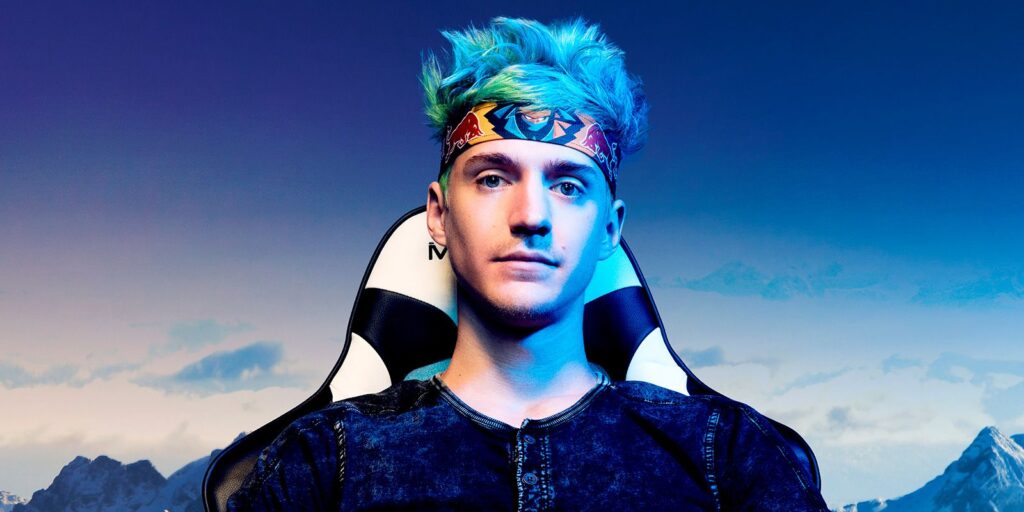
Born Richard Tyler Blevins on June 5, 1991, in Taylor, Michigan, and raised in Grayslake, Illinois, Tyler Blevins spent his teenage years competing in Halo tournaments before becoming the most recognizable face professional gaming has ever produced. His father introduced him to video games. His competitive instinct did the rest. He moved through Halo, H1Z1, and PUBG before Fortnite: Battle Royale arrived in late 2017 and offered him the ideal stage – a mass-market, visually accessible game that attracted celebrity attention and mainstream media coverage in a way no gaming title before it had. On March 14, 2018, he played Fortnite live with Drake, Travis Scott, and NFL wide receiver JuJu Smith-Schuster. More than 635,000 people watched simultaneously, setting a Twitch record for a single individual stream. Within weeks, he was on late-night television, in a Super Bowl commercial, on the cover of ESPN The Magazine as the first professional gamer to receive that honor, and named one of Time magazine’s 100 Most Influential People. He made nearly $10 million in 2018 by his own estimate.
In August 2019, he left Twitch for Microsoft’s Mixer platform in a deal reported by Business Insider at $20 million to $30 million. Mixer shut down in July 2020 without finding an audience, and the streamers Microsoft had recruited to the platform – Ninja among them – received buyout payments. He returned to Twitch in September 2020, signing a new multi-year exclusive deal. In March 2024, he announced he had been diagnosed with melanoma – a skin cancer discovered during a routine annual mole check – on the bottom of his foot. One week later, he announced he was cancer-free following a biopsy. In 2024, he joined the Jerry Jones-backed gaming company GameSquare Holdings as Chief Innovation Officer. He is the most-followed user in Twitch history, with over 19 million followers. He lives in Illinois with his wife Jessica. He has raised well over $1 million for charity through livestream events and personal donations.
1. STREAMING INCOME
Ninja’s streaming career divides into four distinct financial phases.
Early and building phase (2011–2017): Halo, H1Z1, PUBG, and early Fortnite streaming. Twitch subscriptions at modest sub counts (peak perhaps 50,000 at $2.50 net per subscription after Twitch’s cut), brand deals starting to emerge. Combined estimate: approximately $5M.
Fortnite peak (2018–2019): The defining financial period of his career. At his peak, Ninja had over 100,000 paid Twitch subscribers at $5 per month. Twitch’s standard split gives top-tier partners 70 percent, meaning approximately $350,000 per month in subscription revenue alone. Combined with advertising, donations (bits), and brand deal income running at his peak celebrity level – Electronic Arts paid him $1 million to promote Apex Legends in a single promotion in 2019 – his total income in this period was extraordinary. Forbes documented his 2018–2019 income at approximately $17M combined. Combined streaming and brand income in this phase: approximately $20M.
Mixer era and aftermath (2019–2020): The Mixer exclusivity deal of $20–30M represents the single largest income event of his career. It was a platform-level acquisition of his audience and brand, not a performance-based payment, and it was paid regardless of the eventual failure of Mixer. An additional buyout was received when Microsoft closed Mixer in 2020 and released contracted streamers; Ninja’s specific share of the reported $40M combined creator buyout has not been disclosed but was significant. Combined Mixer-period income: approximately $25M.
Post-return phase (2020–2026): Return to Twitch under a new multi-year exclusive deal, with a meaningfully smaller Fortnite-era audience. His Twitch subscriber count is substantially below peak. Annual income in this phase has been estimated at $15M to $20M in recent years across streaming and brand deals, with GameSquare adding an executive compensation component. Combined for the period: approximately $25M.
Total lifetime streaming and platform income: approximately $75M
2. ENDORSEMENTS AND BRAND DEALS
Beyond the Apex Legends promotion, Ninja has maintained consistent brand relationships throughout his career. Red Bull Esports signed him in June 2018, producing live events including Rise Till Dawn in Chicago. Adidas produced the “Time In” Nite Jogger shoe collaboration. La Roche-Posay engaged him for a skin-cancer awareness campaign following his 2024 melanoma diagnosis. Additional brand work across gaming peripherals, food brands, and entertainment properties adds meaningfully.
Total endorsement income: approximately $25M
3. OTHER INCOME
Book: Ninja: Get Good (Penguin Random House) – a gaming guide that was a commercial success. Combined with Ninja: The Most Dangerous Game (a graphic novel) and other licensed products: approximately $2M.
Film and television: cameos in Free Guy (2021, with Ryan Reynolds) and voice work in Hotel Transylvania: Transformania (2022). MasterClass creator course (2022). Combined: approximately $2M.
Merchandise: his own line running across his peak and post-peak periods. Approximate net to Ninja: approximately $5M across the career.
4. REPRESENTATION
Ninja has been managed by Loaded, a gaming-focused talent management firm that also represents other top streamers. Standard gaming management rate runs approximately 10 to 15 percent. We model 12 percent.
Representation at approximately 12 percent: approximately minus $13M
5. TAX
Ninja has been Illinois-based throughout his adult professional life. Illinois has a flat individual income tax rate of 4.95 percent, compared to California’s 13.3 percent and New York’s 10.9 percent top rate. Combined with the federal rate, his effective blended rate is approximately 40 percent – meaningfully lower than the California-based creators in this database who face a combined effective rate of approximately 42 percent even with loan-out company structures. The Illinois advantage is structural and does not require the loan-out corporate architecture that California talent uses to achieve partial relief.
Tax at approximately 40 percent blended effective: approximately minus $38M
REAL ESTATE
Ninja and Jessica own property in the Chicago, Illinois area. Illinois real estate has appreciated modestly compared to California markets.
Estimated net real estate appreciation: approximately plus $3M
6. LIFESTYLE AND EXPENSES
Consumed spending only. Ninja is not documented as an extreme consumer. He and Jessica have an active and visible lifestyle but no superyacht, no exotic car fleet, and no trophy real estate portfolio. Charity giving has been substantial.
- Early (2011–2017, 7 years): competitive gamer building phase; approximately $250K per year; $1.75M
- Peak (2018–2019, 2 years): heightened lifestyle commensurate with his profile; approximately $2M per year; $4M
- Mixer and post-return (2020–2026, 6 years): settled lifestyle, Illinois-based, charitable giving; approximately $1.5M per year; $9M
Total lifetime lifestyle burn: approximately $15M
RICHPEEK ESTIMATE: $50 Million
| Calculation | Amount |
|---|---|
| Lifetime streaming and platform income (including Mixer deal) | ~$75M |
| Endorsements and brand deals | ~$25M |
| Book, film, merchandise, and other income | ~$9M |
| Total gross earnings | ~$109M |
| Minus representation (~12%, Loaded management) | -$13M |
| Minus tax (~40% blended effective, Illinois-based) | -$38M |
| Minus lifestyle burn (consumed only) | -$15M |
| Available to accumulate | ~$43M |
| Plus real estate appreciation | +$3M |
| Plus wealth management | $0 (None reported) |
| Total Net Worth | ~$46M → $50M |
We land at $50 million, matching Celebrity Net Worth and the consistent estimate across most credible sources. The defining financial event of Ninja’s career is the Mixer deal – a $20 to $30 million platform exclusivity payment that arrived in 2019, the same year Microsoft was investing heavily in its streaming ambitions, and paid out fully despite Mixer closing just twelve months later. Had he remained on Twitch through the pandemic period in 2020 when streaming viewership exploded globally, his accumulated income might have been materially higher. Instead, the Mixer gamble cost him the best period in platform streaming history in exchange for a guaranteed payday that remains the largest single transaction on his balance sheet.
The Illinois tax advantage, while modest in absolute dollar terms, is worth acknowledging: across a $109 million gross career, the difference between the Illinois combined rate of 40 percent and California’s comparable figure of 42 percent represents approximately $2 million in additional retained income. It is not the reason he is based in Illinois, but it is a structural benefit that has compounded quietly across his career.