$500 Million
Who He Is
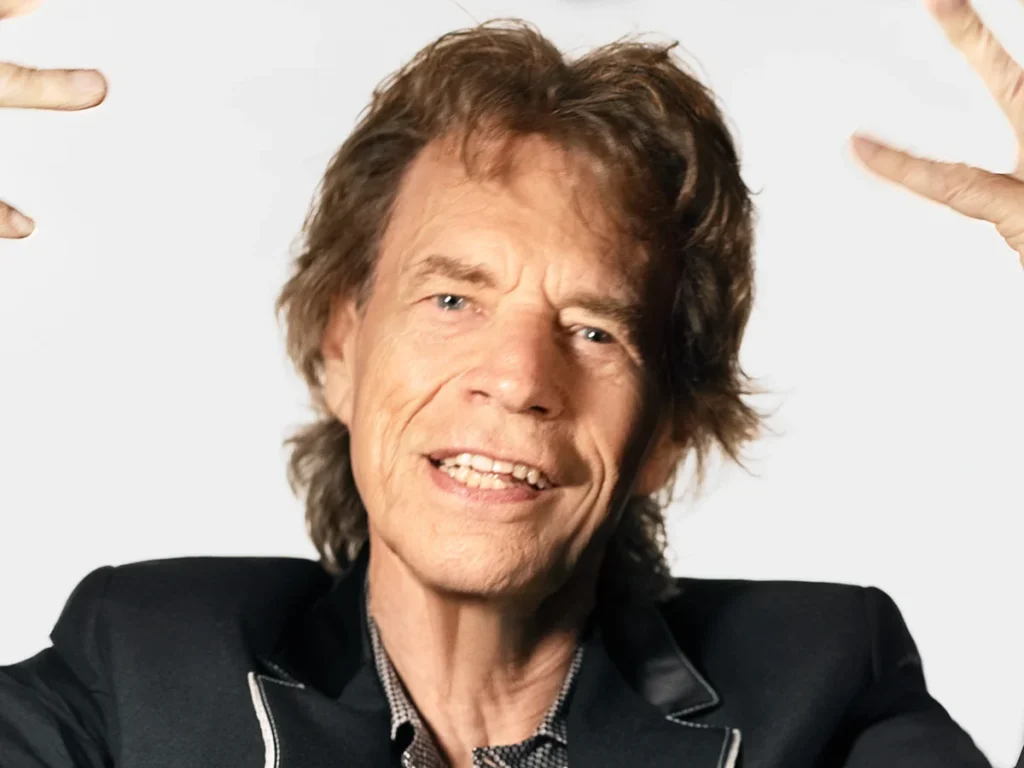
Sir Michael Philip Jagger, born July 26, 1943, in Dartford, Kent, England, is the lead vocalist and co-founder of the Rolling Stones, a band active for more than six decades and still touring. The Stones have sold over 200 million records worldwide and have staged some of the highest-grossing concert tours in history, breaking the all-time record three separate times. Jagger co-wrote the majority of the catalog with guitarist Keith Richards, producing “Paint It Black,” “Gimme Shelter,” “Sympathy for the Devil,” “Start Me Up,” “Honky Tonk Women,” “Jumpin’ Jack Flash,” and hundreds of others. He has eight children with five different women. Per Fortune, the Stones generated over $1.5 billion in total gross revenue from touring alone between 1989 and 2001.
1. Rolling Stones Earnings – 1963-1979 (near zero net)
The Stones’ early years were financially catastrophic despite the commercial success. Management agreements with Andrew Loog Oldham were exploitative, and the Decca Records contract stripped most recording revenue. By 1971 each member owed the UK government approximately $250,000 in back taxes, the top combined rate on investment income had reached 98%. The band left England on April 5, 1971 (the last day of the UK tax year) and relocated to the south of France, recording Exile on Main St. at Keith Richards’s rented Villa Nellcote. They sheltered subsequent earnings in a Netherlands holding company.
Despite grossing tens of millions across the late 1960s and 1970s, the net picture is bleak: near-confiscatory UK taxes, poor original deal structures, the costs of the tax exile and Dutch entity setup, heavy legal fees, and documented financial disorganization left very little accumulated. We model this entire 16-year period as approximately $10 million net to Jagger personally, a conservative but honest figure.
2. Rolling Stones Earnings – 1980s and 1990s
From the Steel Wheels/Urban Jungle Tour (1989-1990) onward, the Stones operated as a properly structured international touring business. Documented tour grosses:
- Steel Wheels/Urban Jungle Tour (1989-1990): ~$260M gross
- Voodoo Lounge Tour (1994-1995): $320M gross (world record at the time)
- Bridges to Babylon / No Security Tour (1997-1999): ~$350M gross
Total band gross 1989-1999: approximately $930 million. The Stones split touring profits among four core members (Jagger, Richards, Wood, Watts/Jordan), management (~15%), and production costs which on stadium tours run 30-40% of gross. Jagger’s personal share after production, management, and his non-UK tax structure (approximately 20% effective on profit flowing through Dutch entities): approximately $130 million.
3. Rolling Stones Earnings – 2000s through 2024
Documented tour grosses:
- Licks Tour (2002-2003): ~$300M gross
- A Bigger Bang Tour (2005-2007): $558M gross (Guinness World Record)
- 50 and Counting Tour (2012-2013): ~$260M gross
- No Filter Tour (2017-2021): ~$415M gross
- Hackney Diamonds Tour (2024): ~$130M gross (North America leg documented)
Total band gross 2000-2024: approximately $1.66 billion. At the same split structure and effective rate: Jagger’s personal net from this phase approximately $230 million.
4. Rolling Stones Catalog
The post-1971 Jagger-Richards catalog, Exile on Main St. through Hackney Diamonds, is owned and controlled by the band through their own publishing entity. Pre-1971 catalog ownership was largely captured by Decca and early management structures and represents a much smaller royalty share for Jagger personally.
Annual songwriter and publishing royalties on the post-1971 catalog flowing to Jagger personally: estimated $12-15 million per year. Tier: legacy 25+ years evergreen rock catalog, 20x multiple. Value of Jagger’s personal stake: $260 million.
5. Real Estate
Jagger owns properties documented at approximately $250 million current market value including: a beachfront compound on Mustique (rents at $30,000-$50,000/week), a second Mustique property, a chateau in the south of France, homes in London, and a Florida property purchased in 2020. Properties were acquired across the 1970s-2000s. Appreciation gain over original purchase prices: approximately $110 million.
6. Wealth Management
None reported. Jagger is a well-documented spender, multiple households, eight children with five women, a famously active lifestyle, and no public record of a structured investment program beyond his real estate and catalog. The Sunday Times tracking his wealth growing year-on-year reflects asset appreciation already captured above, not disciplined passive compounding.
7. Lifestyle Burn
Jagger has maintained one of rock’s most expensive personal lifestyles for 60+ years. Consumed spending only, property purchases and investments excluded.
- Early phase (1963-1980): $500K/year x 17 years = $8.5 million
- Mid phase (1981-2000): $2M/year x 20 years = $40 million
- Peak phase (2001-2025): $3.5M/year x 24 years = $84 million
- Child support and ongoing obligations across eight children with five women: $70 million
- Legal costs across multiple relationships, settlements, and business disputes: $25 million
Total lifestyle burn: approximately $228 million.
Net Worth Waterfall
| Line Item | Amount |
|---|---|
| 1963-1979 Stones earnings (net) | $10M |
| 1980s-1990s Stones touring (net) | $130M |
| 2000-2024 Stones touring (net) | $230M |
| Post-1971 catalog, Jagger personal share (20x) | $260M |
| Real estate appreciation | $110M |
| Wealth management | $0M |
| Less: lifestyle burn | -$228M |
| Total Net Worth | $512M |
Rounded to $500 million.
Why Our Figure Differs From Consensus
Our math produces $512 million, which we round to $500 million. The early years, 1963 to 1979, are the critical variable. Most estimates treat this period as a straightforward windfall. In reality the combination of 93-98% UK supertax, Decca’s extraction of recording profits, Oldham’s management cut, and the documented financial disarray of the early 1970s means the Stones generated almost nothing net before the Steel Wheels era. Our lifestyle burn is also fully costed: 60 years of documented high spending across eight children and five women is real consumed capital. We include no wealth management line, there is no public evidence of disciplined passive investing. The number comes out where it comes out.
A Study in Structure
Mick Jagger once studied accounting at the London School of Economics before dropping out to join the Rolling Stones. The irony is that he needed that knowledge more than he knew, the early Stones were systematically stripped of their earnings by people who understood financial structures better than they did. By the time he had the power to structure deals on his own terms in the late 1970s, he applied the lesson with precision. The Stones became one of the first bands to exploit the gap between the geography of performance and the geography of taxable income. At 81, he is still on the road, and still on the right side of that ledger.