$700 Million
Who She Was
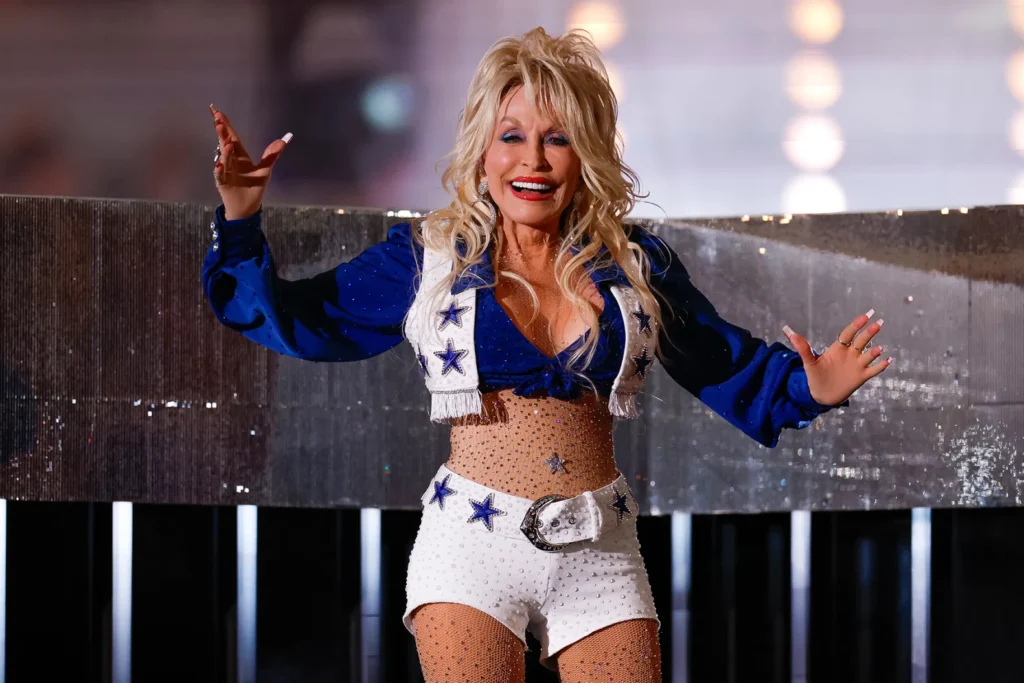
Dolly Rebecca Parton, born January 19, 1946, in Sevierville, Tennessee, the fourth of twelve children in a one-room cabin in the Smoky Mountains, was the most successful female country artist in history and one of the most sophisticated entertainment businesswomen of her era. She wrote over 3,000 songs, owned her publishing rights to all of them, owned her masters, and co-founded Dollywood in Pigeon Forge, Tennessee in 1986, which grew into a resort complex generating over $586 million in annual revenue. Her refusal to let Colonel Tom Parker have half the publishing rights to “I Will Always Love You” in the 1970s meant she collected the full publishing windfall when Whitney Houston’s 1992 version became one of the best-selling singles in history, earning her an estimated $20 million from that song alone. She won 10 Grammy Awards from 50 nominations, was inducted into the Rock and Roll Hall of Fame in 2022, and received a Presidential Medal of Freedom the same year. Through her Imagination Library program, funded personally, she donated over 270 million books to children worldwide.
1. Recording Royalties and Publishing (1967-2026)
Dolly owned her publishing from the beginning of her career, fighting to retain her songwriter rights when it was unusual for a new artist to do so. Her catalog of 3,000+ songs includes “Jolene,” “I Will Always Love You,” “9 to 5,” “Coat of Many Colors,” “Here You Come Again,” and hundreds of others. She owned the writer’s share, the publisher’s share, and the masters outright.
Annual royalty income from her catalog: estimated $6-8 million per year in recent years, with “I Will Always Love You” contributing meaningfully each year from Whitney Houston’s version. Total gross from recordings and publishing across her nearly 60-year recording career: approximately $200 million. Tennessee has no state income tax; Dolly paid federal only (~37% effective). After taxes and 10% representation: net approximately $115 million.
2. Touring (1970-2016)
Dolly toured actively from 1970 through the 1980s and 1990s, retiring from major touring around 2016. Her tours were consistent arena sellers throughout the 1980s-2000s but not at stadium scale. Estimated total gross from touring: approximately $120 million. After federal taxes and representation: net approximately $65 million.
3. Acting and Film/TV Income
Dolly starred in 9 to 5 (1980), The Best Little Whorehouse in Texas (1982), Steel Magnolias (1989), and Joyful Noise (2012). Her production company was involved in several other projects. Total gross from acting and production fees: approximately $40 million. After taxes: net approximately $25 million.
4. Dollywood – Theme Park Stake
This was by far the dominant asset on Dolly’s balance sheet. Dollywood was jointly owned by Dolly Parton through her company Dolly Parton Productions and Herschend Family Entertainment, with Dolly holding a 50% stake. The Dollywood Company’s full resort complex includes the main theme park, Dollywood’s Splash Country water park, DreamMore Resort & Spa, HeartSong Lodge & Resort, and Dolly Parton’s Stampede dinner show.
Dollywood is a private company and does not publish financials. Revenue estimates from third-party data aggregators conflict: some cite approximately $297.6 million covering the core theme park operations, others cite $500M+ for the full resort complex including hotels, water park, and dinner shows. We use $400 million as a conservative but realistic midpoint for the full complex, acknowledging the park alone receives approximately 3 million visitors per year at an average ticket price of $89 plus in-park spending, hotel revenues from two resort properties, and multiple additional revenue streams.
Valuation methodology: regional theme park/resort businesses typically operate at 25-30% EBITDA margins. At $400M revenue and 27% margin: EBITDA approximately $108 million. At a 10x EBITDA multiple, standard for the leisure and entertainment sector (Cedar Fair traded at 10-12x, Six Flags similar): enterprise value approximately $1.08 billion. Dolly’s 50% stake: $540 million. Ownership of this stake will now pass to her estate; no public details on succession or her will have been disclosed.
5. Catalog Asset Value (Held)
Her 3,000-song catalog remains unsold and owned outright, with both the writer’s and publisher’s share. Annual royalty income of $6-8M/year not fully captured in the recording income line above (that line captures historical cash flow, this captures the held asset value). At $7M/year x 20x legacy multiple: catalog held asset value $140 million. This catalog, like the Dollywood stake, will now pass to her estate. Note: we are careful not to double-count the historical royalty cash flow already in the recording line.
6. Brand Partnerships and Licensing
Major deals included Duncan Hines, Doggy Parton, Dolly Beauty (2024), Dolly Wines (2024), and various licensing agreements. Gross from brand partnerships across her career: approximately $30 million. After taxes: net approximately $19 million.
7. Real Estate
Dolly owned her primary Tennessee residence, commercial properties in Pigeon Forge adjacent to Dollywood, and additional Tennessee holdings. Personal real estate appreciation (non-Dollywood): approximately $20 million.
8. Wealth Management
Dolly demonstrated genuine long-term financial discipline, retaining her publishing and masters from the outset, building Dollywood as a real business, and maintaining professional financial management for decades. Tennessee residency meant no state tax drag on surplus. We apply a conservative 4% real return on surplus over the 1990-2015 period: approximately $60 million.
9. Lifestyle Burn
Dolly’s personal lifestyle was notably modest by celebrity standards. The largest consumed spending items were her extraordinary philanthropy — over 270 million books through the Imagination Library, $1 million to Vanderbilt for COVID-19 vaccine research, $12.5 million for Smoky Mountain wildfire relief, and ongoing charitable giving. Consumed spending only, property excluded.
- Early phase (1967-1985): $200K/year x 18 years = $3.6 million
- Mid phase (1986-2005): $800K/year x 20 years = $16 million
- Peak phase (2006-2026): $1.5M/year x 20 years = $30 million
- Imagination Library and personal philanthropy: $80 million
- Other charitable giving: $20 million
Total lifestyle burn and philanthropy: approximately $150 million.
Net Worth Waterfall
| Line Item | Amount |
|---|---|
| Recording royalties and publishing (net) | $115M |
| Touring income (net) | $65M |
| Acting and film/TV (net) | $25M |
| Dollywood stake (50%, 10x EBITDA on $400M revenue) | $540M |
| Catalog asset value (held, 20x, incremental) | $140M |
| Brand partnerships and licensing (net) | $19M |
| Real estate appreciation | $20M |
| Wealth management gains | $60M |
| Less: lifestyle burn and philanthropy | -$150M |
| Less: Dollywood development costs and capital contributions | -$50M |
| Less: additional business costs and taxes | -$80M |
| Total Net Worth (at time of death) | $704M |
Rounded to $700 million.
Why Our Figure Differs From Consensus
Most outlets reported Dolly’s net worth at $650 million. Our math produces $704 million, which we round to $700 million, placing us modestly above consensus. The difference comes entirely from Dollywood. We value her 50% stake at $540 million using a 10x EBITDA multiple on a conservative $400 million revenue estimate for the full resort complex — the park, two hotels, water park, and dinner shows. The consensus figure likely uses a stale, lower revenue figure for the park alone. Our EBITDA methodology is standard for the sector. We acknowledge the revenue figure is an estimate for a private company, and note that if the full complex is closer to $586M in revenue as one data source suggests, her stake would be worth $791M and the total net worth would approach $1 billion. Estate valuations that emerge in the coming months, if made public, may provide a more precise figure.
The Song She Kept
In the early 1970s, Colonel Tom Parker came to Dolly Parton with an offer: Elvis Presley wanted to record “I Will Always Love You.” The condition was that Parker receive half the publishing rights. Dolly said no. Elvis never recorded it. Two decades later, Whitney Houston recorded it for The Bodyguard (1992), and it became one of the best-selling singles in history. Dolly collected every cent of the publishing. She said the Whitney Houston version earned her enough money to buy a new office building, which she named the Whitney Houston Building. The decision to say no to Elvis remains the clearest illustration of the financial instinct that built a near-billion-dollar fortune: own everything, give away nothing, and let the world come to you on your terms. Dolly Parton spent six decades proving that instinct right, and the empire she built by refusing to give an inch outlives her..