$850 Million
Who He Is
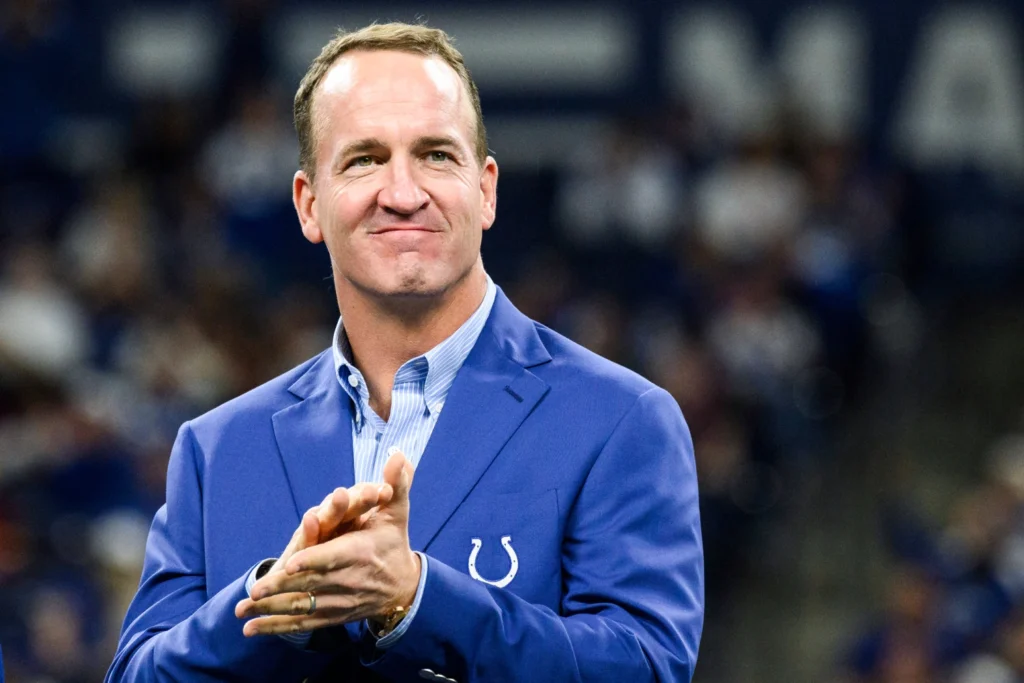
Peyton Williams Manning, born March 24, 1976, in New Orleans, Louisiana, is widely regarded as the greatest quarterback in NFL history and one of the most commercially successful athletes America has ever produced. The son of former Saints quarterback Archie Manning and older brother of two-time Super Bowl winner Eli, Peyton was the first overall pick in the 1998 NFL Draft and spent 18 seasons in the league – 13 with the Indianapolis Colts and four with the Denver Broncos – winning two Super Bowls, five MVP awards, and 14 Pro Bowl selections. He retired in March 2016, one month after winning Super Bowl 50 with the Broncos at age 39, holding the NFL records for career touchdown passes and passing yards at the time of his departure. He was inducted into the Pro Football Hall of Fame in 2021 and the College Football Hall of Fame in 2025.
Since retirement he has built one of the most valuable athlete-owned media businesses in history. His production company, Omaha Productions – named after his signature pre-snap audible call – was founded in 2020, produced the ManningCast alternate Monday Night Football broadcast on ESPN, and was valued at approximately $800M in a March 2025 funding round involving Silver Lake and former Endeavor executive chairman Patrick Whitesell. Manning is based in Denver, Colorado, where he lives with his wife Ashley and their twin children, and has been a Colorado tax resident through most of his post-playing career.
1. NFL Career Salary (1998-2015)
Peyton Manning’s total NFL career earnings are confirmed at $248.79M by Over the Cap and Spotrac – the definitive salary tracking sources. His contract history by phase:
- 1998-2003: Six-year rookie deal with the Colts, $46.3M total including an $11.6M signing bonus. A then-record for a rookie quarterback.
- 2004-2010: Seven-year extension with the Colts, $99.2M including a $34.5M signing bonus.
- 2011: Five-year extension with the Colts, $90M including a $20M signing bonus. Manning missed the entire 2011 season with neck surgery and was released in March 2012 before receiving a $28M bonus.
- 2012-2015: Five-year, $96M contract with the Denver Broncos ($58M guaranteed), restructured in 2015 to two years at $34M. He collected approximately $19M of the restructured deal before retiring.
NFL career salary: $248.8M gross.
2. Playing-Era Endorsements (1998-2016)
Manning was the NFL’s most marketable player for the better part of two decades. Forbes documented $15M/yr from endorsements at his commercial peak. Partners across his playing career included Reebok, Nike, Gatorade, DirecTV, MasterCard, Sony, Buick, ESPN, Papa John’s (for which he also became a franchise owner), and Sprint. Sportico’s March 2026 career earnings review confirmed approximately $150M in endorsement income during his playing career.
- 1998-2004 (early career, building profile): avg $5M/yr x 7 years = $35M
- 2004-2012 (commercial peak): avg $15M/yr x 8 years = $120M
- 2012-2016 (Broncos era, maintained at high level): avg $14M/yr x 4 years = $56M
These phases sum to $211M, but Sportico’s confirmed $150M figure is more reliable and based on actual tracked income rather than rate estimates. We use $150M.
Playing-era endorsements: $150M gross.
3. Post-Retirement Endorsements and Media Income (2016-2025)
Manning’s commercial value did not decline after retirement – it grew. Nationwide has been his most visible post-retirement partner, with a relationship running since 2014. Other continuing and new partners have included Buick, Gatorade, Subway, ESPN, and various brand campaigns. Multiple sources confirm he earns $10-15M/yr in endorsements alone post-retirement, separate from Omaha Productions income.
The ManningCast launched in 2021. ESPN pays Omaha Productions approximately $60M/yr for the full slate of programming under the partnership, per reporting by The Athletic’s Andrew Marchand. Manning founded Omaha and controls approximately 87-90% of it after selling roughly 10% to Whitesell/Silver Lake in March 2025 (and a smaller prior stake to Peter Chernin’s North Road Company at a $400M+ valuation in 2024). The ESPN fee is company revenue, not personal income – it flows into Omaha’s P&L and then to Manning as the majority owner via distributions after operating costs. Omaha employs approximately 45 people. With $60M in annual ESPN revenue and confirmed profitability since 2020, conservative operating margins of 30-35% produce approximately $18-21M/yr in personal distributable income to Manning from Omaha.
Post-retirement income (2016-2025, 10 years):
- Endorsements: avg $12M/yr x 10 years = $120M
- Omaha Productions distributions (2021-2025, 5 years at ~$20M/yr): ~$100M
Post-retirement income: ~$220M gross.
4. Papa John’s Franchises
Manning purchased 31 Papa John’s locations in the Denver area beginning in 2012, coinciding with his Broncos signing. He sold all 31 franchises on February 26, 2018, two days before the NFL and Papa John’s announced the end of their partnership – a well-timed exit. The purchase price and sale price have not been publicly disclosed. Denver-area Papa John’s franchises in 2012 sold for approximately $200,000-$350,000 per location; by 2018 values had declined modestly amid softening same-store sales. Estimated net gain on the franchise portfolio after six years of operation: approximately $3M above the purchase cost, based on the income the stores generated during ownership minus operating costs and the final sale price relative to cost. This is a conservative figure given the exit timing.
Papa John’s net gain: ~$3M.
5. Representation
Manning was represented throughout his playing career by agent Tom Condon of CAA Sports, one of the most respected quarterback agents in the business. CAA’s standard agent fee in the NFL is 3% (NFLPA-capped). On the commercial side, Manning’s endorsement management ran through CAA as well at approximately 10-15%. Post-retirement commercial affairs transitioned largely to Omaha’s own structure. Blended across the full career: 5% on NFL salary, 12% on endorsements and media income.
- NFL salary representation (3% x $248.8M): -$7.5M
- Endorsements and media representation (12% x $370M): -$44.4M
Total representation: -$51.9M. Post-representation gross: ~$569.9M.
6. Tax
Manning spent his playing career in Indiana (Colts, 14 seasons) and Colorado (Broncos, 4 seasons). Indiana’s state income tax is a flat 3.05%; Colorado’s is a flat 4.40%. Both are meaningfully below the 9-13% rates in California and New York, giving Manning a structural tax advantage relative to many peers. Federal top rate across his career ranged from 35% to 37%.
Jock tax applies: Manning paid income tax in every state where he played road games across 18 seasons. For a quarterback earning $15-20M/yr at peak, the aggregate jock tax across away games in California, New York, and other high-rate states adds approximately 2-3 percentage points to his effective rate.
Effective blended rate across the full career and post-retirement income, weighted for Indiana/Colorado residency and jock tax: approximately 42%.
Tax (42% of $569.9M): -$239.4M. Net after representation and tax: ~$330.5M.
7. Lifestyle Burn
Manning is widely described as financially conservative relative to his income level. He does not maintain a large fleet of vehicles or a sprawling real estate portfolio beyond his primary Denver residence and a New Orleans property near family. His Cherry Hills Village estate in Denver was purchased for $4.575M and is now valued at approximately $6.5M. He has a Vail vacation home at approximately $2.3M.
- Early career (1998-2003, 6 years): ~$1M/yr consumed = $6M
- Peak (2004-2012, 9 years): ~$2.5M/yr consumed = $22.5M
- Late career and early retirement (2013-2020, 8 years): ~$3M/yr consumed = $24M
- Current (2021-2025, 5 years): ~$2M/yr consumed = $10M
Total lifestyle burn: ~$62.5M. Available to accumulate: ~$268M.
8. Real Estate
Manning’s documented residential real estate holdings are modest relative to his income: the Cherry Hills Village Denver estate (purchased $4.575M, current value ~$6.5M, gain ~$1.9M) and a Vail vacation home (~$2.3M current value, no documented purchase price, minimal holding period gain). No significant commercial real estate portfolio has been documented.
Real estate appreciation gain: ~$2M.
9. Omaha Productions
This is the defining asset. Omaha Productions was founded in 2020 by Manning and media executive Jamie Horowitz. It has produced more than 30 TV series and live events for Disney, Netflix, and NBCUniversal, including the ManningCast, Peyton’s Places, Eli’s Places, the Netflix documentaries Quarterback and Receiver, and the NFL Honors broadcast.
The company has been profitable since launch. In 2024, Peter Chernin’s North Road Company acquired a small minority stake at a valuation above $400M. In March 2025, Patrick Whitesell’s new Silver Lake-backed platform acquired approximately 10% at a confirmed valuation of more than $750M, with Axios reporting a post-money figure of approximately $800M.
Manning co-founded Omaha alongside media executive Jamie Horowitz. External minority investors hold approximately 12.5% of the company in total: Whitesell/Silver Lake acquired roughly 10% in March 2025, and Chernin’s North Road acquired approximately 2.5% in 2023 (Axios reported a $10M investment at a $400M+ valuation). The remaining approximately 87.5% is split between Manning and Horowitz, with Manning confirmed as the controlling shareholder. Horowitz’s co-founder stake is not publicly disclosed; a co-founder of a profitable five-year-old media company with this profile would typically hold a meaningful slice, plausibly 15-25%. Using a conservative estimate of Horowitz at 20% leaves Manning at approximately 67.5% of the company.
Manning’s Omaha stake: 67.5% x $800M = $540M.
The $800M valuation is anchored in an arm’s-length transaction with Silver Lake, one of the most sophisticated private equity firms in the world. It is not a speculative figure. The Omaha distributions already captured in Section 3 represent consumed earnings flowing to Manning personally – the equity stake here is the residual balance-sheet value of the company itself, not double-counted with those distributions.
10. Wealth Management
Manning is known for financial discipline and has worked with structured wealth advisors throughout his career. No specific documented investment returns or wealth management mandate beyond the Papa John’s franchise activity and Omaha Productions are publicly confirmed.
Wealth Management: None reported ($0).
Net Worth Waterfall
| Line Item | Amount |
|---|---|
| NFL career salary (1998-2015, confirmed by Over the Cap) | +$248.8M |
| Playing-era endorsements (1998-2016, Sportico confirmed) | +$150M |
| Post-retirement endorsements (2016-2025) | +$120M |
| Omaha Productions distributions (2021-2025) | +$100M |
| Papa John’s franchise net gain | +$3M |
| Less: representation (3% NFL / 12% commercial, blended) | -$51.9M |
| Less: tax (42% effective, Indiana/Colorado + jock tax) | -$239.4M |
| Less: lifestyle burn (era-scaled, consumed only) | -$62.5M |
| Real estate appreciation (Cherry Hills, documented gain) | +$2M |
| Omaha Productions equity (est. 67.5% of $800M valuation) | +$540M |
| Wealth Management | $0 |
| Total Net Worth | ~$851M -> $850M |
Our calculation: $850 Million.
Why Our Figure Is Higher Than Consensus
Celebrity Net Worth places Manning at $300M. Our independent build produces $850M. The entire gap is Omaha Productions. CNW’s $300M figure appears to have been set before the March 2025 Silver Lake transaction that confirmed an $800M company valuation, and it does not credit Manning’s equity stake as a held asset at all – treating Omaha as a revenue source rather than a balance-sheet item. The $800M valuation is not speculative: it is anchored in a disclosed arm’s-length transaction with one of the world’s most sophisticated private equity firms. Manning holds a controlling majority stake estimated conservatively at approximately 67.5% after accounting for co-founder Jamie Horowitz’s unquantified but real equity position. At that ownership level the stake alone is worth $540M – nearly double CNW’s entire figure for Manning’s net worth. The NFL salary ($248.8M confirmed by Over the Cap), the Colorado and Indiana tax advantage, and the post-retirement endorsement income are all tracked conservatively. Omaha Productions is the number that changes everything.
The Second Career
Peyton Manning told his retirement press conference in March 2016 that the end of his football career was “just the beginning of something I haven’t even discovered yet.” He was more right than even he probably knew. Four years later he co-founded Omaha Productions with a handful of employees in Denver. Five years after that, it was valued at $800M by one of the most rigorous private equity firms in the world. The ManningCast he built for ESPN changed how a generation of fans watches Monday Night Football. Netflix paid Omaha to produce Quarterback and Receiver, two of the most-watched sports documentaries in the platform’s history. He is 50 years old, controls a media company worth nearly a billion dollars, earns $10M+ per year from endorsements that have outlasted his playing career by a decade, and is worth an estimated $850M on the strength of what he built after the last snap. The $249M he made throwing footballs for 18 years turned out to be the opening act.