$285 Million
Who He Is
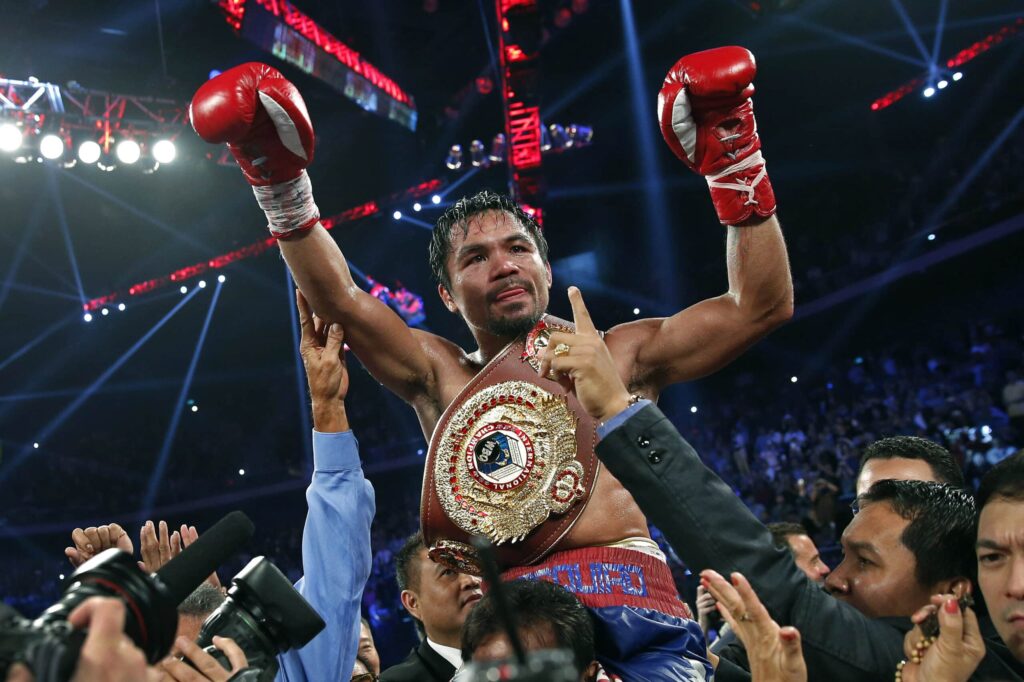
Emmanuel Dapidran Pacquiao, born December 17, 1978, in Kibawe, Bukidnon, Philippines, is the only boxer in history to win world titles in eight different weight divisions and one of the most beloved athletes his country has ever produced. He grew up in poverty in General Santos City, left school at 14, moved to Manila, lived briefly on the streets, and began boxing professionally at 16 to support his family. What followed was a 26-year professional career spanning 73 fights, 62 wins, 39 knockouts, and a global commercial footprint that made him the second-highest-paid athlete in the world in 2015. He defeated Oscar De La Hoya, Ricky Hatton, Miguel Cotto, Juan Manuel Marquez, Timothy Bradley, and Keith Thurman. His only credible opponent he never clearly beat was Floyd Mayweather, who won a unanimous decision in the most commercially successful boxing match in history.
Away from boxing, Pacquiao served as a congressman in the Philippines from 2010 to 2016 and as a senator from 2016 to 2022. He ran for president in 2022 and finished third. He retired from boxing after losing to Yordenis Ugas in August 2021, returned in July 2025 at age 46 to fight Mario Barrios to a majority draw, and has a rematch against Floyd Mayweather confirmed for September 2026 at The Sphere in Las Vegas on Netflix. He is a Philippine tax resident and has been throughout his career.
1. Early Career Fight Purses (1995-2006)
Pacquiao turned professional at 16 in the Philippine flyweight division. His early fights paid thousands of pesos – negligible in dollar terms. His first US exposure came on HBO undercards starting around 2001. Entry into seven-figure purses began with the Erik Morales trilogy from 2005 to 2006.
- 1995-2004 (Philippine and Asian circuit, ~50 fights): ~$2M cumulative
- 2005-2006 vs. Morales trilogy and related fights: ~$6M
Phase total: ~$8M gross.
2. The Ascent: Eight Divisions (2007-2011)
This phase produced Pacquiao’s first superstar paydays as he climbed from super featherweight to welterweight, claiming titles at each stop. De La Hoya was the commercial breakthrough.
- December 2008 vs. Oscar De La Hoya (welterweight debut, PPV): ~$20M
- May 2009 vs. Ricky Hatton (light welterweight, PPV): ~$20M
- November 2009 vs. Miguel Cotto (light welterweight, PPV): ~$25M
- March 2010 vs. Joshua Clottey (welterweight): ~$15M
- November 2010 vs. Antonio Margarito: ~$20M
- May 2011 vs. Shane Mosley: ~$25M
Phase total: ~$125M gross.
3. The Mayweather Pursuit and Peak Years (2012-2015)
Negotiations with Mayweather consumed much of this period between fights. Pacquiao fought Bradley twice and Marquez a fourth time while Mayweather demurred. When the fight finally landed in May 2015, it shattered every PPV record in boxing history.
- June 2012 vs. Timothy Bradley I: ~$25M
- December 2012 vs. Juan Manuel Marquez IV (KO loss): ~$25M
- April 2014 vs. Timothy Bradley II: ~$20M
- November 2014 vs. Chris Algieri: ~$15M
- May 2015 vs. Floyd Mayweather Jr. (Fight of the Century): ~$130M
The Mayweather figure is confirmed by Celebrity Net Worth, CNW’s own detailed breakdown of the fight’s economics, and multiple independent sources. With 4.4 million PPV buys generating over $400M in total revenue and a 60/40 purse split in Mayweather’s favor, Pacquiao’s guaranteed $50M plus PPV backend produced approximately $130M total.
Phase total: ~$215M gross.
4. The Late Career (2016-2021)
After the Mayweather loss Pacquiao fought selectively while serving in the Philippine Senate. Purses declined from the Fight of the Century peak but remained in the eight-figure range for major bouts.
- April 2016 vs. Timothy Bradley III: ~$20M
- November 2016 vs. Jessie Vargas: ~$12M
- July 2017 vs. Jeff Horn (upset loss, Brisbane): ~$10M
- July 2018 vs. Lucas Matthysse (Argentina, title win): ~$8M
- January 2019 vs. Adrien Broner: ~$20M
- July 2019 vs. Keith Thurman (split decision win, WBA Super title): ~$20M
- August 2021 vs. Yordenis Ugas (loss, retirement): ~$10M
Phase total: ~$100M gross.
5. The Return (2025)
After a four-year retirement, Pacquiao returned at age 46 to fight WBC welterweight champion Mario Barrios in Las Vegas on July 19, 2025. The bout ended in a majority draw. Pacquiao earned an estimated $12.5M guaranteed plus a share of Amazon Prime PPV revenue, bringing his total to approximately $15-18M. We use $15M as a conservative figure.
A Floyd Mayweather rematch was announced for September 19, 2026 at The Sphere in Las Vegas on Netflix. In June 2026 Mayweather became embroiled in contractual disputes with promoters, claiming the bout was an exhibition while Pacquiao’s team maintained it was a sanctioned professional fight. On June 25, 2026, Pacquiao confirmed the rematch had been postponed indefinitely. A new date is expected to be announced in 2027. The potential purse for Pacquiao – reported at over $50M guaranteed plus Netflix backend – is not included here as the fight has not taken place.
Phase total: ~$15M gross.
6. Endorsements (1999-2025)
Pacquiao’s endorsement portfolio was extensive but never reached the per-year totals of Mayweather or the global luxury tier of Ronaldo. His primary commercial partners across his career included Nike (dropped in 2016 over anti-gay comments, partially restored for the Mayweather fight), Hewlett-Packard, Nestlé, Anta Sports (China), Monster Energy, Hennessy, Gillette, Cleto Reyes, Smart Communications, and various Philippine-market brands. He was also a major endorser of products in the Philippines where his national hero status commands premium rates.
Forbes tracked him at $26M total earnings in 2019 (fight purse plus endorsements), implying approximately $5-6M from endorsements in a non-Mayweather year. In his peak commercial window around the Mayweather fight, endorsements ran higher – Paramount Pictures, Tecate, and Smart Communications alone were title sponsors for the 2015 fight. Career endorsement income across 25+ active years is estimated at approximately $100M, consistent with the $500M total earnings figure cited by multiple sources when combined with the ~$460M in confirmed fight purses above.
- 1999-2007 (Philippine market, early career): ~$5M
- 2008-2014 (international breakout): avg $5M/yr x 7 years = $35M
- 2015 (Mayweather fight year, peak commercial): ~$20M
- 2016-2021 (Nike loss, reduced roster): avg $5M/yr x 6 years = $30M
- 2022-2025 (post-retirement, selective deals): ~$10M
Career endorsements: ~$100M gross.
7. Representation
Pacquiao was managed for the bulk of his US career by Bob Arum’s Top Rank Promotions and later Al Haymon’s Premier Boxing Champions. Top Rank’s promotional cut on fight purses is typically 15-20%. From 2018 onward under PBC/Haymon the arrangement shifted. Blended across his full career – heavy Top Rank years in his biggest earning phase, his own self-promotion for Philippine fights, and the later PBC arrangement:
Representation (12% blended): -$55.6M. Post-representation gross: ~$402.4M.
8. Tax
Pacquiao is a Philippine tax resident and has been throughout his career. The Philippines taxes residents on worldwide income at progressive rates up to 35%. His US fight purses – the majority of his income – are subject to Nevada or California non-resident withholding of approximately 10-15% on fight income, with the Philippines granting a foreign tax credit for amounts paid to US authorities. The net effective combined rate after treaty credits and business deductions runs at approximately 35% on a blended basis.
His charitable giving is substantial and well-documented – he has funded housing, scholarships, and community programs in the Philippines throughout his career – but charitable giving is not a tax deduction in the same way as business expenses and is treated as personal spending below.
Tax (35% of $402.4M): -$140.8M. Net after representation and tax: ~$261.6M.
9. Lifestyle Burn
Pacquiao’s lifestyle spending is among the highest of any athlete in this database on a consumed basis. He maintains a large household and extended family support structure, travels with a significant entourage including security, trainers, and staff, owns a fleet of luxury vehicles documented at more than a dozen cars, and has donated enormous sums to churches, disaster relief, and community organizations in the Philippines. Charitable donations are consumed spending – they do not generate an asset. Property purchases and investments are excluded per methodology.
- Early career (1995-2006, 12 years): avg $300K/yr = $3.6M
- Ascent phase (2007-2011, 5 years): avg $3M/yr = $15M
- Peak and Mayweather era (2012-2016, 5 years): avg $6M/yr = $30M
- Senate years and late career (2017-2021, 5 years): avg $5M/yr = $25M
- Post-retirement and return (2022-2025, 4 years): avg $3M/yr = $12M
Total lifestyle burn: ~$85.6M. Available to accumulate: ~$176M.
10. Real Estate
Pacquiao’s documented US real estate includes a Hancock Park, Los Angeles home purchased in 2009 for $2M, listed for sale in November 2021 at $4.5M – an appreciation gain of approximately $2.5M. He also purchased Diddy’s former Beverly Hills mansion in mid-2015 for $12.5M; current market value is not publicly documented and has not been sold, so no gain is counted. His Philippines property portfolio – mansions in Sarangani, Forbes Park Makati, and a Manila beach villa – were purchased with career earnings already in the waterfall and are counted at appreciation only; specific Philippine property values and purchase prices are not documented with enough precision to estimate a reliable gain.
Real estate appreciation gain (Hancock Park only, documented): +$2.5M.
11. Business Assets
Pacquiao has built an extensive business portfolio in the Philippines including MP Promotions (boxing promotion company), Team Pacquiao Coffee (chain), Pacman Wild Card Gyms, the Maharlika Pilipinas Basketball League, media and TV investments including the Blow by Blow channel, a banana plantation, investments in natural gas power, and the PAC cryptocurrency token. He also invested in Singapore-based blockchain company GCOX as a brand ambassador.
None of these businesses have a disclosed arm’s-length funding-round valuation. The PAC token had a market cap at launch but cryptocurrency tokens are not equity in a company and their value fluctuates to near zero without disclosed underlying business metrics. Per methodology, unanchored business values are excluded.
Business assets: $0 (no disclosed funding-round valuations).
12. Wealth Management
No specific wealth management arrangement or documented investment returns beyond the items above have been publicly disclosed.
Wealth Management: None reported ($0).
Net Worth Waterfall
| Line Item | Amount |
|---|---|
| Fight purses – early career (1995-2006) | +$8M |
| Fight purses – eight-division ascent (2007-2011) | +$125M |
| Fight purses – Mayweather pursuit and peak (2012-2015) | +$215M |
| Fight purses – late career (2016-2021) | +$100M |
| Fight purses – 2025 return (Barrios draw) | +$15M |
| Endorsements (career) | +$100M |
| Less: representation (12% blended, Top Rank / PBC) | -$55.6M |
| Less: tax (35% effective, Philippines worldwide + US withholding) | -$140.8M |
| Less: lifestyle burn (era-scaled, consumed only, incl. charitable giving) | -$85.6M |
| Real estate appreciation (Hancock Park LA, documented gain) | +$2.5M |
| Business assets (MP Promotions, coffee, gyms, crypto – no anchor) | $0 |
| Wealth Management | $0 |
| Total Net Worth | ~$283.5M -> $285M |
Our calculation: $285 Million.
Why Our Figure Differs From Consensus
Celebrity Net Worth places Pacquiao at $220M. Our independent build produces $285M, higher than CNW for two reasons. First, CNW appears to use a conservative endorsement total – our $100M career endorsement figure is anchored in Forbes annual tracking and is consistent with the $500M+ total career earnings figure cited by Sportico and others when combined with fight purses. Second, CNW does not appear to apply the full Philippine worldwide income tax picture combined with US withholding on Nevada fight purses – the 35% blended effective rate is the correct treatment for a Philippines-resident fighter earning the bulk of his income in the US. The lifestyle burn of $85.6M is already the highest in this database relative to income level, reflecting Pacquiao’s well-documented pattern of large-scale charitable giving and the cost of maintaining a large entourage and extended family support structure throughout his career. Even with all of that applied, the math produces $285M.
From the Streets of Manila to the Sphere
Manny Pacquiao left home at 14 with nothing and earned approximately $460M in fight purses across 73 professional bouts. He gave a meaningful portion of it away. He served in the Philippine Senate while simultaneously fighting the best welterweights in the world. He lost a presidential election and went back to the gym. He fought Mario Barrios to a draw at age 46 and has a Floyd Mayweather rematch confirmed for The Sphere in 2026. The $285M he has built is a number that only makes sense when you account for where it started – which was a 98-pound teenager putting rocks in his socks to make the minimum weight limit. The rest is the most improbable financial biography in the history of the sport.