$125 Million
Who He Is
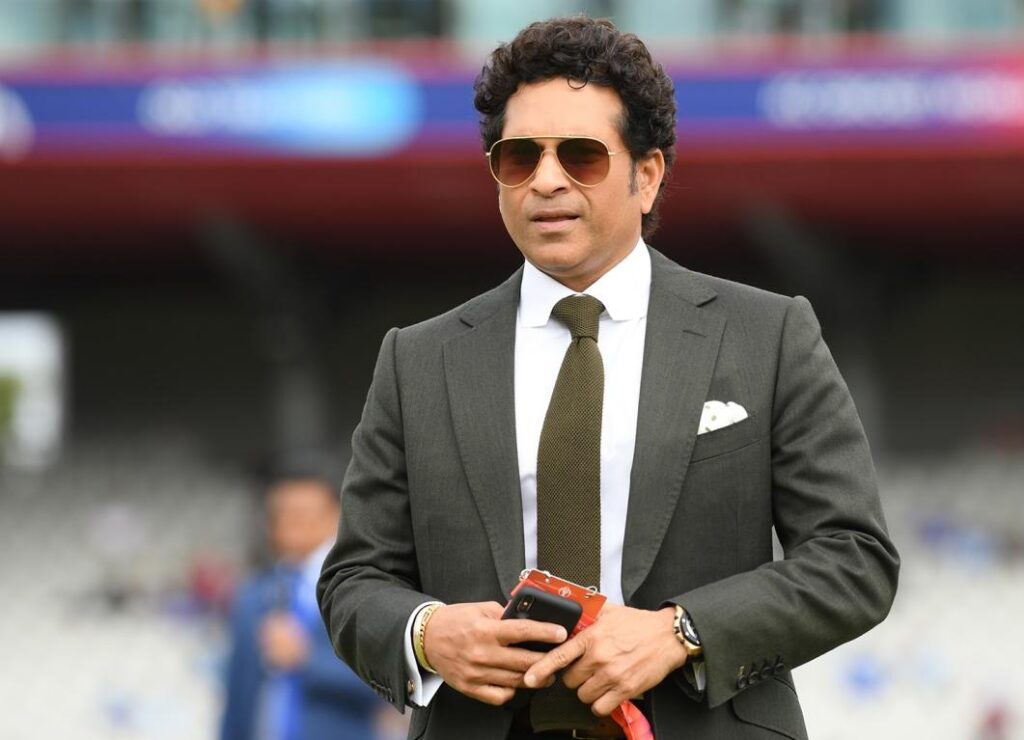
Sachin Ramesh Tendulkar, born April 24, 1973, in the Dadar neighbourhood of Bombay, is the highest run-scorer in the history of international cricket and the only batsman ever to score 100 international centuries. He made his Test debut for India in Karachi against Pakistan on November 15, 1989, at the age of 16, and retired from all cricket on November 16, 2013, after his 200th Test match at the Wankhede Stadium in Mumbai. In between he played 664 international matches across formats, scored 34,357 runs, and became the defining figure of Indian cricket’s transformation from a sport into an industry. He was awarded the Bharat Ratna in 2014 and inducted into the ICC Cricket Hall of Fame in 2019. ESPNcricinfo named him the Greatest Batsman of the Twenty-First Century in 2026.
In India, Sachin Tendulkar is not merely an athlete. He is a cultural institution. The scale of that status translates directly into a commercial career with no parallel in cricket history. He endorsed more than 100 brands across his career. He was the face of Pepsi, then Coca-Cola. He wore the MRF logo on his bat from the 1990s through retirement. He drove BMWs and advertised them. His endorsement income dominates this financial biography in a way that has no equivalent among cricketers and few equivalents in global sport. He lives in Bandra, Mumbai, with his wife Anjali, a pediatrician he married in 1995, and their children Sara and Arjun. He is a permanent Mumbai tax resident, with commercial income routed through SRT Sports Management Pvt. Ltd., a company he co-founded with Anjali.
1. Cricket Playing Income (1989-2013)
The most counterintuitive section of the Tendulkar financial biography. For most athletes in this database, playing income is the primary story. For Tendulkar, cricket fees were the smallest pillar of his wealth.
BCCI match fees and central contracts:
The BCCI introduced formal central contracts in 2004-2005. Tendulkar was in the top Grade A category throughout:
- 2004-2007: ₹5M retainer (~$56K) per year
- 2007-2010: ₹6M retainer (~$68K) per year
- 2010-2014: ₹10M retainer (~$113K) per year
Match fees ran at approximately ₹200,000-250,000 per Test (~$2,300-$2,800) and ₹160,000-185,000 per ODI (~$1,800-$2,100). In the pre-contract era (1989-2004), BCCI payments were similarly modest.
IPL (2008-2013):
Mumbai Indians signed Tendulkar as their icon player ahead of the inaugural 2008 IPL season at 15% above the highest-paid franchise player:
- 2008-2010: ₹4.485 crore/season (~$505K/season) = ~$1.5M
- 2011-2013: ₹8.28 crore/season (~$933K/season) = ~$2.8M
IPL total (6 seasons, confirmed at ₹38.295 crore): ~$4.3M gross.
Total cricket playing income including all match fees, retainers, and bonuses across 24 years: approximately $30M gross.
2. Endorsements – Active Career (1989-2013)
This is where the Tendulkar financial story is written.
MRF bat sponsorship was one of the most iconic in sport. Confirmed career total from MRF alone: more than ₹40 crore (~$4.8M). Boost energy drink ran a 25-year partnership from early in his career. Pepsi was a major backer through the 1990s, followed by Coca-Cola. Adidas covered sportswear. BMW India began a relationship that has outlasted most F1 careers. Additional active-career partners included Britannia, TVS, Canon, Philips, Reynolds, Visa, Airtel, Castrol, and many others.
In 2010, Forbes listed him among the world’s top-earning athletes with annual income exceeding $22M. By his peak years (2003-2013) he was the most commercially valuable sportsperson in India without exception.
| Period | Annual endorsement est. | Years | Total |
|---|---|---|---|
| 1989-1995 (building) | avg $1.5M/yr | 7 | $10.5M |
| 1996-2002 (established star) | avg $5M/yr | 7 | $35M |
| 2003-2013 (commercial peak) | avg $6.5M/yr | 11 | $71.5M |
Active career endorsements: ~$117M gross.
3. Post-Retirement Endorsements (2014-2025)
The most distinctive aspect of Tendulkar’s financial profile versus any other athlete in this database: his endorsement income has barely declined since he stopped playing. Current partners as of 2026 include BMW, MRF, Adidas, Boost, Luminous, Apollo Tyres (signed February 2026), Bank of Baroda (global ambassador deal signed October 2024), and Spinny. His Mumbai Indians mentorship pays approximately ₹10 crore/season (~$1.2M). One current source estimates his 2025 annual endorsement income at $12-18M/yr.
- 2014-2019 (early post-retirement, 6 years): avg $8M/yr = $48M
- 2020-2025 (sustained commercial presence, 6 years): avg $12M/yr = $72M
Post-retirement commercial income (2014-2025): ~$120M gross.
4. Total Gross and Representation
Total gross: $30M (cricket) + $117M (active endorsements) + $120M (post-retirement) = $267M.
Commercial income is routed through SRT Sports Management Pvt. Ltd. India’s corporate tax rate of 22-25% (base) applies to company income, which is materially lower than the personal top rate of 30%+ surcharge. Because Tendulkar manages his affairs through his own company rather than an external agency, representation costs are lower than typical agent fees; blended effective management cost approximately 10%.
Representation (10%): -$26.7M. Post-representation gross: ~$240.3M.
5. Tax
Tendulkar is a Mumbai resident throughout. India’s personal income tax top rate is 30% plus a 4% health and education cess plus a 15% surcharge on the tax for income above ₹5 crore – producing a personal top marginal rate of approximately 42.7%. However, income routed through SRT Sports Management attracts corporate tax of approximately 25.17% (including surcharge and cess for domestic companies). Given the significant portion of his income flowing through SRT, a blended effective rate of approximately 30% across all income is reasonable.
Tax (30% of $240.3M): -$72.1M. Net after representation and tax: ~$168.2M.
6. Lifestyle Burn
Tendulkar’s lifestyle is consistently described as comfortable but not extravagant relative to his wealth. He is known to have declined a ₹20 crore offer from a liquor brand. His car collection is BMW-weighted given the endorsement relationship, with a Ferrari 360 Modena reportedly sold. His philanthropic activity through the Sachin Tendulkar Foundation is ongoing.
- 1989-1995 (early career): ~$200K/yr = $1.2M
- 1996-2007 (established star): avg ~$1.5M/yr = $18M
- 2008-2013 (peak, Bandra renovations): avg ~$2.5M/yr = $15M
- 2014-2025 (retired, stable): avg ~$2M/yr = $24M
Total lifestyle burn: ~$58.2M. Available to accumulate: ~$110M.
7. Real Estate Appreciation
- Bandra bungalow (La Mer, Perry Cross Road): Purchased 2007 for approximately ₹39 crore (~$5.5M). Renovated for an estimated ₹40-45 crore additional. Current value: ₹100-150 crore midpoint ~$15M. Net gain above total cost: ~$5.3M.
- Alibaug beach property: ~₹22 crore. Modest appreciation. Gain: ~$0.5M.
- BKC apartment: Purchased 2018 for ₹7.5 crore (~$900K). Current value ~₹11 crore. Gain: ~$0.3M.
Real estate net appreciation: ~$6.1M.
8. Business Assets
Azad Engineering (confirmed exit): Tendulkar invested ₹5 crore in March 2023 at ₹136.92/share (3,65,176 shares). The stock listed at ₹720 in December 2023 and reached above ₹1,934 by mid-2024. Tracxn confirms this as a portfolio exit. Conservative exit gain at avg ₹1,500/share: ~₹51 crore gain = ~$6M net gain on a ₹5 crore investment.
Spinny: Tendulkar is a confirmed investor (Series F participation September 2025). Spinny holds unicorn status. Stake size is undisclosed. At even 0.1% of a $1.7B valuation his stake is worth approximately $1.7M. Excluded due to insufficient precision on stake size.
Smaaash Entertainment: 18% stake acquired 2013. Company valued at ₹118 crore in March 2023. 18% = ~₹21 crore (~$2.5M). Included at $2.5M.
Other investments (Smartron, JetSynthesys, Truzon Solar, others): No arm’s-length valuations sufficient to anchor. Excluded.
Business assets: $6M (Azad exit gain) + $2.5M (Smaaash) = $8.5M.
Net Worth Waterfall
| Line Item | Amount |
|---|---|
| Cricket income, BCCI, IPL (1989-2013) | +$30M |
| Active career endorsements (1989-2013) | +$117M |
| Post-retirement commercial income (2014-2025) | +$120M |
| Less: representation (10%, SRT Sports Management) | -$26.7M |
| Less: tax (30% blended, SRT corporate + personal) | -$72.1M |
| Less: lifestyle burn (era-scaled, consumed only) | -$58.2M |
| Real estate appreciation (Bandra, Alibaug, BKC) | +$6.1M |
| Business assets (Azad Engineering exit + Smaaash) | +$8.5M |
| Total Net Worth | ~$124.6M -> $125M |
Our calculation: $125 Million.
Why Our Figure Is Below Consensus
Celebrity Net Worth places Tendulkar at $200M. Independent Indian financial sources cluster at $165-175M. Our independent build produces $125M. The gap reflects the honest weight of India’s 30% blended tax rate applied to a career earned entirely in Mumbai, combined with our exclusion of startup stakes that lack confirmed arm’s-length valuations. CNW and Indian sources likely credit the Spinny stake and additional undisclosed portfolio positions more generously than our methodology permits.
Cricket Built the Brand. The Brand Built the Wealth.
Sachin Tendulkar’s playing income across 24 years of international cricket amounts to approximately $30M gross – roughly what Wayne Rooney earned in a single peak year at Manchester United. The BCCI in the 1990s paid its players what it paid them, which was not much by international standards. What Tendulkar earned from cricket was a platform. What he built on that platform – 100+ brand endorsements, a bat sticker deal with MRF that became the most iconic sponsorship in Indian sport, a relationship with BMW that has outlasted most F1 careers, and a post-retirement commercial income stream that rivals active athletes in other sports – is the actual story of his wealth. He is the only athlete in this database whose net worth is overwhelmingly a function of endorsements rather than playing income, and he continues earning more from brand deals in retirement than most cricketers earn from playing. That is what 100 international centuries, 34,357 runs, and 35 years of keeping your name clean actually buys you in India.