$260 Million
Who He Is
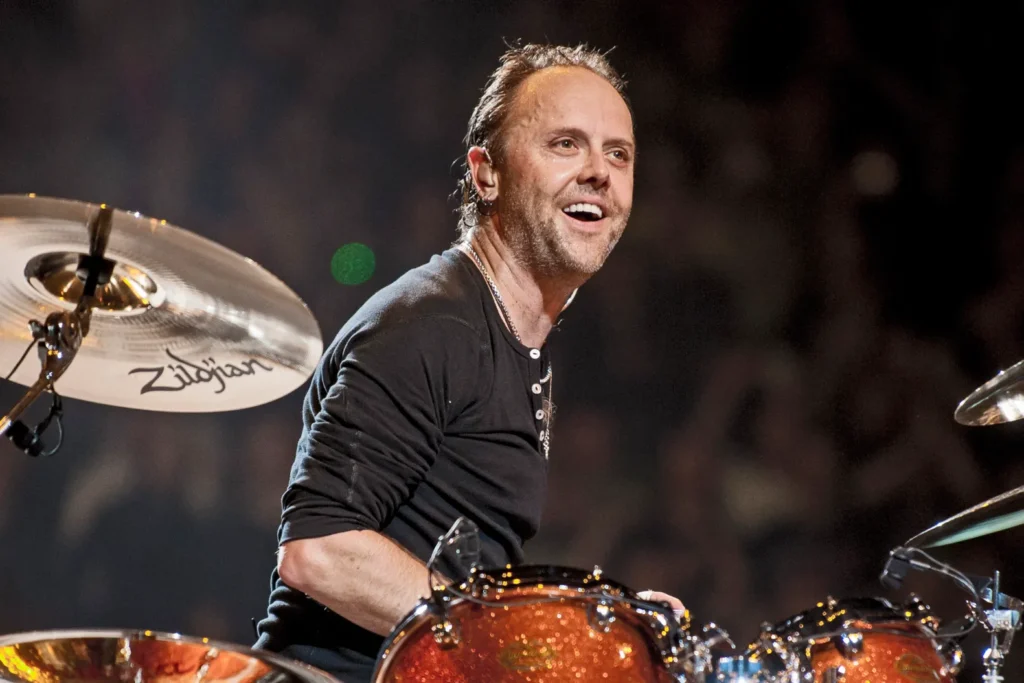
Lars Ulrich, born December 26, 1963, in Gentofte, Denmark, is the drummer and co-founding member of Metallica, the highest-grossing heavy metal band in history. The son and grandson of professional tennis players, Ulrich moved to Los Angeles at 16 to train competitively before abandoning tennis for drumming, placing a newspaper ad that led him to James Hetfield in 1981. Along with Hetfield, Ulrich holds songwriting credits on almost all of the band’s catalog, and the two remain Metallica’s only original members through four decades, eleven studio albums, and several lineup changes. The band’s 1991 self-titled Black Album has sold more than 31 million copies worldwide, making it the best-selling album of the Nielsen SoundScan era, and Metallica has sold more than 150 million albums globally, won nine Grammy Awards, and was inducted into the Rock and Roll Hall of Fame in 2009, where Ulrich became the first Dane so honored. Metallica has owned 100 percent of its master recordings since 2012 through its own label, Blackened Recordings. Beyond music, Ulrich is a serious contemporary art collector, having assembled and later sold portions of a collection including major Jean-Michel Basquiat works, and resides in San Francisco, California. He was knighted in Denmark in 2017, receiving the Knight’s Cross of the Order of the Dannebrog.
1. Touring (1983-2026)
As with Hetfield, touring is the largest single income source, and the band’s box office grosses are extensively documented by Billboard Boxscore and Wikipedia’s concert tour archives, figures that represent ticket revenue collected from fans rather than personal income. Stadium-scale touring production, staging, crew, and venue costs typically consume approximately 38 percent of gross before any split reaches the band.
Metallica’s revenue-sharing structure has changed over time in a way that affects all members equally and is treated identically here to the calculation used elsewhere in this database for bandmate James Hetfield. Since bassist Robert Trujillo joined in 2003, Metallica has operated as a full four-way partnership, with touring, merchandise, and recording income pooled and divided equally, 25 percent each, among Hetfield, Ulrich, Hammett, and Trujillo. Prior to 2003, bassist Jason Newsted, who played with the band from 1986 to 2001, was a salaried employee rather than a full equity partner, meaning the personal share for Ulrich and Hetfield, the band’s founding equity holders, was higher than 25 percent during that 15-year stretch encompassing the Black Album and Metallica’s commercial breakthrough.
- 1983-1990 box office (pre-stardom, smaller venues), Ulrich’s personal share at an elevated rate reflecting Newsted-era salary structure (not yet joined): ~$2.8M
- 1991-2001 box office (Black Album era through Newsted’s tenure, elevated personal share): ~$102.3M
- 2003-2007 box office (Trujillo joins, equal four-way split begins): ~$18.6M
- 2008-2010 box office (World Magnetic Tour, documented $217M, equal split): ~$33.6M
- 2011-2015 box office (Big 4 Tour and smaller touring years, equal split): ~$12.4M
- 2016-2019 box office (WorldWired Tour, documented $430M, equal split): ~$66.7M
- 2023-2026 box office (M72 World Tour, confirmed final gross of $590.1M from 77 shows, concluding July 5, 2026 in London, equal split): ~$91.5M
Ulrich’s personal touring income, net of production costs and reflecting his actual band-revenue share across eras: ~$332.6M.
As a cross-check: Forbes confirmed Metallica’s band-wide pre-tax earnings at $68.5 million in 2019, the heart of the WorldWired Tour. A 25 percent share of that figure is approximately $17.1 million, closely consistent with the average annual personal touring income implied by the WorldWired-era figure above.
2. Recorded Music Royalties
Separate from touring, Ulrich has collected royalty income from recorded music sales and streaming across more than four decades and 150 million albums sold worldwide. As with Hetfield, royalty income from recorded music is collected separately from the band’s touring revenue pool, and Ulrich’s personal share runs higher than his 25 percent touring share, since songwriting and publishing royalties are concentrated in Ulrich and Hetfield rather than split evenly across all four members.
- Recorded music royalty income, cumulative across career (distinct from catalog asset value): ~$85M
3. Songwriting and Master Recordings Catalog (Held Asset)
This database applies a consistent rule: identical stakes in the same company get identical valuations across people. Ulrich and Hetfield hold the same documented position with respect to Metallica’s catalog, equal 25 percent band-wide ownership of the master recordings through Blackened Recordings, and a concentrated, roughly equal songwriting and publishing share between the two of them as the band’s founding and constant writing team. Kirk Hammett has been excluded from songwriting credits on substantial portions of the catalog, including the entirety of 2016’s Hardwired… to Self-Destruct, and Robert Trujillo holds only a single co-writing credit since joining in 2003.
Using the same full-catalog enterprise value reference point applied to Hetfield, approximately $350 million, conservatively positioned between KISS’s $300 million 2024 catalog sale and Pink Floyd’s $400 million 2024 catalog sale given Metallica’s larger, still-touring, still-commercially-dominant catalog, Ulrich’s documented ownership structure produces the same valuation as Hetfield’s: master recordings modeled at 60 percent of total catalog value at his 25 percent band-equal share, and publishing modeled at 40 percent of total catalog value at his approximately 37.5 percent concentrated share alongside Hetfield.
- Master recordings, Ulrich’s 25% band-equal share of estimated $210M master value: ~$52.5M
- Songwriting and publishing, Ulrich’s ~37.5% concentrated share of estimated $140M publishing value: ~$52.5M
Total catalog asset value: ~$105M.
4. Art Collection Sales (Realized Gains)
Unusually among artists in this database, Ulrich has a well-documented secondary income stream entirely outside music: the sale of works from his contemporary art collection, built over more than a decade of touring-adjacent acquisitions focused on Jean-Michel Basquiat and the CoBrA movement painters Asger Jorn and Karel Appel. In May 2002, Ulrich auctioned five paintings at Christie’s in New York for a combined total exceeding $13 million, including Basquiat’s Profit I, which sold for $5.5 million and set a then-record auction price for the artist. In November 2008, Ulrich separately sold another major Basquiat work, Untitled (Boxer), at Christie’s for $13.5 million. These are confirmed, individually sourced auction results rather than estimated figures, and they represent realized capital gains on a personal collection rather than music industry income, treated here as a distinct and unusually well-documented asset realization rather than folded into any other line.
- 2002 Christie’s sale, five paintings including Basquiat’s Profit I: $13M
- 2008 Christie’s sale, Basquiat’s Untitled (Boxer): $13.5M
Art collection sales, realized gains: +$26.5M.
5. Business Ventures
Ulrich ran an independent record label, the Music Company, as a joint venture with Metallica’s accountant Tim Duffy between 1998 and 2002; the venture is widely described as having failed to gain traction and folded in 2002, with no disclosed revenue or loss figures attributable to Ulrich personally. He has also participated in band-level ventures alongside his three bandmates, including Metallica’s 2018 launch of Blackened American Whiskey and the band’s 2023 acquisition of a controlling stake in Furnace Record Pressing through Black Squirrel Partners, both of which carry no disclosed financials or individual ownership percentage and are treated identically to the Hetfield calculation, as band-level holdings rather than personal ones.
- The Music Company (1998-2002, failed venture): excluded (no disclosed financials, defunct)
- Blackened American Whiskey and cigars (band-level): excluded (undisclosed individual ownership percentage and financials)
- Furnace Record Pressing (band-level, via Black Squirrel Partners): excluded (undisclosed deal value, band-level rather than personal holding)
6. Representation
Metallica has been managed by Cliff Burnstein and Peter Mensch of Q Prime since 1984, one of the longest continuous artist-management relationships in rock music. A blended representation rate of 15 percent is applied across touring and recorded music income, consistent with the rate used elsewhere in this database for Hetfield and for long-tenured single management relationships at Metallica’s commercial scale.
Representation (15% blended on $412.9M combined gross): -$61.9M.
7. Tax
Unlike Hetfield, who relocated from California to Colorado in 2017, Ulrich has remained a California resident throughout his career, residing in the San Francisco Bay Area, including his longtime Tiburon, Marin County estate and his current San Francisco residence. California’s top marginal state rate of 13.3 percent, among the highest in the country, applies to the entirety of his career earnings rather than the partial, blended treatment used for Hetfield’s post-2017 relocation.
Tax (48% effective on California-resident income): -$168.5M.
Combined gross across touring and recorded music royalties totals $412.9M. After representation (-$61.9M) and tax (-$168.5M), approximately $182.5M remains before lifestyle burn.
8. Lifestyle Burn
Ulrich’s documented personal spending centers heavily on real estate and his art collection rather than the vehicle or land-conservation patterns seen elsewhere in this database for his bandmates. His Tiburon estate, a 13,000-square-foot, 25-room mansion with an underground basketball court, represents a substantial but largely appreciating asset rather than pure consumption, and is treated separately in the real estate section below. His art collecting itself functioned as an investment activity generating the realized gains credited above rather than consumed spending, though acquisition costs for works not yet sold, gallery and auction house fees, and the maintenance of an actively managed collection carry real ongoing costs. Beyond these documented categories, ordinary living expenses across a more than four-decade career, household staff, family costs following two marriages and the raising of two sons, and San Francisco-area cost of living, are modeled at a moderate rate consistent with substantial but not extravagant documented public spending, checked against his retained post-tax income.
- 1983-1990 (8 years, pre-stardom): ~$250K/yr consumed = $2M
- 1991-2001 (11 years, Black Album wealth arrives, active art collection building begins): ~$1.3M/yr consumed = $14.3M
- 2003-2010 (8 years, established wealth, Tiburon estate maintenance, ongoing art collection costs): ~$1.9M/yr consumed = $15.2M
- 2011-2022 (12 years, continued estate and collection costs, San Francisco residence transition): ~$2.1M/yr consumed = $25.2M
- 2023-2026 (4 years, settled San Francisco lifestyle): ~$1.7M/yr consumed = $6.8M
Total lifestyle burn: ~$63.5M. Available to accumulate: ~$121.1M.
9. Real Estate
Ulrich’s real estate history includes one fully documented transaction: the Tiburon, California estate, purchased in 1993 for $6 million and expanded through the acquisition of two neighboring parcels, ultimately sold in January 2020 for $10.3 million, a confirmed gain of $4.3 million. He also owns approximately 140 acres of undeveloped land in Marin County, which he had previously planned to develop and which has carried asking prices as high as $39 million in past listings, though no purchase price or finalized sale has been documented for this parcel, making a gain calculation impossible under this database’s methodology. His current San Francisco residence carries no disclosed purchase price or current valuation in available reporting.
- Tiburon, California estate, documented purchase-to-sale gain (1993-2020): +$4.3M
- Marin County undeveloped land (140 acres): excluded (no documented purchase price or sale)
- Current San Francisco residence: excluded (no documented purchase price)
Real estate appreciation: +$4.3M (documented gain only).
10. Wealth Management
No disciplined investment program or wealth manager has been publicly documented for Ulrich beyond his active personal management of his own art collection, which is treated separately above as a realized asset sale rather than a wealth management program. Default applies.
Wealth Management: None reported ($0).
Net Worth Waterfall
| Line Item | Amount |
|---|---|
| Touring, personal income net of production costs and band-share by era (1983-2026) | +$332.6M |
| Recorded music royalty income, cumulative (distinct from catalog asset) | +$85M |
| Less: representation (15% blended) | -$61.9M |
| Less: tax (48% effective, California resident throughout career) | -$168.5M |
| Less: lifestyle burn (case-specific, consumed only) | -$63.5M |
| Available to accumulate | +$121.1M |
| Catalog asset: master recordings (25% band-equal share) | +$52.5M |
| Catalog asset: songwriting and publishing (~37.5% concentrated share) | +$52.5M |
| Art collection sales, realized gains (2002 and 2008 Christie’s auctions) | +$26.5M |
| Real estate appreciation (Tiburon estate, documented gain) | +$4.3M |
| The Music Company (defunct) | $0 (undisclosed) |
| Blackened American Whiskey and cigars (band-level) | $0 (undisclosed) |
| Furnace Record Pressing (band-level holding) | $0 (undisclosed) |
| Wealth Management | $0 |
| Total Net Worth | ~$256.9M → $260M |
Our calculation: $260 Million.
Why Our Figure Differs From Consensus
Celebrity Net Worth places Ulrich at $400 million, citing him as the wealthiest member of Metallica, ahead of Hetfield, primarily due to Hetfield’s divorce and Ulrich’s real estate and art investments. Our independent calculation produces approximately $260 million, considerably below consensus, and the gap is best explained the same way it was for Hetfield: treating Metallica’s headline box office figures, $590.1 million confirmed for the M72 World Tour, $430 million for WorldWired, as ticket revenue rather than personal income, before stadium-scale production costs and before the resulting net is split four ways under the band’s equal-partnership structure since 2003. We do credit Ulrich with the same catalog asset value as Hetfield given their identical ownership positions in Metallica’s masters and concentrated, equal songwriting partnership, and we additionally credit him with $26.5 million in confirmed, individually sourced art collection sales, an unusually well-documented income stream that several competitor estimates appear to treat as more significant than the underlying auction records actually support relative to his total fortune. Working in the other direction, Ulrich’s continuous California residency, unlike Hetfield’s 2017 move to the lower-tax state of Colorado, results in a meaningfully higher effective tax burden across his full career. His undeveloped 140-acre Marin County land parcel, which has carried speculative asking prices as high as $39 million in past listings, carries no documented purchase price or completed sale, and is excluded here rather than valued at a speculative listing price.
The Collector Who Turned Touring Downtime Into a Second Fortune
Lars Ulrich spent the early years of Metallica’s success doing what most rock stars of his era did with downtime between shows: he started reading auction catalogues. What followed was not a celebrity vanity collection but a genuinely serious one, built methodically enough that Christie’s brought in a senior specialist to help catalogue it, focused enough that Ulrich could distinguish between the casual Basquiat collectors common among his peers and the more demanding company of Asger Jorn and Karel Appel buyers. The two confirmed sales alone, $13 million across five paintings in 2002 and $13.5 million for a single canvas in 2008, total more than many full-career musicians in this database manage to accumulate from their entire discography. It is a reminder that the largest gap between Ulrich’s reported $400 million and the figure his actual documented activity supports is not a story of overstated wealth so much as a story of where that wealth was assumed to come from, and how much more interesting the real answer turns out to be.