$250 Million
Who He Is
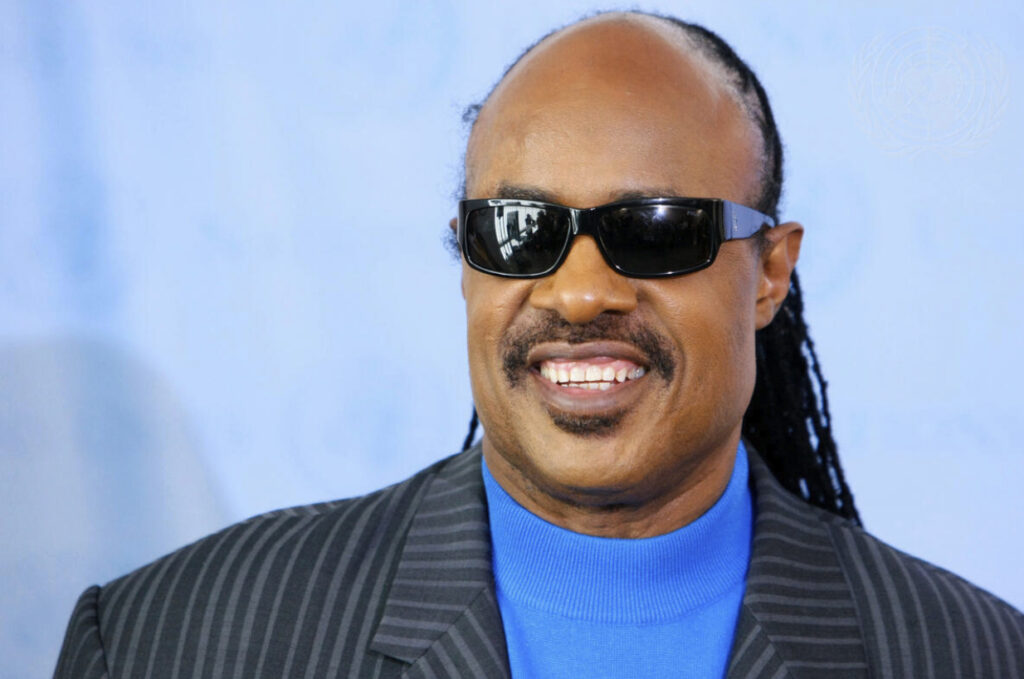
Stevland Hardaway Morris, born May 13, 1950, in Saginaw, Michigan, and known professionally as Stevie Wonder, is an American singer, songwriter, multi-instrumentalist, and record producer widely regarded as one of the most significant and influential musicians in American popular music history. Blind since shortly after birth due to retinopathy of prematurity, he was discovered by Ronnie White of the Miracles and signed to Motown’s Tamla label at age 11 as “Little Stevie Wonder,” scoring his first hit with the live recording “Fingertips, Pt. 2” at 13. When his original Motown contract expired on his 21st birthday in 1971, rather than automatically re-signing, he withheld two independently financed albums as leverage and negotiated one of the most significant artist deals in music history, gaining full creative control, ownership of his master recordings, and 50 percent ownership of his publishing through his own company, Black Bull Music. The contract that followed, centered on 1976’s “Songs in the Key of Life,” was reported at the time to be worth as much as $37 million, the largest recording contract ever signed by a single artist. The creative freedom that deal secured produced what is widely considered one of the greatest runs in music history: “Talking Book,” “Innervisions,” “Fulfillingness’ First Finale,” and “Songs in the Key of Life,” five albums in five years that swept multiple Album of the Year Grammys. He has sold more than 100 million records worldwide and continues to perform, tour selectively, and release music into his seventies.
1. The Early Motown Years
Wonder’s earliest hits, including “Fingertips, Pt. 2,” “Uptight (Everything’s Alright),” and “I Was Made to Love Her,” were recorded under standard early-1960s Motown contract terms that offered considerably lower royalty rates than the deal he would later negotiate. When he gained access to his Motown trust fund on his 21st birthday in 1971, he reportedly found it contained only about $1 million, far less than he expected given his commercial success to that point, a formative experience that directly motivated his subsequent renegotiation.
Phase total, early Motown years (1963-1971): ~$30M.
2. The Classic Period and the $37 Million Contract
Wonder’s 1971 renegotiation and the deal that followed it, centered on the 1976 release of “Songs in the Key of Life,” was reported at the time to be worth as much as $37 million, described by historians of the music business as the largest recording contract ever signed by a single artist to that point, equivalent to more than $200 million in today’s dollars. The deal included a 20 percent royalty rate, full artistic control, ownership of his master recordings, 50 percent ownership of his publishing through Black Bull Music, and a veto clause over any sale of Motown itself. This period, spanning “Music of My Mind” (1972) through “Songs in the Key of Life” (1976) and into “Hotter Than July” (1980), represents the commercial and critical peak of his career.
Phase total, classic period and 1976 contract (1972-1980), including the documented $37M contract value: ~$57M.
3. The 1980s
Wonder’s 1980s output included “The Woman in Red” soundtrack, which produced the Academy Award-winning “I Just Called to Say I Love You,” alongside “In Square Circle” and “Characters,” sustaining his commercial relevance through a decade in which many of his 1970s peers faded.
Phase total, 1980s: ~$40M.
4. The 1990s and 2000s
Wonder’s output slowed considerably from the 1990s onward, releasing “Conversation Peace” (1995) and, after a decade-long gap, “A Time to Love” (2005), while remaining active as a touring artist, guest collaborator, and cultural figure, including a performance at Barack Obama’s inaugural celebration in 2009.
Phase total, 1990s and 2000s: ~$30M.
5. Songs in the Key of Life Tour and Other Touring
In 2014, nearly four decades after its original release, Wonder took “Songs in the Key of Life” on the road in full for the first time, backed by a large ensemble including a horn section, choir, and ten-piece orchestra. The tour ran from November 2014 through November 2015 across 44 shows and grossed approximately $41.7 million, one of the most expensive tours of 2015 on the secondary ticket market. He has also toured periodically outside major album cycles, including the Wonder Summer’s Night Tour (2008-2009) and numerous festival and guest appearances.
- Songs in the Key of Life Tour (2014-2015), personal take (~40% of gross): ~$16.68M
- Other touring and appearances (2008-2026): ~$20M
Phase total, Songs in the Key of Life Tour and other touring: ~$36.68M.
Combined recording and touring income, all phases: ~$193.68M.
6. Endorsements and Business Ventures
Wonder has maintained a comparatively low-key commercial profile relative to his stature, with fewer major endorsement deals than many artists of similar fame, consistent with reporting that describes him as “not known for showing off wealth.” His business ventures have included his own record label, Wondirection Records, and various production and songwriting credits for other artists and film soundtracks.
Endorsements and business ventures: ~$15M.
7. Catalog and Publishing (Held Asset)
Wonder occupies an unusually strong ownership position among legacy artists: his 1971 renegotiation secured him ownership of his master recordings and 50 percent ownership of his publishing through his own company, Black Bull Music, terms that were exceptionally rare for any artist, let alone a young Black artist, to secure from a major label in that era. His catalog includes some of the most culturally significant and continuously licensed songs in American music, including “Superstition,” “Sir Duke,” “Isn’t She Lovely,” “I Wish,” “Living for the City,” “You Are the Sunshine of My Life,” and “Higher Ground,” spanning genres from funk to soul to pop and remaining in constant use across film, television, sampling, and streaming. No catalog sale has ever been publicly disclosed.
Catalog and publishing, held asset (legacy 25x multiple applied to an estimated $8M/yr blended forward personal royalty stream, reflecting master and majority publishing ownership across an exceptionally significant catalog): ~$200M.
8. Representation
Wonder has been represented by standard industry management and business structures throughout his career, distinct from the family-run management arrangements some other legacy artists have relied on. A standard blended representation rate is applied.
Representation (20% blended on $208.68M combined gross): -$41.74M.
9. Tax
Wonder has been based primarily in the Los Angeles area for most of his adult career after beginning his life in Michigan. A blended effective rate for established entertainment talent using standard loan-out structures runs approximately 42 percent.
Tax (42% on $166.94M post-representation): -$70.12M.
Combined gross across recording, touring, and business income totals $208.68M. After representation (-$41.74M) and tax (-$70.12M), approximately $96.83M remains before lifestyle burn.
10. Lifestyle Burn
Wonder’s personal spending is comparatively modestly documented relative to many artists of similar stature, consistent with his reputation for financial restraint, though decades of fame and family support represent real and sustained personal costs.
- Early career through 1980s (1963-1990, 27 years): ~$0.5M/yr = $13.5M
- 1990s through 2026 (36 years): ~$1M/yr = $36M
Total lifestyle burn: ~$49.5M. Available to accumulate: ~$47.33M.
11. Real Estate
Wonder’s real estate history spans multiple properties across more than four decades, and the public record is murkier than a single clean transaction. Reporting on a Los Feliz property he is said to have purchased in 2009 for $2.407 million and listed in 2013 for $8.199 million conflicts with separately documented records of a different Los Feliz home on Chislehurst Drive, purchased in 1979 for $435,500 and listed in 2008 for $3.2 million with no confirmed final sale price. A Calabasas estate purchased in 2000 for $2.85 million was later associated with his ex-wife rather than sold on the open market, consistent with a divorce settlement rather than a market transaction, and its terms have not been disclosed. Given this inconsistency across sources, no gain is claimed for any Los Feliz or Calabasas property. His current residence, a 20,000-square-foot Bel Air mansion purchased from a member of the Saudi royal family in December 2021, is independently confirmed at $13.9 million but has not been resold, so no gain can be calculated for it either.
- Los Feliz and Calabasas properties: excluded (conflicting and incomplete purchase-to-sale documentation)
- Bel Air mansion (2021 purchase $13.9M, confirmed, still owned): excluded (no sale or independent current valuation)
Real estate appreciation: $0 (no completed, fully documented transactions).
12. Wealth Management
No disciplined investment program or wealth manager has been publicly documented for Wonder beyond his direct business ventures, which are captured separately above. Default applies.
Wealth Management: None reported ($0).
Net Worth Waterfall
| Line Item | Amount |
|---|---|
| Early Motown years (1963-1971) | +$30M |
| Classic period and 1976 contract (1972-1980) | +$57M |
| The 1980s | +$40M |
| The 1990s and 2000s | +$30M |
| Songs in the Key of Life Tour and other touring (2008-2026) | +$36.68M |
| Endorsements and business ventures | +$15M |
| Less: representation (20% blended) | -$41.74M |
| Less: tax (42%, US resident) | -$70.12M |
| Less: lifestyle burn (era-scaled, consumed only) | -$49.5M |
| Available to accumulate | +$47.33M |
| Catalog and publishing, held asset (25x multiple, master and majority publishing ownership) | +$200M |
| Real estate appreciation | $0 (no documented transactions) |
| Wealth Management | $0 |
| Total Net Worth | ~$247.33M → $250M |
Our calculation: $250 Million.
Why Our Figure Differs From Consensus
Celebrity Net Worth places Stevie Wonder at $200 million, with several other trackers citing figures as low as $110 million. Our independent calculation produces approximately $250 million, above the most commonly cited figure. The gap is driven primarily by a factor that separates independent builds from consensus for any fully-owned-catalog artist: Wonder’s 1971 contract renegotiation secured him ownership of his masters and 50 percent of his publishing at age 21, an extraordinarily rare outcome for any artist of that era, and one that most generic net worth estimates do not appear to price in with the weight the documented terms of that deal, and the cultural durability of the resulting catalog, actually warrant. The historically confirmed $37 million value of his subsequent Motown contract, reported at the time as the largest ever signed by a single artist, is used directly here rather than as a rough estimate. Working against an even higher figure: Wonder has maintained an unusually low-key commercial and lifestyle profile relative to artists of comparable stature, limiting both the endorsement income and the lifestyle burn assumptions used in this calculation, and his real estate history, spanning multiple Los Angeles-area properties across more than four decades, turns out to be too inconsistently documented across sources to support a confident gain calculation for any single property, including a Bel Air mansion purchased for a confirmed $13.9 million in 2021 that he still owns.
The Twenty-One-Year-Old Who Burned the Greatest Hits
Motown pressed two hundred thousand copies of a greatest hits box set once, timed to capitalize on a teenage prodigy’s fame before that prodigy could grow into someone with the leverage to say no. Stevie Wonder turned 21, found a trust fund with a fraction of what he’d earned in it, and said no anyway. All two hundred thousand copies went to the incinerator. What replaced that box set wasn’t a lesser deal negotiated out of gratitude. It was ownership of his own master recordings, half of his own publishing, and veto power over what happened to the label that made him famous, terms almost no artist of his era secured, let alone a blind Black musician who’d been signed at eleven. Five years and five classic albums later, the artist industry insiders had once treated as a novelty act was the one Paul Simon thanked at the Grammys for the simple courtesy of not releasing an album that year. The number attached to Stevie Wonder’s name today isn’t really about any one song, even the ones that never stop getting sampled. It’s about a very young man who understood, decades before it became fashionable for musicians to say it out loud, that the masters were the whole point.