$235 Million
Who He Is
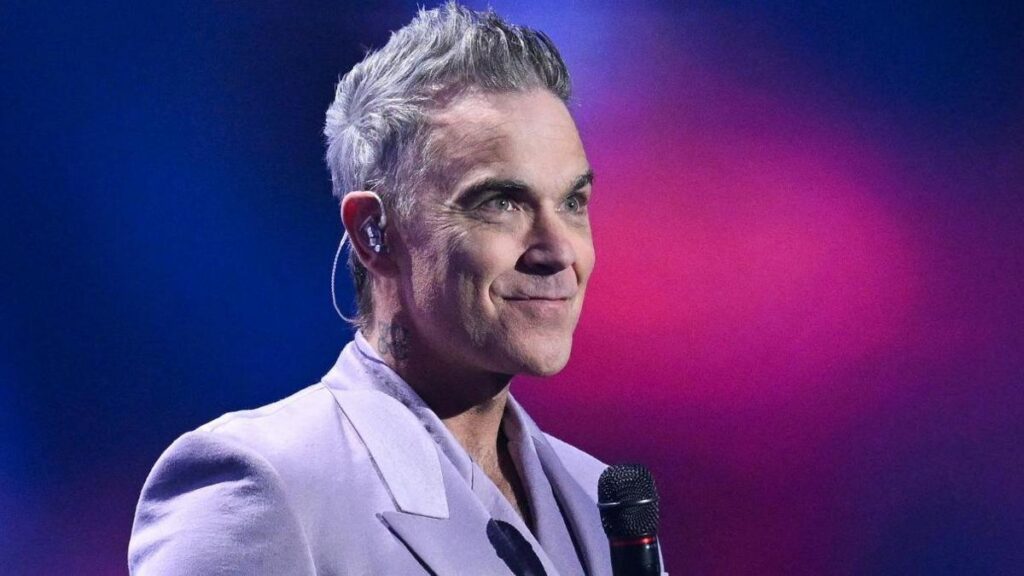
Robert Peter Williams, born February 13, 1974, in Stoke-on-Trent, England, is an English singer and songwriter who joined the boy band Take That in 1990 at age 16, its youngest founding member, before departing acrimoniously in 1995 to launch one of the most commercially successful solo careers in British pop history. Working primarily with songwriting and production partner Guy Chambers from 1997 onward, he co-wrote most of his signature hits, including “Angels,” “Let Me Entertain You,” “Millennium,” and “Better Man,” and has since become the most decorated act in BRIT Awards history with 18 wins. In January 2026, his sixteenth studio album, “Britpop,” gave him his sixteenth UK number-one album, breaking the Beatles’ longstanding record for the most chart-topping albums by a single act. His 2002 recording contract with EMI, reportedly worth £80 million, was the largest music contract in British history at the time. He set a Guinness World Record in 2006 by selling 1.6 million tickets in a single day for his Close Encounters stadium tour, and has sold more than 75 million records worldwide across his solo career.
1. Take That and Early Solo Career
Williams’s earliest professional earnings came from his five years in Take That (1990-1995), which produced twelve UK number-one singles but split his share of the band’s income five ways during the height of British boy-band mania. His first solo albums, “Life Thru a Lens” (1997) and “I’ve Been Expecting You” (1998), the latter featuring his signature “Angels” and “Millennium,” established him as a major solo artist ahead of his landmark EMI deal.
Phase total, Take That and early solo career (1990-2001): ~$20M.
2. The £80 Million EMI Deal and Close Encounters Tour
In 2002, Williams signed a recording contract with EMI reportedly worth £80 million, the largest music contract in British history at the time, equivalent to roughly $130 million in contemporary US dollars. The deal underwrote a run of commercially dominant albums and his 2006 Close Encounters stadium tour, which played more than 50 shows across six continents and saw him set a Guinness World Record by selling 1.6 million tickets in a single day, the scale of a top-tier global stadium act.
- EMI recording contract, documented value: ~$130M
- Close Encounters Tour (2006), personal take (~40% of an estimated $80M gross): ~$32M
Phase total, EMI deal and Close Encounters Tour (2002-2006): ~$162M.
3. Take the Crown Stadium Tour
Williams’s first solo stadium tour since Close Encounters, the Take the Crown Stadium Tour ran across Europe in summer 2013, ranking 35th on Pollstar’s mid-year worldwide tours list with $20 million reported from the first nine of its 26 shows; scaling that figure to the tour’s full run produces a substantially larger total gross.
Phase total, Take the Crown Stadium Tour (2013), personal take (~40% of an estimated $57.8M gross): ~$23.11M.
4. The Heavy Entertainment Show Tour
Williams’s 2017-2018 tour in support of “The Heavy Entertainment Show” played 47 shows across Europe, North America, Oceania, and South America, grossing a confirmed $62 million.
Phase total, The Heavy Entertainment Show Tour (2017-2018), personal take (~40% of gross): ~$24.8M.
5. XXV Tour, Vegas Residency, and the Britpop Tour
Williams marked his 25th anniversary as a solo artist with the XXV Tour (2022-2023), an 80-show run built around newly orchestrated versions of his catalog, following a 2019 Las Vegas residency that showcased a more cabaret-inflected side of his performing style. His current Britpop Tour, in support of his record-breaking sixteenth studio album, began in May 2025 and is scheduled to run through November 2026 across 71 shows spanning six continents; because the tour remains ongoing, a built estimate reflecting its scale to date is used.
- XXV Tour (2022-2023), personal take (~40% of an estimated $70M gross): ~$28M
- Las Vegas residency, festival dates, and other touring (2019-2026): ~$24M
- Britpop Tour (2025-2026, ongoing), personal take (~40% of an estimated $50M gross to date): ~$20M
Phase total, XXV Tour, Vegas residency, and Britpop Tour (2019-2026): ~$72M.
Combined touring and live-performance personal take, all phases: ~$151.91M.
6. The Take That Reunion and Progress Live
In 2010, Williams rejoined Take That for the first time since his 1995 departure, recording the album “Progress” with all five original members and touring together on Progress Live in summer 2011, his only reunion tour with the band before departing again. The tour grossed approximately $185.2 million across 35 shows, becoming the highest-grossing tour in UK history at the time, and Billboard reported that each of the five band members personally received £7.9 million after tax from the tour, a directly confirmed, already-tax-paid figure treated here as a net addition rather than run through the standard representation and tax deductions applied elsewhere in this calculation.
The Take That reunion and Progress Live (2010-2011), confirmed after-tax personal take: ~$12.64M.
7. Recording Career and Royalty Income
Separate from the EMI contract value already counted above, Williams’s broader recording career has generated additional royalty income both before that deal and in the years since it concluded, spanning his pre-EMI catalog and subsequent releases including “Swings Both Ways,” “The Heavy Entertainment Show,” “XXV,” and “Britpop.”
Recording career and royalty income, general catalog outside the EMI deal: ~$60M.
8. Endorsements and Business Ventures
Williams has maintained a moderate endorsement profile relative to his commercial stature, including brand partnerships and licensing deals over the course of his career. No individual deal values have been publicly disclosed for most of these partnerships.
Endorsements and business ventures: ~$20M.
9. Catalog and Publishing
Williams is a genuine co-writer on the large majority of his signature hits, working primarily with Guy Chambers, who has separately been reported to have earned an estimated £3 million in lifetime royalties from “Angels” alone. This gives Williams a real, substantial writing interest in his catalog, though one shared roughly evenly with his songwriting partner rather than held outright, a meaningfully different position from legacy artists who wrote their material entirely on their own. No catalog sale has been publicly disclosed.
Catalog and publishing, held asset (moderate multiple applied to a shared, roughly 50/50 co-writing interest): ~$45M.
Separate from songwriting, Williams is still entitled to a standard performer royalty on his recorded catalog regardless of the co-writing split with Chambers, a right tied to the recording rather than the composition. With more than 75 million records sold and continued significant streaming and radio presence for his catalog, this performer royalty stream is a genuine, durable asset independent of the songwriting question above.
Performer royalty on recorded catalog, held asset (standard artist royalty rate applied to an estimated $2M/yr blended forward royalty stream across a 75-million-selling catalog): ~$20M.
10. Representation
Williams has been represented by standard industry management and agency structures throughout his solo career. A standard blended representation rate is applied.
Representation (20% blended on $361.91M combined gross): -$72.38M.
11. Tax
Williams has been primarily UK tax resident for most of his career, with a period of Beverly Hills residency from 2015 to 2022. A blended effective rate reflecting the UK’s top rate of approximately 47 percent for most of his career, moderated by his years of US residency, is applied.
Tax (45% blended on $289.53M post-representation): -$130.29M.
Combined gross across touring, recording, endorsements, and the EMI contract value totals $361.91M. After representation (-$72.38M) and tax (-$130.29M), approximately $159.24M remains before lifestyle burn.
12. Lifestyle Burn
Williams’s personal spending has been publicly associated with an extensive real estate portfolio and lavish lifestyle across his career, including homes in London, the Bahamas, and formerly Beverly Hills.
- Take That through EMI-era peak (1990-2010, 20 years): ~$1M/yr = $20M
- Later career (2010-2026, 16 years): ~$1.5M/yr = $24M
Total lifestyle burn: ~$44M. Available to accumulate, including the confirmed after-tax Progress Live income: ~$127.88M.
13. Real Estate
Williams’s real estate history includes one exceptionally well-documented transaction. In 2015, he purchased a Beverly Hills mansion for approximately $32 million; in 2022, he sold the property to Canadian rapper Drake for a reported $75 million, a documented gain of approximately $43 million, one of the most lucrative celebrity real estate transactions on record. His other properties, including homes in London and the Bahamas, carry no clean documented purchase-to-sale pairs.
- Beverly Hills mansion (2015 purchase $32M, 2022 sale to Drake $75M): +$43M gain
- London and Bahamas properties: excluded (no documented purchase-to-sale pairs)
Real estate appreciation: ~$43M.
14. Wealth Management
No disciplined investment program or wealth manager has been publicly documented for Williams beyond his direct business ventures, which are captured separately above. Default applies.
Wealth Management: None reported ($0).
Net Worth Waterfall
| Line Item | Amount |
|---|---|
| Take That and early solo career (1990-2001) | +$20M |
| EMI deal and Close Encounters Tour (2002-2006) | +$162M |
| Take the Crown Stadium Tour, personal take (2013) | +$23.11M |
| The Heavy Entertainment Show Tour, personal take (2017-2018) | +$24.8M |
| XXV Tour, Vegas residency, and Britpop Tour (2019-2026) | +$72M |
| Recording career and royalty income (general catalog) | +$60M |
| Endorsements and business ventures | +$20M |
| Less: representation (20% blended) | -$72.38M |
| Less: tax (45% blended, UK/US split residency) | -$130.29M |
| Less: lifestyle burn (era-scaled, consumed only) | -$44M |
| Take That reunion, Progress Live, confirmed after-tax personal take (2010-2011) | +$12.64M |
| Available to accumulate | +$127.88M |
| Catalog and publishing, held asset (moderate multiple, shared co-writing interest) | +$45M |
| Performer royalty on recorded catalog, held asset (standard artist royalty rate) | +$20M |
| Real estate appreciation (Beverly Hills mansion, documented sale to Drake) | +$43M |
| Wealth Management | $0 |
| Total Net Worth | ~$235.88M → $235M |
Our calculation: $235 Million.
Why Our Figure Differs From Consensus
Celebrity Net Worth places Robbie Williams at $300 million, with other trackers citing figures ranging as low as £150-160 million ($185-200 million). Our independent calculation produces approximately $235 million. His 2011 reunion tour with Take That, Progress Live, is entirely separate from his solo touring career and carries a directly confirmed, already-tax-paid figure, £7.9 million personally to Williams, that a build focused only on his solo career would overlook. The primary structural factor still limiting the figure below CNW’s is the same one affecting many artists who co-write with a longtime creative partner rather than writing alone: Williams shares songwriting credit on most of his biggest hits with Guy Chambers rather than holding it outright, meaning his personal catalog interest, while real and substantial, is roughly half of what a sole songwriter of comparable commercial stature would hold. That gap is partly offset by a distinction easy to miss: regardless of the co-writing split, Williams still earns a standard performer royalty on his own recordings, a separate and durable asset tied to the master rather than the composition, and it is credited here on its own line. Working in favor of the figure landing where it does: three of the largest and best-documented figures in this calculation, the reported £80 million EMI contract, the confirmed £7.9 million Progress Live payout, and the confirmed $43 million profit on his Beverly Hills mansion sale to Drake, are all hard, sourced figures rather than estimates.
The Man Who Left the Boy Band and Broke the Beatles’ Record
In 1995, walking away from Take That looked like the kind of decision that ends careers rather than builds them, a 21-year-old giving up the biggest pop machine in Britain over a falling-out with the band’s chief songwriter. Three decades later, it’s Robbie Williams holding the record the Beatles held for sixty years, sixteen UK number-one albums, more than any act in chart history. The distance between those two facts is the whole story of how this number got built: a songwriting partnership with Guy Chambers that turned a boy-band graduate into one of Britain’s most enduring hitmakers, a record-setting EMI contract that made him, for a moment, the most expensive signing in the country’s music history, and a stadium tour so in demand it broke a Guinness World Record for ticket sales in a single day. He didn’t just survive leaving the band that made him famous. He spent the next thirty years making sure nobody remembered him as the one who used to be in it.