$20 Million
WHO HE IS
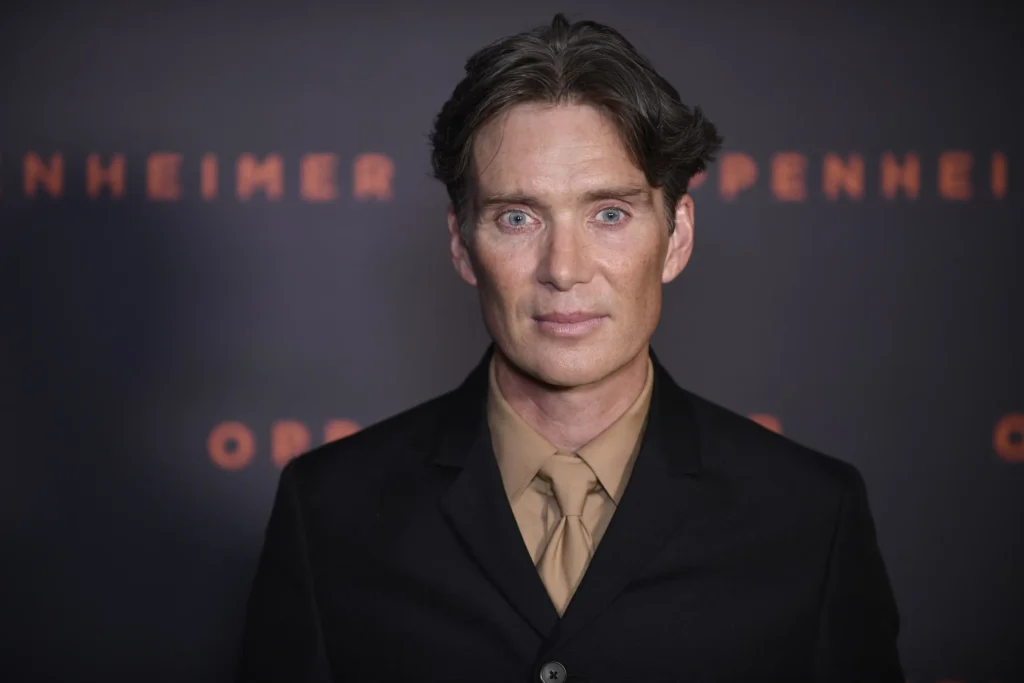
Cillian Murphy, born May 25, 1976, in Douglas, County Cork, Ireland, is an Irish actor who built a deliberately selective career for two decades before becoming a global star in his late forties. He studied law before catching what he has called the “acting bug,” making his professional debut in the 1996 stage production of Disco Pigs, and broke into film with 2002’s 28 Days Later. He became a recurring presence in Christopher Nolan’s films starting with 2005’s Batman Begins, playing Dr. Jonathan Crane across the Dark Knight trilogy before smaller roles in Inception and Dunkirk, a collaboration that spanned nearly two decades before Nolan finally cast him in a lead role. From 2013 to 2022, he starred as Thomas Shelby in the BBC and Netflix series Peaky Blinders, a role that turned him into a global cult figure, before Nolan’s Oppenheimer made him a first-time Academy Award winner in 2024, the first Irish-born actor to win Best Actor. He has been notably candid about discomfort with his own wealth, telling The Guardian he struggles with “Catholic guilt” over his paychecks. He co-owns the production company Big Things Films and has been the face of a Versace global campaign. He has been married to visual artist Yvonne McGuinness since 2004, and the couple, who moved back to Dublin from London in 2015, have two sons.
1. Film and Television Career
Murphy’s income reflects a career built on selectivity rather than blockbuster volume for most of its length, with his biggest paydays arriving only in the last several years. His early Nolan collaborations, playing a supporting villain across three Batman films plus smaller parts in Inception and Dunkirk, carried modest fees relative to his co-stars, since he was rarely the lead. Peaky Blinders changed his trajectory more than any single film role: his per-episode rate reportedly rose from around $100,000 in the early seasons to more than $2 million by the finale, with total earnings across the six-season run estimated between $10 million and $12 million. His Oppenheimer payday, a confirmed $10 million, remains the largest single paycheck of his career, and his post-Oscar asking price is estimated to have risen to $3 to $5 million per project, a fee he is expected to command for the Peaky Blinders film sequel, The Immortal Man, releasing in 2026.
- Early career, Disco Pigs through Red Eye (1996-2004): ~$2M
- Nolan ensemble era, Batman Begins through The Dark Knight Rises (2005-2012): ~$12M
- Peaky Blinders era, the television run plus film work including Dunkirk and Anthropoid (2013-2022): ~$19M
- Post-Oscar era, Oppenheimer, Small Things Like These, and Peaky Blinders: The Immortal Man (2023-2026): ~$25M
Phase total: ~$58M.
2. Endorsements
Murphy has kept his endorsement work minimal relative to his fame level, consistent with his broader reputation for avoiding the trappings of Hollywood celebrity. His most notable brand relationship is a global campaign with Versace, though no specific contract value has been disclosed.
- Versace, global campaign: ~$4M
Phase total: ~$4M.
3. Representation
Murphy’s film, television, and endorsement income has been managed through standard talent representation across his career. A blended representation rate of 13 percent, covering agent, manager, and legal fees, is applied across his combined entertainment earnings.
Representation (13% blended on $62M combined gross): -$8.06M.
4. Tax
Murphy has been based in Dublin, Ireland for most of his career, moving back from London in 2015. A blended effective rate of 45 percent is applied, reflecting Ireland’s high marginal tax rates for top earners alongside income earned on UK and US productions.
Tax (45% blended on $53.94M post-representation): -$24.27M.
Combined gross across his film and television career ($58M) and endorsements ($4M) totals $62M. After representation (-$8.06M) and tax (-$24.27M), approximately $29.67M remains before lifestyle burn.
5. Lifestyle Burn
Murphy has been unusually candid and consistent about deliberately avoiding a high-spending lifestyle. He has spoken publicly about discomfort with his wealth, chose to raise his family in Dublin rather than Los Angeles or London, and is widely described in profiles as private and low-key relative to actors of his fame level.
- Early career (1996-2004, 9 years): ~$80K/yr consumed = $0.72M
- Nolan ensemble era (2005-2012, 8 years): ~$200K/yr consumed = $1.6M
- Peaky Blinders era, raising two sons (2013-2022, 10 years): ~$400K/yr consumed = $4M
- Post-Oscar era (2023-2026, 4 years): ~$600K/yr consumed = $2.4M
Total lifestyle burn: ~$8.72M. Available to accumulate: ~$20.95M.
This burn figure represents roughly 29 percent of Murphy’s post-representation, post-tax entertainment and endorsement income, tracking closely with his own public statements about deliberately avoiding the high-spending patterns common among actors at his earnings tier.
6. Real Estate
Murphy owns a residence in Dublin reportedly valued at approximately $1.7 million, his primary property since relocating his family back to Ireland. No purchase price has been disclosed for the property, so no gain is credited here.
Real estate: $0 (no disclosed purchase price to pair against a current valuation).
7. Business Ventures (Unvalued)
Murphy co-owns the production company Big Things Films Ltd, though no projects, valuation, or profit structure have been publicly disclosed for the company.
Other business ventures: $0 (unvalued).
Net Worth Waterfall
| Line Item | Amount |
|---|---|
| Film and television career (1996-2026) | +$58M |
| Endorsements (Versace) | +$4M |
| Less: representation (13% blended on $62M combined gross) | -$8.06M |
| Less: tax (45% blended, Irish resident) | -$24.27M |
| Less: lifestyle burn (era-scaled, consumed only) | -$8.72M |
| Available to accumulate | +$20.95M |
| Real estate | $0 (no cost basis) |
| Business ventures (Big Things Films) | $0 (unvalued) |
| Total Net Worth | ~$20.95M → $20M |
Our calculation: $20 Million.
Why Our Figure Closely Matches Consensus
Celebrity Net Worth places Cillian Murphy at $20 million, and our independent build lands almost exactly there. That kind of agreement is worth noting on its own, since a sizable gap more often traces to an underpriced endorsement, an unquantified business stake, or a recent payday public trackers haven’t caught up to. Murphy simply doesn’t have those hidden line items: his endorsement work is genuinely minimal, his production company carries no disclosed value, and his one real estate holding lacks a purchase price to credit a gain against. The agreement here suggests Murphy’s income streams are thoroughly and accurately captured by existing public reporting, a genuine rarity for an actor who has spent the last three years as a reigning Academy Award winner. If Murphy’s Peaky Blinders backend, his Big Things Films income, or his current Dublin home’s purchase price were disclosed, this figure could move modestly higher.
The Oscar Winner Who Never Changed His Address
Most actors who win a Best Actor Oscar for a Christopher Nolan film about the birth of the atomic bomb are expected to follow it with a run of nine-figure paydays and a move to Los Angeles. Cillian Murphy did neither. He took the same handful of carefully chosen projects he always has, kept his family in Dublin, and reportedly spent his Oppenheimer press tour talking about guilt rather than growth. The number in this calculation reflects that choice as much as it reflects his talent: a fortune built almost entirely on acting fees, with none of the endorsement sprawl or side-business architecture that defines most of his peers, arriving at a figure that the rest of the industry already had roughly right.