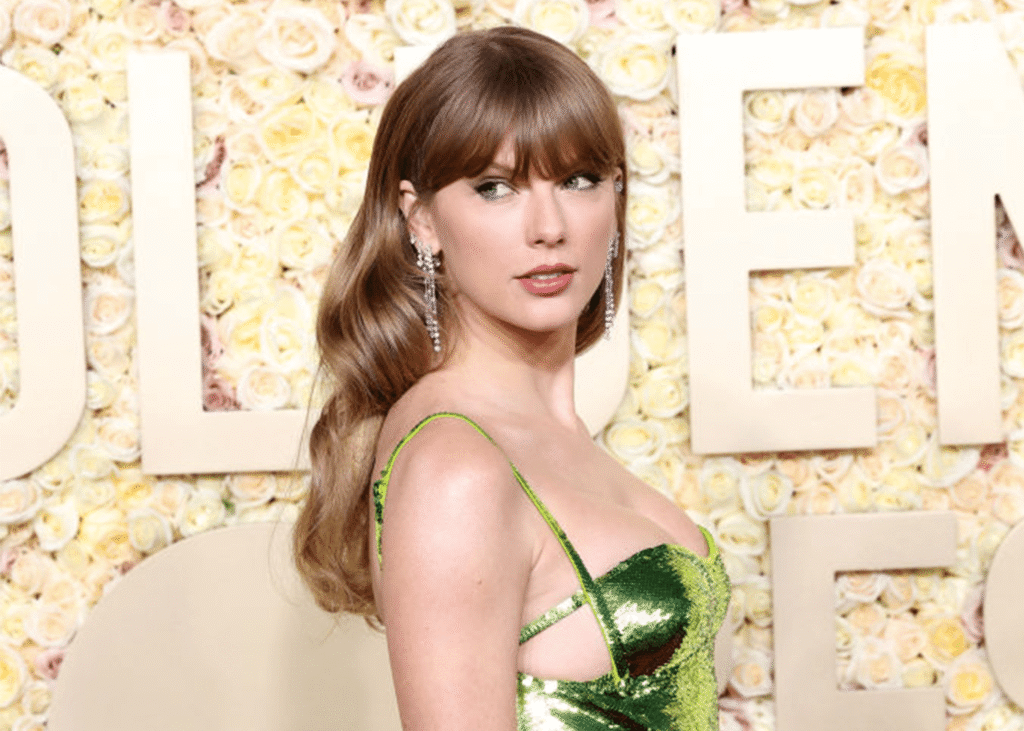
In June 2019, talent manager Scooter Braun’s company, Ithaca Holdings, acquired Big Machine Label Group, the Nashville label that had launched Taylor Swift’s career and still owned the master recordings of her first six albums. The deal was reported at roughly $300 million and included Big Machine’s full roster and business holdings. Buried inside it, almost as a footnote to the wider acquisition, was the entire recorded output of one of the most commercially dominant artists alive.
Swift found out about it the same way everyone else did: when it was announced.
Big Machine Acquisition Price (June 2019): $300 Million
“My Worst Case Scenario”
Swift’s response was immediate and public. In a lengthy Tumblr post, she called the sale “my worst case scenario,” writing that she’d found out about it the same way the public had. She accused Braun of years of manipulative treatment through his work with other clients, and said she had left Big Machine specifically because she suspected label founder Scott Borchetta was preparing to sell the company, and her music along with it.
She said she had been offered a chance to earn her masters back, one album at a time, in exchange for signing a new contract with Big Machine. She turned it down.
The industry took sides quickly. Kelly Clarkson, Halsey, Ed Sheeran and Cher publicly backed Swift. Borchetta and Braun’s camp pushed back, disputing her account of the negotiations. None of it changed the basic fact underneath the noise: Swift did not own the recordings of Taylor Swift, Fearless, Speak Now, Red, 1989, or Reputation, and had no legal path to get them back through negotiation.
So she picked a different path entirely.
The Announcement Nobody Thought Would Work
In August 2019, Swift announced she intended to re-record her first six albums from scratch. On paper, it sounded like a symbolic gesture, a way to make a point without changing who actually owned the originals. Master recordings and the underlying songwriting compositions are legally distinct: Swift owned her own compositions outright, which meant nothing stopped her from going back into a studio and recording new versions of songs she had already written, this time for herself.
The plan was to make the old versions commercially irrelevant. If new recordings of “Love Story” or “Shake It Off” sounded close enough to the originals and Swift controlled where they could be licensed, streamed, and sold, the version Braun and whoever bought the catalog next actually owned would start losing the one thing that gave it value: being the version people actually wanted to hear.
Seventeen months after buying it, Braun sold Swift’s masters again, this time to the private equity firm Shamrock Capital, in a deal reported north of $300 million. Swift said she learned about that sale the same way she’d learned about the first one. She called Shamrock directly and told them she couldn’t formally partner with them, since any transaction still involved ongoing payments back to Braun and Ithaca.
Shamrock Capital Acquisition Price (November 2020): $300+ Million
Taylor’s Version
On April 9, 2021, Swift released Fearless (Taylor’s Version), a meticulous re-recording of her 2008 album, padded out with over a dozen previously unreleased bonus tracks “From the Vault.” It debuted at number one. Red (Taylor’s Version) followed in November 2021, also number one, and its ten-minute version of “All Too Well” became a genuine cultural moment, a song people had already loved for a decade suddenly recontextualized as an act of reclamation. Speak Now (Taylor’s Version) arrived in 2023, and 1989 (Taylor’s Version) later that same year.
Streaming platforms, radio stations, and film and TV licensors increasingly defaulted to the new versions. The originals didn’t disappear, but the version of “Taylor Swift’s music” that most of the world was actually hearing, streaming, and paying for was, more and more, the version she owned outright.
A Tour Built on the Fight Itself
The re-recording campaign was still four albums deep when the Eras Tour turned it into the biggest live music event in history. The tour ran from March 2023 to December 2024: 149 shows across five continents, grossing more than $2 billion in ticket sales alone, the first tour in history to cross that threshold. A concert film released that October added another $260 million-plus at the box office, becoming the highest-grossing concert film ever made. Between the two, the Eras era generated over $2.3 billion in direct revenue, before accounting for merchandise, which industry estimates place at several hundred million dollars more on its own.
Eras Tour Gross Ticket Revenue (2023-2024): $2 Billion+
Swift didn’t just perform her catalog on that tour. She staged it as a journey through every album she’d fought to reclaim, walking out each night to Dusty Springfield’s “You Don’t Own Me” before a note of her own music played. The audience knew exactly what that meant. The fight over the masters had become part of the show itself.
In October 2023, with the Eras Tour still running, Forbes named Swift a billionaire for the first time, the first musician in history to cross that threshold primarily on the strength of songwriting and live performance rather than an outside business, brand, or investment portfolio. Her estimated $1.1 billion fortune at the time included roughly $370 million from touring and merchandise and another $400 million tied to music released since 2019, the years she’d spent both re-recording her old catalog and releasing new albums under a label deal where she owned her masters from day one.
Taylor Swift Net Worth, Billionaire Milestone (October 2023): $1.1 Billion
Buying It Back Anyway
By the time the Eras Tour wrapped, Swift had re-recorded four of her six original albums. Reputation and her 2006 self-titled debut remained the two she hadn’t gotten to. She didn’t need to finish the job the way she’d started it.
On May 30, 2025, Swift announced she had purchased the master recordings of all six of her original albums outright, buying them from Shamrock Capital in a deal she did not publicly price, though it was widely reported in the range of $360 million. In a letter posted to her website, she wrote that all the music she had ever made now belonged to her, calling it “actually being pretty reserved” for a description of her greatest dream come true.
Shamrock, for its part, seemed to know exactly what it had been sitting on. “We made this investment because we believe in the immense value and opportunity that comes with her work,” the firm had said back in 2020, when Swift first declined to formally partner with them. Five years later, that value was exactly why she came back to buy it.
Master Recordings Repurchase Price (May 2025, reported): ~$360 Million
Braun, asked for comment when the news broke, offered five words: “I am happy for her.”
What the Whole Fight Was Actually Worth
Taylor Swift’s net worth now sits at an estimated $2 billion, with her music catalog alone valued at roughly $900 million, a figure that climbed specifically because she went out and bought the part of it she didn’t already own. Nearly $800 million more comes directly from touring and performance royalties, income that, unlike the catalog fight, was never in dispute. She owns virtually all of it now: every master, every composition, every dollar the Eras Tour generated.
None of that was guaranteed in June 2019. A different artist, one without the songwriting leverage, the fan base, or the sheer stubbornness to spend six years re-recording her own back catalog for spite and principle, might have taken the deal Big Machine offered and moved on. Swift instead turned a hostile takeover of her life’s work into the exact same thing that eventually let her buy it back on her own terms: proof, delivered one platinum re-recording at a time, of precisely how much that catalog was worth, and precisely who the audience believed it belonged to.