$4.4 Billion
WHO HE IS
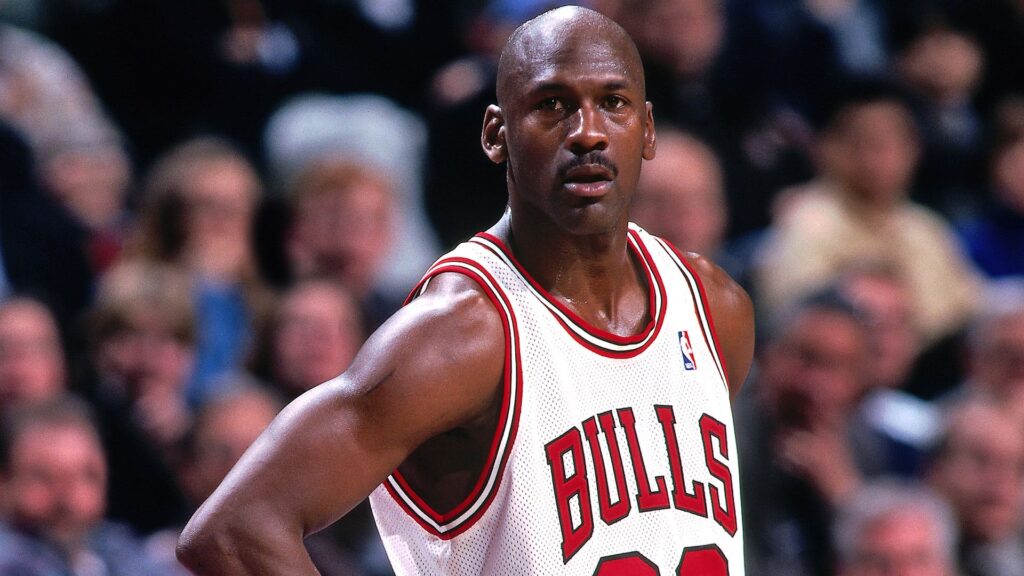
Michael Jeffrey Jordan, born February 17, 1963, in Brooklyn and raised in Wilmington, North Carolina, is widely regarded as the greatest basketball player of all time and, decades after his final game, the wealthiest athlete in history by a wide margin. He won six NBA championships and five MVP awards across 15 seasons with the Chicago Bulls and Washington Wizards, but his financial story is almost entirely a post-salary one: his career playing salary totaled roughly $94 million, a figure his Nike partnership alone now exceeds most years.
Jordan’s business career began with a rookie-year Nike deal in 1984 that included an unprecedented royalty structure, evolved into the Jordan Brand, a Nike sub-label that generates billions in annual revenue, and expanded into team ownership when he bought into the Charlotte Bobcats (later Hornets) in 2006 and took majority control in 2010. He sold his controlling stake in 2023 at a $3 billion valuation, one of the largest returns in sports ownership history, while retaining a minority position. He also holds stakes in NASCAR’s 23XI Racing, DraftKings, and Cincoro Tequila, and became the first professional athlete to appear on the Forbes 400 list of wealthiest Americans.
1. Career Earned Income (1984-2026)
This is the foundation of Jordan’s fortune: NBA playing salary, Nike and Jordan Brand royalties, and endorsement income from Gatorade, Hanes, McDonald’s, Wheaties, Upper Deck, Oakley, and 2K Sports, combined into a single documented figure. Sportico’s April 2026 all-time highest-paid athletes analysis puts this cumulative, unadjusted total at $3.28 billion through the 2025-26 period, explicitly excluding investment gains and asset sales such as the Hornets. His 1984 Nike deal, structured with a then-unprecedented 5% royalty on Air Jordan sales rather than a flat endorsement fee, is the single decision most responsible for this figure: Jordan Brand alone generated roughly $6.6 billion in revenue in its most recent reported fiscal year, and his 5% royalty on that translates to $150M to $275M annually even in retirement.
Career earned income (salary, royalties, endorsements, 1984-2026): $3.28B gross.
2. Representation
Jordan was represented for his playing career and the negotiation of his original, deal-defining 1984 Nike contract by David Falk, one of the sport’s most influential agents. That active representation relationship effectively wound down as Jordan’s playing career ended and Falk’s own agency was sold in the mid-2000s. The critical detail: Jordan Brand’s revenue, and therefore the bulk of the cumulative $3.28B figure, grew overwhelmingly after that point, from a few hundred million dollars a year in the mid-2000s to $6.6B by the 2020s, decades after any active agent relationship existed to take a percentage. Applying a single blended representation rate to the entire $3.28B would incorrectly charge a commission on decades of self-managed royalty income where no agent was involved. We instead apply representation only to the portion of income earned during Jordan’s playing career and the active Falk-representation period through the mid-2000s, estimated at roughly $700M of the total, covering his NBA salary and the endorsement and early royalty income negotiated during that era.
Representation (8% on the ~$700M actively-represented portion only): -$56M. Post-representation: ~$3.22B.
3. Tax
Jordan’s tax exposure shifted across his career: Illinois residency during his playing years (roughly 40% effective for a high earner), followed by decades of Nike royalty income earned partly as a North Carolina resident during his Hornets ownership era and partly as a Florida resident, where he has increasingly based himself and where there is no state income tax. We apply a blended effective rate reflecting this mix across four decades of earned income.
Tax (40% effective): -$1.288B. Net after representation and tax: ~$1.934B.
4. Lifestyle Burn
Jordan’s spending is extensively documented across four decades: a well-known high-stakes golf and gambling habit, a custom Gulfstream jet, a superyacht, an extensive car collection, and the construction of his ultra-exclusive Grove XXIII golf club in Florida (nicknamed “Slaughterhouse 23” by members). Spending scaled with both fame and available wealth across each career phase.
- 1984-1998 (playing career): ~$3M/yr = $45M
- 1998-2010 (early retirement, Wizards comeback, high-profile gambling/golf lifestyle): ~$8M/yr = $96M
- 2010-2023 (Hornets ownership era, jet, yacht, Grove XXIII build-out): ~$15M/yr = $195M
- 2023-2026 (full retirement, family life with wife Yvette Prieto and their twin daughters): ~$10M/yr = $30M
Total lifestyle burn: ~$366M. Available to accumulate: ~$1.568B.
5. Charlotte Hornets Sale (2023)
This is the second-largest single component of Jordan’s fortune after his Nike royalties. Jordan bought a minority stake in the then-Charlotte Bobcats in 2006, took majority control in 2010 at a total team valuation of $275M (with his own cash contribution reported at roughly $175M, partly financed through assumed debt), sold a minority stake to investors Gabe Plotkin and Daniel Sundheim in 2019 at a $1.5 billion valuation, and sold his remaining controlling interest in 2023 to a group led by Plotkin and Rick Schnall at an approximately $3 billion valuation, retaining a minority stake in the process. Independent analysis of Jordan’s wealth (Investormint, cross-referencing Forbes’ own methodology) identifies the realized gain from this exit at approximately $2.7B, which we use here as a better-sourced figure than a rough derivation from the headline transaction value alone. This gain is taxed at capital gains rates rather than ordinary income given the nature of the transaction.
- Realized gain on sale of controlling interest: ~$2.7B
- Less capital gains tax (approximately 24%, reflecting Florida residency by the time of sale and federal long-term capital gains plus net investment income tax): -$648M
Hornets sale, net after capital gains tax: ~$2.05B.
6. Charlotte Hornets Retained Stake
Jordan’s exact retained ownership percentage following the 2023 sale has never been publicly disclosed, which several outlets covering the transaction explicitly note makes precise calculation impossible. Based on the scale of stakes sold to other minority investors in the same transaction, we apply a conservative estimate of a 15% retained position against the Hornets’ current valuation, reported around $4 billion in 2026.
Hornets retained stake (~15% of ~$4B): ~$600M.
7. 23XI Racing
Jordan co-founded this NASCAR Cup Series team with driver Denny Hamlin in 2020. The team has grown rapidly, backed by sponsors including DoorDash, McDonald’s, and Monster Energy, and was independently valued at approximately $150M as of 2025, with strong on-track performance continuing into the 2026 season following a settled antitrust dispute with NASCAR. We credit Jordan’s presumed even split with Hamlin.
23XI Racing (50% of ~$150M): ~$75M.
8. DraftKings Equity
Jordan joined DraftKings as an investor and special advisor to the board in September 2020. The size of his equity position has never been disclosed, and DraftKings’ market capitalization has fluctuated between $10 billion and $20 billion since, meaning even a small stake could carry real value. Given the total absence of a disclosed percentage, we apply a conservative estimate rather than attempt to size a position we cannot verify.
DraftKings equity: ~$25M.
9. Cincoro Tequila
Jordan co-founded this ultra-premium tequila brand in 2019 alongside fellow NBA team owners Jeanie Buss, Wes Edens, Wyc Grousbeck, and Emilia Fazzalari. The brand has sold over 1.5 million bottles and won 23 international awards but has not reached the commercial scale of celebrity spirits brands like Casamigos or Teremana. Split roughly five ways among its founding partners, we apply a conservative estimate for Jordan’s share.
Cincoro Tequila stake: ~$12M.
10. Real Estate
Robb Report’s property portfolio analysis puts Jordan’s real estate holdings, including his Florida estate, at approximately $29M in total current value. Without disclosed purchase prices for each property, and consistent with our standard treatment of crediting gain rather than full current value, we apply a conservative estimate that roughly half of that figure represents appreciation above what he originally paid, rather than crediting the full portfolio value.
Real estate appreciation (conservative estimate): ~$14M.
11. Other Ventures
Jordan holds a range of additional smaller interests, several with real, sourced documentation. He has co-owned an automotive dealership group, Michael Jordan Nissan, with business partners since 1990, expanding to multiple locations across North Carolina and Maryland; the group’s revenue reached approximately $71M as of mid-2025, though Jordan holds a minority partner stake rather than sole ownership. He also holds investments in fintech company Vanilla, esports organization Axiomatic Gaming, and is a limited partner in Courtside Ventures, a sports and lifestyle-focused venture capital fund. Additional interests include a chain of Michael Jordan’s Steak House restaurants in Chicago, New York, and Washington D.C., MJE hair salons, and his Grove XXIII private golf club, which generates exclusive membership revenue. None of these carry individually disclosed valuations, so we apply a conservative combined estimate reflecting a minority stake in a modest-revenue dealership group plus small stakes in early-stage ventures and fund commitments.
Other ventures (dealership group, Vanilla, Axiomatic Gaming, Courtside Ventures, restaurants, and related): ~$20M.
12. Wealth Management
Beyond the specific holdings itemized above, no separate, verified wealth management portfolio with disclosed returns was found in available sourcing.
Wealth Management: None reported beyond items captured above ($0).
Net Worth Waterfall
| Line Item | Amount |
|---|---|
| Career earned income (salary, Nike/Jordan Brand, endorsements) | +$3.28B |
| Less: representation (8% on actively-represented ~$700M only) | -$56M |
| Less: tax (40% effective) | -$1.29B |
| Less: lifestyle burn (era-scaled) | -$366M |
| Charlotte Hornets sale, net after capital gains tax (2023) | +$2.05B |
| Charlotte Hornets retained stake (~15%) | +$600M |
| 23XI Racing (50%) | +$75M |
| DraftKings equity | +$25M |
| Cincoro Tequila stake | +$12M |
| Real estate appreciation | +$14M |
| Other ventures (dealership group, Vanilla, Axiomatic, Courtside) | +$20M |
| Wealth Management | $0 |
| Total Net Worth | ~$4.36B -> $4.4 Billion |
Why Our Figure Differs From Consensus
Forbes currently puts Jordan at $4.3 billion, and our independently built figure lands close by at $4.4 billion after correcting for two things a first-pass calculation easily gets wrong. First, representation: it’s tempting to apply a single blended agent commission rate across Jordan’s entire career earned income, but the overwhelming majority of that income, decades of Nike/Jordan Brand royalty growth, was earned long after his active agent relationship with David Falk wound down in the mid-2000s. Charging a commission on self-managed royalty checks decades after the deal was negotiated would meaningfully understate his real take-home. Second, the Charlotte Hornets sale: rather than deriving the realized gain from the headline $3 billion transaction value alone, we cross-referenced an independent breakdown of Forbes’ own methodology that identifies the gain more precisely at approximately $2.7 billion, a figure a rougher percentage-based estimate would have understated. We also found genuine, previously undocumented value in Jordan’s minority stake in an automotive dealership group he has co-owned since 1990, along with smaller stakes in fintech company Vanilla, esports outfit Axiomatic Gaming, and VC fund Courtside Ventures, none of which are typically itemized in consensus estimates but which are real, sourced holdings, and which are the main reason our figure lands modestly above rather than at Forbes’ own number. The remaining softness in our figure, and in every published estimate of Jordan’s wealth, sits in two genuinely undisclosed numbers: his exact retained Hornets ownership percentage and the size of his DraftKings equity position, neither of which has ever been made public by any source we reviewed.
The $500,000 Bet Nobody Else Would Take
In 1984, Nike was not the obvious choice for an unproven rookie out of North Carolina. Adidas and Converse dominated basketball, and Nike offered Jordan a modest $500,000-a-year deal that most stars of the era would have negotiated as a flat fee and moved on from. Instead, his camp pushed for a royalty on sales, a structure almost nobody in sports asked for at the time. Air Jordans sold $126 million in their first year alone. Four decades, six championships, one team sale worth ten times what he paid for it, and a NASCAR team later, that single contract clause has generated more money than every other basketball player in history has made playing the game combined. Jordan’s talent won him championships. That one negotiated percentage point is why his bank account never noticed he retired. did not become the richest athlete in history because he was the best player. He became the richest because, at the very start, he insisted on owning a piece of the thing his greatness would build.