$130 Million
WHO HE IS
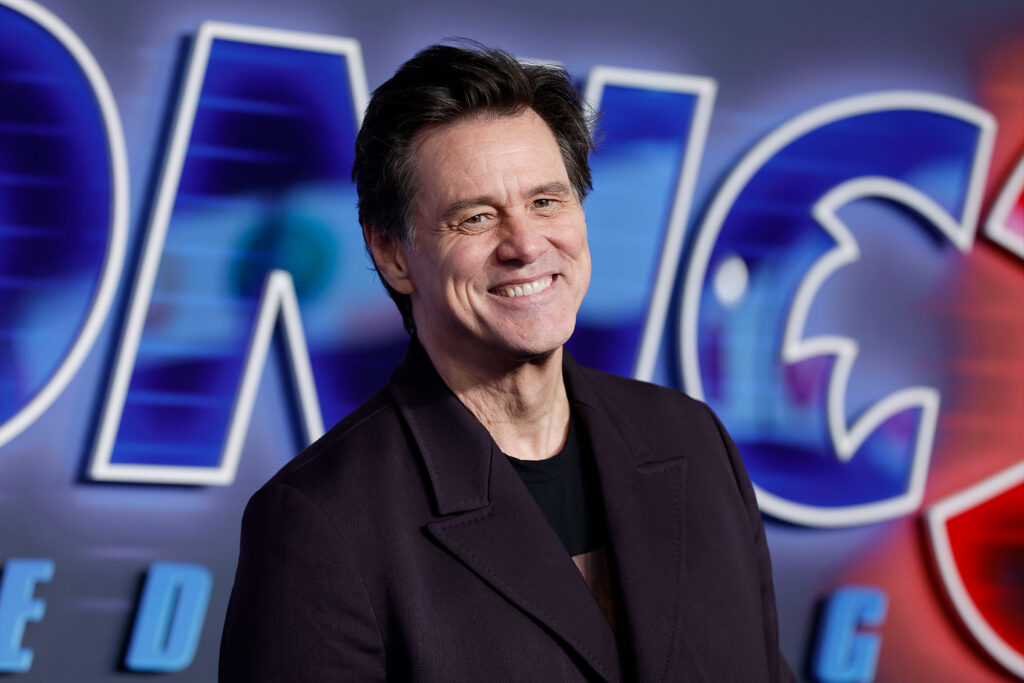
Jim Carrey, born James Eugene Carrey on January 17, 1962, in Newmarket, Ontario, Canada, is a Canadian American actor, comedian, and producer. He broke through on the Fox sketch series In Living Color in 1990, then became Hollywood’s biggest comedic star in 1994 with a trio of hits released in a single year, Ace Ventura: Pet Detective, The Mask, and Dumb and Dumber. He went on to become the first actor to command a $20 million base salary for a single film, alternated blockbuster comedy with acclaimed dramatic turns in The Truman Show and Man on the Moon, and later returned to family franchise work as Dr. Robotnik in the Sonic the Hedgehog films. He has been married twice, to Melissa Womer and to Lauren Holly, and has one daughter, Jane.
1. Film and Television Career
Carrey’s earnings history is one of the clearest in Hollywood, tracking a steady rise from sketch comedy wages to a string of $20 million paydays, punctuated by two of the most talked about backend deals in film history.
- In Living Color, roughly 100 episodes at $25,000 per episode (1990 to 1994): ~$2.5M
- Ace Ventura: Pet Detective, $350,000; The Mask, $540,000; Dumb and Dumber, $7M (all 1994): ~$7.9M
- Ace Ventura: When Nature Calls (1995): $15M
- Batman Forever (1995): ~$5M
- The Cable Guy, the first $20 million single film salary in Hollywood history (1996): $20M
- Liar Liar (1997): $20M
- The Truman Show, a reduced dramatic fee (1998): $12M
- Man on the Moon (1999): ~$12M
- Me, Myself & Irene (2000): $20M
- How the Grinch Stole Christmas, base fee plus a percentage of merchandise sales (2000): ~$25M
- The Majestic (2001): ~$20M
- Bruce Almighty, base salary plus backend (2003): ~$30M
- Lemony Snicket’s A Series of Unfortunate Events (2004): $20M
- Eternal Sunshine of the Spotless Mind, a passion-project pay cut (2004): ~$5M
- Fun with Dick and Jane (2005): $20M
- The Number 23 (2007): ~$15M
- Yes Man, zero upfront salary in exchange for 36.2% of the film’s profits (2008): $35M
- A Christmas Carol, motion capture voice role (2009): ~$12M
- I Love You Phillip Morris, a documented pay cut to $200,000 for a low-budget passion project (2009 to 2010): $0.2M
- Mr. Popper’s Penguins (2011): ~$15M
- Kick-Ass 2 (2013): ~$5M
- Dumb and Dumber To (2014): ~$25M
- Kidding, Showtime series, two seasons (2018 to 2020): ~$8M
- Sonic the Hedgehog (2020): ~$10M
- Sonic the Hedgehog 2 (2022): ~$15M
- Sonic the Hedgehog 3, publicly reported fee (2024): $12M
Film and television earnings, 1990 to 2024: ~$387M.
2. Endorsements
Carrey largely stayed out of the celebrity endorsement business throughout his career, a deliberate contrast with many of his A-list peers. His first ever advertising appearance came in a 2022 Super Bowl commercial reprising his Cable Guy persona.
Endorsement income (2022 Super Bowl campaign, Carrey’s only documented ad appearance): ~$3M.
3. Business Ventures
Carrey has not built an outside company or held a significant reported equity stake in a business the way many of his peers have. His post-acting creative work, painting and political cartooning, has generated cultural attention but no publicly documented income figures large enough to register as a held asset. No business equity is counted here.
4. Representation
Representation across film, television, and endorsement income, covering agent, manager, and legal fees, is applied at a blended 13 percent, standard for a full Hollywood team across a three-decade career.
Representation (13% blended on $390M combined earnings): -$50.7M.
5. Tax
Carrey has been a California resident for the great majority of his career. We apply the standard 42 percent effective rate used for established Hollywood talent, reflecting loan-out company structuring against California’s roughly 50 percent marginal combined rate.
Tax (42% effective on $339.3M post-representation income): -$142.51M.
6. Lifestyle Burn
Carrey has been unusually direct in public about his own spending. In a 2024 interview with the Associated Press explaining his return to acting for Sonic the Hedgehog 3 after announcing his retirement two years earlier, he said plainly that he had bought a lot of stuff and needed the money. That admission, combined with the eventual sale of his longtime Brentwood estate for nearly $12M below its original asking price after more than two years on the market, points to real spending pressure rather than routine market softness, and justifies a lifestyle estimate above the ordinary baseline.
- Rising fame, In Living Color through Ace Ventura era (1990 to 1996, 7 years): ~$500K/yr consumed = $3.5M
- Peak Hollywood stardom, Brentwood and Malibu properties, two marriages (1997 to 2010, 14 years): ~$3M/yr consumed = $42M
- Later career, continued high spending, art collecting, and the documented overspending admitted in 2024 (2011 to 2024, 14 years): ~$2.5M/yr consumed = $35M
Total lifestyle burn: ~$80.5M, roughly 41 percent of post-tax income, above our usual range but supported by Carrey’s own on-record statement and the forced markdown sale of his primary residence.
7. Real Estate
Carrey’s real estate history includes two long-held properties with documented purchase and sale prices.
- Brentwood compound, Los Angeles, first parcel bought in 1994 for $3.8M, adjacent lot added in 2000 for $1.7M, sold in 2025 for approximately $17M after an extended listing period and repeated price cuts from an original $28.9M ask: against a combined cost basis of $5.5M, a documented gain of $11.5M
- Malibu beachfront mansion, purchased in 2002 for $9.75M, sold in 2013 for $13.4M: a documented gain of $3.65M
Real estate appreciation: $15.15M.
8. Wealth Management
No dedicated investment manager, fund, or disciplined portfolio program has been publicly documented for Carrey.
Wealth Management: None reported ($0).
Net Worth Waterfall
| Line Item | Amount |
|---|---|
| Film and television career (1990 to 2024) | +$387M |
| Endorsements (2022 Super Bowl campaign) | +$3M |
| Less: representation (13% blended) | -$50.7M |
| Less: tax (42% effective, California resident) | -$142.51M |
| Less: lifestyle burn (era-scaled, consumed only) | -$80.5M |
| Available to accumulate | +$116.29M |
| Real estate (Brentwood and Malibu gains) | +$15.15M |
| Business equity | $0 |
| Wealth Management | $0 |
| Total (raw) | ~$131.44M |
| Final Figure (rounded) | $130M |
Our calculation: $130 Million.
Why Our Figure Differs From Widely Circulated Estimates
The commonly cited figure for Carrey’s net worth is $180M, and on paper his career gross would support a number in that range. Our figure lands below that consensus, and unlike cases where a lower number simply reflects missing data, this gap traces to two specific, well-documented events rather than an undercounted asset.
First, Carrey told the Associated Press directly in 2024 that he had bought a lot of stuff and needed the money, an unusually candid admission from an actor of his stature that points to real spending well above what a standard lifestyle estimate would assume. Second, his longtime Brentwood estate sat on the market for more than two years and ultimately sold for close to $12M below its original asking price, a documented shortfall rather than a routine market fluctuation. Both facts are specific, sourced, and point in the same direction, so we have not forced the number back up toward the wider consensus.
The Van, the Check, and the Comeback
Jim Carrey’s financial story has always been framed by the check he wrote himself for $10 million in the Hollywood Hills decades before he had it, and by the fact that he genuinely earned that sum many times over. What makes his current chapter different is that the man who once declared he had enough has said, in his own words, that he needed to go back to work. Few actors at his level have ever been that plain about where the money went.o one else could, banked it sensibly rather than spending it into the ground like Nicolas Cage, and then walked toward a quieter life of canvases and reflection. He is wealthy not because he kept chasing the next blockbuster, but because he caught enough of them early, kept what he earned, and knew when to stop. In a series full of people maximizing, he is the one who chose to be content.