$170 Million
WHO HE IS
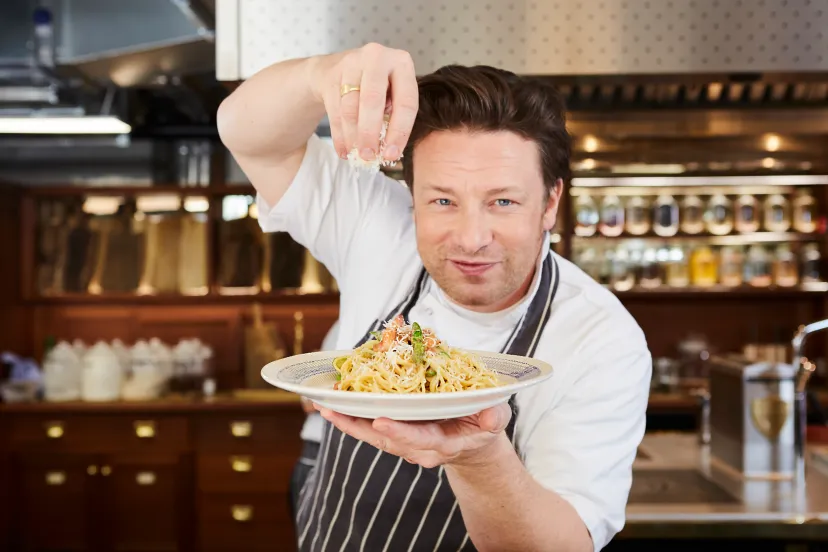
Jamie Trevor Oliver, born May 27, 1975, in Clavering, Essex, England, is a British chef, restaurateur, and media personality. He grew up helping in the kitchen of his parents’ pub, The Cricketers, left school at 16 with two GCSEs despite struggling with dyslexia, and trained at Westminster Catering College before working in France and at Antonio Carluccio’s Neal Street Restaurant under mentor Gennaro Contaldo. A stint as sous chef at The River Café led to a documentary appearance that launched his television career: The Naked Chef debuted on BBC Two in 1999, and its companion cookbook sold 1.2 million copies in its first year. He has since published more than 30 books, sold over 50 million copies worldwide, and become the best-selling British non-fiction author since records began, behind only J.K. Rowling among all British authors. He built the Jamie’s Italian restaurant chain into an 86-location global operation before it collapsed into administration in May 2019, closing 22 of 25 UK locations, eliminating roughly 1,300 jobs, and leaving £83M in debt that was largely unrecovered by creditors. His media and publishing businesses, run through Jamie Oliver Holdings Ltd. and structurally separate from the restaurant equity, survived the collapse intact. He has since reopened in London at the Theatre Royal, Drury Lane, in partnership with Andrew Lloyd Webber, and opened a restaurant in Belgrade, Serbia. He held an 11-year endorsement partnership with UK supermarket chain Sainsbury’s and a two-decade-plus cookware licensing partnership with Groupe SEB (Tefal). He has been married to Juliette “Jools” Norton since 2000, and the couple has five children.
1. Cookbook Royalties (1999-2026)
Oliver’s publishing career is the single largest and most precisely documented driver of his wealth. As of February 2019, he had sold more than 14.55 million books, generating, per Wikipedia, just under £180M for Oliver personally, a rare instance of a specific, sourced lifetime royalty figure for a celebrity chef author. He has continued publishing since, including a children’s fiction series launched in 2023, though at a somewhat lower rate reflecting both industry-wide softening in cookbook sales and a smaller release cadence.
- Documented cumulative royalties through February 2019: £180M
- Continued publishing era, including the Billy children’s book series (2019-2026, 7 years): ~£6M/yr = £42M
Cookbook royalties: £222M gross (~$281.94M).
2. Television, Production, and Licensing Income via Jamie Oliver Holdings (1999-2026)
Oliver’s television career runs from The Naked Chef through Jamie’s Kitchen, Ministry of Food, Jamie’s 15-Minute Meals and 30-Minute Meals (broadcast in over 130 countries), the US series Food Revolution, and, most recently, a 2025 appearance on Netflix’s Chef’s Table: Legends. This income runs through Jamie Oliver Holdings Ltd., which also historically received a documented £9M in dividends and salaries between 2004 and 2009, and, more recently, specific annual dividend figures: £6M in 2021, £6.8M in 2022, and £2.64M in 2023, the latter reflecting a deliberate pay cut. These documented dividend years are used directly rather than era-averaged, with surrounding years estimated conservatively.
- Early breakout era, The Naked Chef and Jamie’s Kitchen (1999-2004): ~£500K/yr = £2.5M
- Documented dividends and salaries (2004-2009): £9M
- Peak international syndication era, Ministry of Food through Food Revolution (2009-2019): ~£2.5M/yr = £25M
- Post-restaurant-collapse recovery, pre-documented years (2019-2021): ~£3M/yr = £6M
- Documented dividend (2021): £6M
- Documented dividend (2022): £6.8M
- Documented dividend, pay-cut year (2023): £2.64M
- Recovery era, including Netflix and new restaurant openings (2024-2026): ~£4M/yr = £12M
Television, production, and licensing income: £69.94M gross (~$88.82M).
3. Sainsbury’s Endorsement (2000-2011)
From June 2000, Oliver was the public face of UK supermarket chain Sainsbury’s, a partnership documented to have earned him approximately £1.2M annually before the two parties ended the arrangement after 11 years in 2011.
- Sainsbury’s endorsement income (2000-2011, 11 years, £1.2M/yr documented): £13.2M
Sainsbury’s endorsement: £13.2M gross (~$16.76M).
4. Tefal Cookware Licensing (2003-2026)
Oliver’s partnership with Groupe SEB, maker of Tefal cookware, began in 2003 and is described as one of the most lucrative and longest-running celebrity chef cookware licensing deals in Europe.
- Tefal cookware licensing (2003-2026, 23 years): ~£1M/yr = £23M
Tefal cookware licensing: £23M gross (~$29.21M).
5. Representation
Standard entertainment and publishing representation applies across Oliver’s book, television, and endorsement income.
- Representation on all income streams (10% x £328.14M): -£32.81M
Total representation: -£32.81M (~-$41.67M).
6. Tax
Oliver has been a UK resident throughout his career. We use the UK’s approximately 47% effective rate.
- Tax on all income net of representation (47% x £295.33M): -£138.80M
Total tax: -£138.80M (~-$176.28M).
7. Lifestyle Burn
Oliver has been married since 2000 and has five children, with a lifestyle that scaled meaningfully during his restaurant chain’s peak years before moderating somewhat after its 2019 collapse.
- Early fame, growing family (1999-2009, 10 years): ~£500K/yr = £5M
- Peak wealth era, pre-restaurant-collapse (2009-2019, 10 years): ~£1.5M/yr = £15M
- Post-collapse era, continued family and multi-property lifestyle (2019-2026, 7 years): ~£1.2M/yr = £8.4M
Total lifestyle burn: ~£28.4M (~-$36.07M).
8. The 2019 Restaurant Group Collapse (Documented Loss)
This is a genuine, well-documented negative event that most competitor net worth figures appear to treat only as a reputational footnote rather than a real financial loss. When Jamie Oliver Restaurant Group entered administration in May 2019 with £83M in debt, Oliver personally lost a £10M loan he had made to the company in 2017 to keep it afloat; administrators later confirmed most of the group’s debt would not be recovered by creditors. This is money that left Oliver’s personal wealth, built through his media and publishing businesses, and was never returned.
- Personal loan lost in 2019 restaurant group collapse: -£10M
Restaurant collapse loss: -£10M (~-$12.7M).
9. Real Estate
Oliver owns a restored Victorian mansion in Clapham, South London, estimated at approximately £9.5M, a 15-bedroom mansion in Essex estimated at approximately £8M, and a property in the Cotswolds. No source provides a documented purchase price alongside these current value estimates, so no real estate gain is counted here. This is treated as a documented gap rather than an assumed £0 outcome.
Real estate: £0 counted (documented, unvalued).
10. Business Equity
Jamie Oliver Holdings Ltd., the media, publishing, and licensing company that survived the 2019 restaurant collapse intact, represents a standing going-concern asset distinct from its annual dividend distributions already counted above, reflecting a substantially larger scale of operation than most other chef-owned companies on this site.
- Jamie Oliver Holdings Ltd., estimated standing value: +£15M
Business equity: +£15M (~$19.05M).
11. Wealth Management
No independently documented wealth management program has been found for Oliver beyond the business interests already priced above.
Wealth Management: None reported (£0).
Net Worth Waterfall
| Line Item | Amount (GBP) | Amount (USD, ~1.27) |
|---|---|---|
| Cookbook royalties (1999-2026) | +£222M | +$281.94M |
| Television, production, and licensing income (1999-2026) | +£69.94M | +$88.82M |
| Sainsbury’s endorsement (2000-2011) | +£13.2M | +$16.76M |
| Tefal cookware licensing (2003-2026) | +£23M | +$29.21M |
| Less: representation | -£32.81M | -$41.67M |
| Less: tax | -£138.80M | -$176.28M |
| Less: lifestyle burn (era-scaled, consumed only) | -£28.4M | -$36.07M |
| Less: 2019 restaurant group collapse, personal loan lost | -£10M | -$12.7M |
| Real estate | £0 | $0 |
| Jamie Oliver Holdings Ltd. business equity (estimated) | +£15M | +$19.05M |
| Wealth Management | £0 | $0 |
| Raw Total | £133.13M | $169.08M |
| Total Net Worth (rounded) | $170M |
Why Our Figure Differs From Consensus
Our build lands at $170M, below the $200M figure widely cited by Celebrity Net Worth and repeated across most outlets, though it lines up reasonably well with a separate, independently sourced trajectory: Wikipedia cites Oliver’s net worth as estimated at £240M in 2014, declining to £173M roughly a decade later, a real, documented decline consistent with the impact of the 2019 restaurant collapse rather than a flat or recovered figure. The gap with the $200M consensus comes largely from a factor most competitor write-ups appear to skip past entirely: the real, documented £10M personal loan Oliver lost when his restaurant group collapsed into administration in 2019, money that left his personal wealth and was never recovered. We also build his television and licensing income from specific documented dividend figures (£9M across 2004-2009, and £6M, £6.8M, and £2.64M in 2021, 2022, and 2023 respectively) rather than a flat annual estimate, which produces a more conservative overall figure than treating his post-2019 income as fully recovered to pre-collapse levels. If Oliver’s newer restaurant ventures in London and Belgrade scale meaningfully, or if further Holdings dividend figures are disclosed, this number would move upward.
The Chef Whose Books Outlasted His Restaurants
Jamie Oliver’s financial story is really two stories that happened to share a name. One is the restaurant empire that grew to 86 locations and collapsed in five years, taking a personal £10M loan down with it and putting more than a thousand people out of work. The other is a publishing operation so consistently profitable, £180M generated from books alone by 2019, that it barely registered the restaurant collapse when it happened, still paying him and his wife millions in dividends within three years of the wreckage. Most celebrity chefs build their fortune around the restaurant. Oliver’s fortune survived losing his.