$60 Million
Who He Is
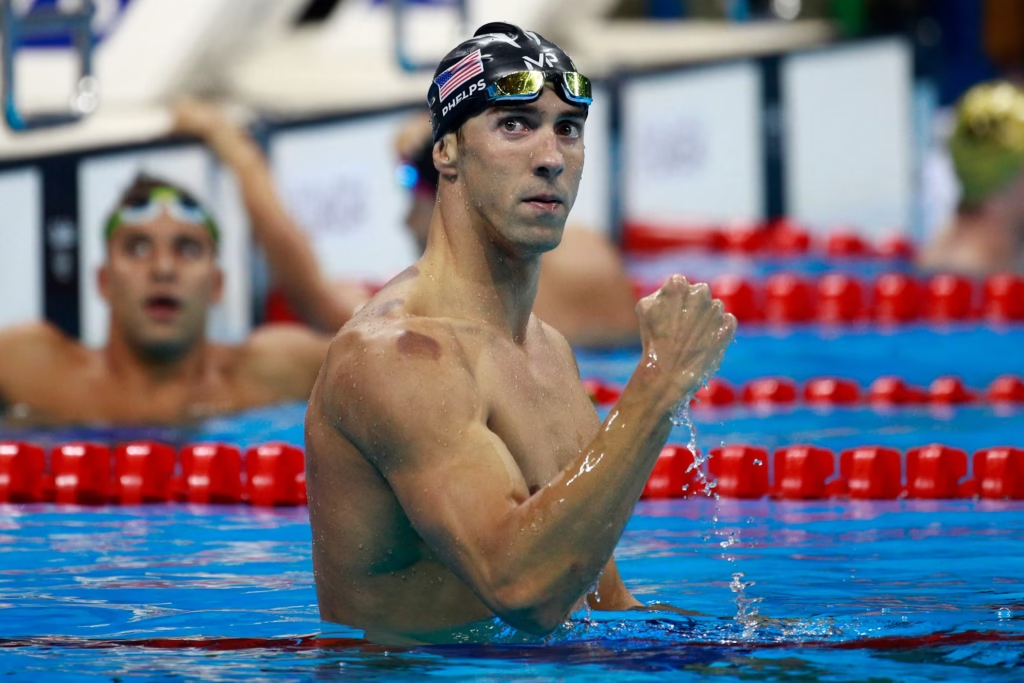
Michael Fred Phelps II, born June 30, 1985, in Baltimore, Maryland, is the most decorated Olympic athlete in history. Across five Olympic Games spanning 2000 to 2016, he won 28 medals in total – 23 of them gold – a record no other competitor in any sport has approached in the modern era. His dominance peaked at the 2008 Beijing Olympics, where he won eight gold medals in a single Games, breaking Mark Spitz’s 36-year-old record of seven. He holds 39 world records. He retired after the 2016 Rio Games and lives in Paradise Valley, Arizona, with his wife Nicole Johnson and their four sons. Beyond swimming, he has become one of the most prominent public advocates for mental health awareness in American sport, openly discussing his own battles with depression and suicidal ideation after his 2012 retirement.
His wealth story is almost entirely an endorsement story split into two chapters: the active career (2001-2016), and a post-retirement phase (2017-2025) that kept the dollars flowing long after he left the pool.
1. Active Career Endorsements (2001-2016)
Phelps signed his first deal with Speedo at age 16 in 2001. The relationship anchored his commercial life for more than a decade.
- Speedo (2001-2013): Starting at modest early fees, scaling sharply after Beijing 2008. Average across the full phase approximately $3M/yr. Plus a $1M performance bonus for breaking Spitz’s record in 2008 – immediately donated to his foundation and excluded from personal net worth. Total Speedo (excluding donated bonus): ~$36M.
- Aqua Sphere / MP Brand (2014-2016): Smaller company, undisclosed terms. Estimated ~$2M/yr. Total: ~$4M.
- Under Armour: Initial 3-year deal from ~2010 estimated at $5M total by sports marketing experts at the time. Continued in various forms through retirement. Career total: ~$8M.
- Secondary portfolio (Visa, Omega, Subway, Wheaties, Louis Vuitton, Head and Shoulders, Hilton, Gatorade, AT&T, PowerBar, Kellogg’s, Colgate, Master Spas, others): At peak (2008-2012) approximately $5-6M/yr combined, scaled down either side. Active career total: ~$46M.
Prize money (USOC Olympic bonuses across all medals): ~$640K. Book and media: ~$2M.
Total active career gross: ~$97M.
2. Post-Retirement Income (2017-2025)
Phelps did not fade commercially after retiring in 2016. His mental health advocacy opened new brand categories, his Olympic legacy remained evergreen across four-year cycles, and his speaking circuit became a meaningful income source. TheStreet documented his ongoing earnings at approximately $9.3M/yr across all income sources as of 2019, well into retirement. Applied across nine post-retirement years (2017-2025), that yields approximately $84M additional gross.
Key post-retirement streams include ongoing Under Armour and Omega ambassador relationships, a Talkspace brand partnership, a Pfizer collaboration announced in 2023, the NBC Paris 2024 broadcast analyst role, corporate speaking at $100K-$150K per engagement, MP swimwear brand royalties from Aqua Lung, and general licensing and media work.
Post-retirement gross: ~$84M.
Total lifetime gross: ~$181M.
3. Representation
Phelps was represented throughout his career by Peter Carlisle of Octagon, one of the most prominent Olympic athlete agents in the US. Standard Octagon fee approximately 15% on endorsements, taken off the gross before tax.
Representation (15% of $181M): -$27M. Net after representation: ~$154M.
4. Tax
Phelps was a Maryland resident through approximately 2015, then moved to Arizona primarily to coach at Arizona State alongside Bob Bowman.
- Maryland era (2001-2015): Federal ~37% + Maryland state ~5.75% + local ~3% = approximately 46% effective on high earned income.
- Arizona era (2015-2025): Federal ~37% + Arizona ~2.5% flat = approximately 40% effective.
Blended effective rate across the full career on the post-representation income of ~$154M: approximately 43%.
Tax (43% of $154M): -$66M. Net after representation and tax: ~$88M.
5. Lifestyle Burn
Phelps trained full-time during his active years, which naturally caps discretionary spending. Post-retirement his lifestyle is comfortable but not ostentatious – no documented private jet ownership, no sprawling property portfolio.
- Active career (2001-2016, 16 years): $800K/yr consumed = $12.8M
- Post-retirement (2017-2025, 9 years): $1.5M/yr consumed = $13.5M
Total lifestyle burn: ~$26M. Available to accumulate: ~$62M.
6. Real Estate
- Baltimore condo: Bought 2007 for $1.69M, sold after the housing crash for $1.25M. Realized loss: -$440K.
- Paradise Valley, Arizona: Bought late 2015 for $2.53M, confirmed sold 2018 for $3.5M. Gain: +$970K.
- Current Scottsdale home: Valued at approximately $5M per CNW. No confirmed purchase price; appreciation excluded per methodology.
Real estate net gain: approximately +$1M (rounding Baltimore loss and Arizona gain).
7. Wealth Management
No major documented investment returns. Talkspace, often cited as an equity holding, went public via SPAC in 2021 at a $1.4B valuation, then declined sharply before being acquired by Universal Health Services in 2026 for $835M. Phelps’ involvement was a brand ambassador role; any equity grant would have been small and reduced in value with the share price collapse. No net positive from investments documented.
Wealth management: $0.
Net Worth Waterfall
| Line Item | Amount |
|---|---|
| Active career gross | +$97M |
| Post-retirement gross (2017-2025) | +$84M |
| Less: representation (15%, Octagon) | -$27M |
| Less: tax (43% blended, Maryland/Arizona) | -$66M |
| Less: lifestyle burn | -$26M |
| Real estate net gain | +$1M |
| Wealth management | $0 |
| Total Net Worth | ~$63M → $60M |
Our calculation: $60 Million.
Why Our Figure Differs From Consensus
CNW and most sources cite $100M. Our independent build produces $60M. The gap has one primary cause: US taxation. Phelps earned $181M gross over 25 years and paid an estimated $66M of that to federal and state governments at a blended 43% rate on post-representation income. That tax bill alone accounts for most of the distance between gross and net. There is no Dollywood equivalent here – no documented business ownership, no catalog sale, no major equity exit that bridges the gap to $100M. Talkspace declined in value after going public. The MP swimwear brand belongs to Aqua Lung, not Phelps personally. The $40M difference between our figure and CNW’s is almost certainly a combination of undisclosed private investment accounts, cash savings compounding over time, and CNW not applying US tax rates to their estimate. Our math is transparent. $60M is where it lands.
What US Tax Rates Cost the Greatest Olympian
Michael Phelps earned $181M gross over a 25-year career and retained approximately $62M before real estate – a 66% erosion from gross to net, driven almost entirely by federal and state income tax. Had he been born in Jamaica and earned the same income at the rates Usain Bolt paid, his tax bill would have been roughly $43M rather than $66M, leaving him with approximately $85M accumulated instead of $62M. That $23M difference is the price of being an American Olympic hero rather than a Jamaican one. Phelps never had the option to relocate for tax purposes the way some European athletes do – his life, his coach, his family, and his identity were always rooted in Baltimore and Arizona. He paid accordingly.