$185 Million
Who She Is
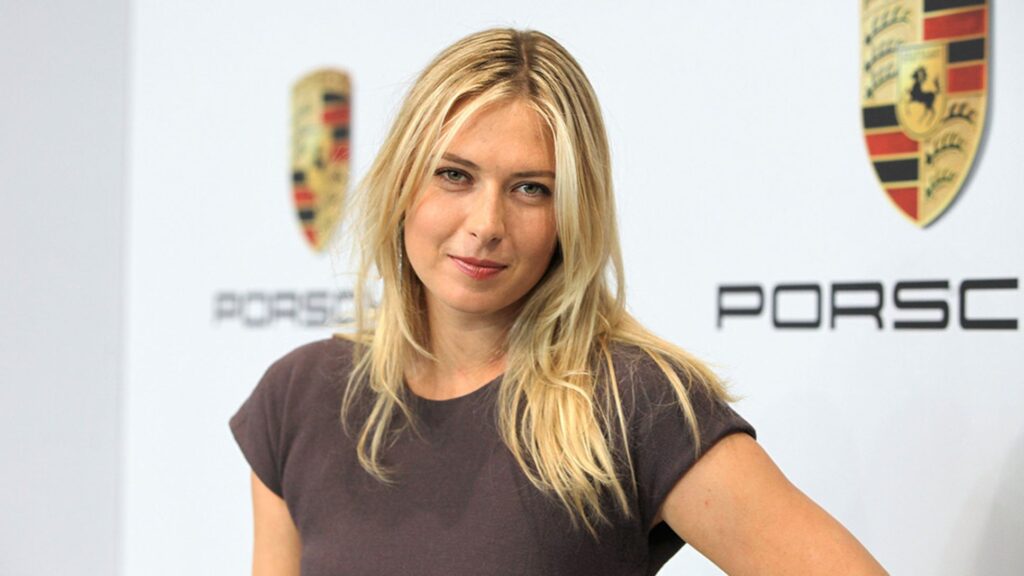
Maria Yuryevna Sharapova, born April 19, 1987, in Nyagan, Russia, is one of the most commercially successful athletes in the history of women’s sports. She moved to the United States at age six with her father, trained at the IMG Academy in Bradenton, Florida, and turned professional in 2001. Her breakthrough came in 2004 when she won Wimbledon at 17, defeating two-time defending champion Serena Williams in the final. She went on to complete a Career Grand Slam – all four major titles – becoming one of only ten women to achieve the feat in the Open Era. She won five Grand Slam titles in total, was ranked world No. 1 for 21 weeks across her career, and retired in February 2020 after a long battle with shoulder injuries.
For 11 consecutive years she was the highest-paid female athlete in the world per Forbes. Her career was significantly disrupted by a 15-month doping suspension starting in 2016 following a positive test for meldonium, a substance she maintained she had taken legally on medical advice for a decade and did not know had been newly banned. The Court of Arbitration for Sport found she had committed no significant fault. She is a permanent US resident, based in Florida throughout her career, which shapes her tax picture substantially.
1. Prize Money (2001-2020)
Sharapova’s official WTA career prize money is documented at $38,777,962 – seventh on the all-time list. This figure is authoritative and complete.
Prize money: $38.8M gross.
2. Nike (2004-2018+)
Nike signed Sharapova in 2010 to an eight-year deal reported at $70M guaranteed – the most lucrative sponsorship ever offered to a female athlete at the time. Business Insider confirmed the deal paid at least $12.5M/yr. Prior to that deal, Nike had been her clothing sponsor since approximately 2004 at lower rates.
- 2004-2009 (pre-mega deal): Estimated $4M/yr with Nike. Total: ~$24M.
- 2010-2018 (eight-year $70M deal): $70M guaranteed, potentially higher with performance bonuses. Total: $70M.
- Post-ban Nike relationship (returned after ban reduced): Nike reinstated the partnership in 2016 at reduced rates. 2017-2020 estimated $5M/yr. Total: ~$15M.
Nike total: ~$109M gross.
3. Secondary Endorsement Portfolio
Sharapova built one of the deepest endorsement portfolios in women’s sports across her active career. Key partners included TAG Heuer (2004-2015), Porsche (2013-2016, suspended at ban), Canon, Motorola, Pepsi/Gatorade (2007-2009), Samsung, Sony Ericsson, Colgate-Palmolive, Evian (continued through ban), Head rackets (throughout career), Avon, Cole Haan, and Land Rover.
Forbes documented her total annual endorsement and appearance income at approximately $23M/yr in 2015, and $20M/yr in 2014. The Nike deal accounts for roughly half; the secondary portfolio generated the rest.
- 2004-2009 (pre-shoulder injury interruption): avg $8M/yr secondary = $48M
- 2010-2015 (peak commercial years): avg $10M/yr secondary = $60M
- 2016 (ban year – most sponsors suspended or dropped): ~$3M = $3M
- 2017-2019 (return, reduced roster): avg $4M/yr = $12M
- 2020 (retirement year): ~$2M
Secondary endorsements total: ~$125M gross.
4. Sugarpova (2012-2021)
Sharapova launched her candy brand in 2012 with a $500K personal investment, as the sole owner. The brand scaled rapidly, reaching distribution in 30 countries and reportedly generating approximately $20M in annual revenue at peak. With a candy business profit margin of approximately 15-20%, net personal income was in the range of $3-4M/yr across the brand’s active years.
The brand went silent by late 2021 – website down, social media dormant, US trademarks lapsed by 2024. No sale was announced. We treat it as a wind-down rather than a realized exit.
- Sugarpova net profit to Sharapova (2013-2020, 8 years at ~$3.5M/yr net): ~$28M.
Sugarpova total: ~$28M net personal income (already net of operating costs; treated as business income, subject to tax and representation).
5. Post-Retirement Income (2020-2025)
Since retiring, Sharapova has maintained a commercial presence through speaking engagements, brand advisory roles, investments, and a board seat at Moncler (2022-2024). She invested alongside Jayson Tatum in Clio Snacks ($17.8M round), and has advisory relationships with Therabody and Tonal. No major equity exit documented.
Post-retirement income estimated at approximately $3M/yr across all sources.
Post-retirement total: ~$15M gross.
6. Total Gross Income
| Source | Amount |
|---|---|
| Prize money | $39M |
| Nike | $109M |
| Secondary endorsements | $125M |
| Sugarpova net business income | $28M |
| Post-retirement | $15M |
| Total gross | ~$316M |
7. Representation
Sharapova was represented throughout her career by Max Eisenbud of IMG, one of the most respected agents in women’s tennis and widely credited with building her commercial empire. IMG’s standard fee in tennis: approximately 10-15%. Use 12% blended.
Note: Sugarpova income already net of operating costs; representation applied to the $28M net income figure as if it were endorsement income since Eisenbud was also the Sugarpova CEO.
Representation (12% of $316M): -$38M. Net after representation: ~$278M.
8. Tax
Sharapova has been a US permanent resident since 1994 and is based in Florida, which has no state income tax. Federal top rate ~37% throughout her peak earning years.
One important note: she earned prize money and appearance fees in dozens of countries throughout her career, and the ITF’s “jock tax” equivalent applies – local withholding on earnings in each jurisdiction. For a touring tennis player, this is meaningful but partially offset by foreign tax credits at the US level. We apply a blended effective rate of 38% to account for this, marginally above the Florida federal-only rate.
Tax (38% of $278M): -$106M. Net after representation and tax: ~$172M.
9. Lifestyle Burn
Sharapova lived well throughout her career – she was a fixture at high-end events globally – but is not known for a large property portfolio or extreme luxury spending.
- Active career (2001-2019, 19 years): $2M/yr consumed = $38M
- Post-retirement (2020-2025): $1.5M/yr = $7.5M
Total lifestyle burn: ~$46M. Available to accumulate: ~$126M.
10. Real Estate
Sharapova has built a significant California property portfolio alongside her Florida base.
- Manhattan Beach, California (primary residence for many years): Bought the land in 2012 for $4.1M, then custom-built an 8,600 sq ft home working with KAA Design. Sold to Luka Doncic in August 2025 for $25M in an off-market deal – setting a record as the priciest sale in Manhattan Beach history. Gross gain: +$20.9M. California taxes gains on in-state property regardless of seller’s residency; combined federal (20%) + California state CGT (13.3%) = approximately 33%. Net gain after CGT: ~$14M.
- Summerland ranch, Santa Barbara County: Bought 2020 for $8.6M, currently valued at approximately $9M. Gain negligible, excluded.
- Montecito estate: Bought early 2024 for $11.5M, currently held. Short holding period, no appreciation documented, excluded.
- Florida home: Referenced in multiple sources but no purchase price or value documented. Excluded.
Real estate net gain: approximately +$14M (Manhattan Beach sale, net of CGT).
11. Business Equity and Investments
Supergoop (2014 – 2021 exit): This is the most consequential and least documented asset in Sharapova’s portfolio. The 2014 official press release described her as joining as a co-owner alongside founder Holly Thaggard – an investment partnership, not a brand ambassador arrangement. She called it her “first ever equity partner” on Twitter when the Blackstone deal closed. She was deeply involved in brand campaigns and strategy for seven years.
Blackstone acquired a majority stake in December 2021 at a valuation of $600-700M (midpoint: $650M). The named continuing shareholders were Thaggard, CEO Amanda Baldwin, and institutional investors Encore Consumer Capital and SWAT Equity – Sharapova is not mentioned by name in the Blackstone press release, suggesting she either cashed out fully or retained a small residual stake.
Her exact percentage has never been disclosed. The key context: she joined in 2014, three years before Encore Capital’s 2017 institutional round, when the company was a small prestige startup. A genuine co-ownership position negotiated in exchange for endorsement value and global distribution at that stage typically implies a meaningful stake – structurally similar to how celebrity co-founders take equity in lieu of cash fees. A range of 5-20% is plausible. We use a conservative 10% midpoint.
At 10% of $650M = $65M gross. Florida resident, so federal CGT only at 20% plus 3.8% NIIT = ~24%. Net: ~$49M.
This is a wide-range estimate. At 5% it’s ~$25M net; at 20% it’s ~$99M net. We flag this explicitly in the article.
Bala Bangles (2020): $900K for 30% stake alongside Mark Cuban on Shark Tank. Company revenue grew from $2.5M to $7.5M post-episode. No documented exit. Excluded.
Therabody, Tonal, Public.com, MoonPay, UFC, Clio Snacks: All small strategic/angel checks with no documented exits. Excluded.
Moncler Board (2022-2024): Director fees approximately $700K-1.3M over two years. Immaterial at this scale. Excluded.
Business equity net (Supergoop, conservative 10% estimate): +$49M.
Net Worth Waterfall
| Line Item | Amount |
|---|---|
| Prize money (gross) | +$39M |
| Nike (gross) | +$109M |
| Secondary endorsements (gross) | +$125M |
| Sugarpova net business income | +$28M |
| Post-retirement income (gross) | +$15M |
| Less: representation (12%, IMG/Eisenbud) | -$38M |
| Less: tax (38% blended, Florida/federal + jock tax) | -$106M |
| Less: lifestyle burn | -$46M |
| Real estate net gain (Manhattan Beach, net of CGT) | +$14M |
| Supergoop exit (est. 10% stake, net of CGT) | +$49M |
| Other investments | $0 |
| Total Net Worth | ~$189M → $185M |
Our calculation: $185 Million.
Supergoop sensitivity: this line drives most of the variance in our figure. At a 5% stake the total falls to ~$160M. At 20% it rises to ~$235M. We use 10% as a conservative midpoint given she joined pre-institutional round as a genuine co-owner in 2014, three years before Encore Capital’s institutional round.
Why Our Figure Differs From Consensus
CNW places Sharapova at $180M. Our independent build produces $185M – marginally above consensus, and for a clear reason: the Supergoop equity exit. Most consensus figures either ignore it entirely or count it at a negligible promotional-grant level. Our analysis of the structure – she joined in 2014 as a named co-owner pre-institutional round, was present for seven years as the brand’s face, and called it her “first ever equity partner” – points to a meaningful stake, conservatively estimated at 10% of the $650M Blackstone valuation. The Manhattan Beach house sale to Doncic for $25M ($14M net after California CGT) is a fully documented 2025 realized gain. Both items require active research to find; neither appears in most consensus estimates. Tax is the largest drag: $106M paid to federal and state governments on $316M in post-representation gross earnings, the unavoidable cost of being a US resident throughout her career.
The Meldonium Tax
Maria Sharapova’s career had two distinct financial acts separated by a 15-month suspension that cost her somewhere between $10M and $40M in endorsement income depending on how you account for what sponsors would have paid without the ban. TAG Heuer walked. Porsche suspended and did not fully return. Several other deals simply expired and were not renewed in the shadow of the controversy. The ban itself was reduced because the Court of Arbitration for Sport found she had not cheated intentionally – but the commercial market does not operate on the same standard of proof as a sports tribunal. The loss was real even if the fault was disputed. What is remarkable is how much she recovered: Nike came back, her remaining sponsors stayed, and by the time she retired in 2020 she was still one of the most commercially active athletes in the sport despite playing only three full seasons after the suspension ended.