$1 Billion
WHO SHE IS
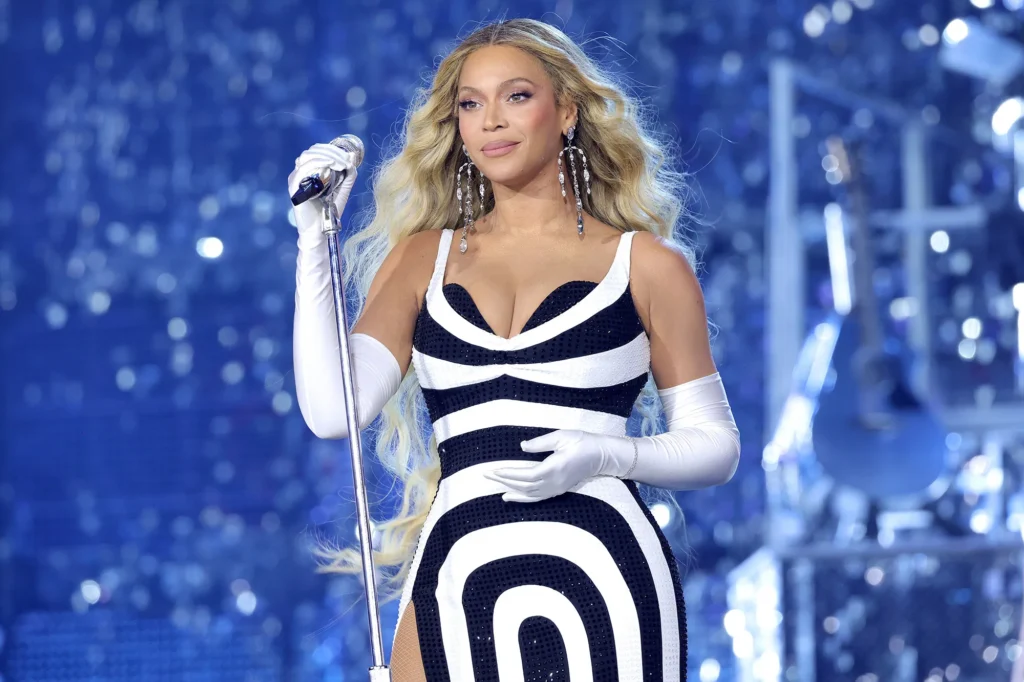
Beyoncé Giselle Knowles-Carter, born September 4, 1981, in Houston, Texas, is an American singer, songwriter, and entrepreneur who rose to fame as the lead singer of Destiny’s Child before launching one of the most successful solo careers in music history. Destiny’s Child sold more than 60 million records worldwide before disbanding in 2005, and Beyoncé’s solo catalog, spanning Dangerously in Love in 2003 through 2024’s Cowboy Carter, has sold more than 200 million records and produced a record 35 Grammy Awards, the most of any artist in history. The single most consequential decision of her business career came in 2010, when she founded Parkwood Entertainment and brought nearly every aspect of her career in-house, producing her own albums, tours, documentaries, and visual projects and fronting production costs herself in exchange for a far larger share of the resulting economics than a traditionally managed artist would keep. That structure has powered two record-setting stadium tours in recent years, the 2023 Renaissance World Tour, which grossed $579.8 million, and the 2025 Cowboy Carter Tour, which grossed $407.6 million in ticket sales plus an estimated $50 million in merchandise, making her the highest-grossing country tour of all time despite Cowboy Carter being only her first country album. Forbes and Celebrity Net Worth both declared her a billionaire at the close of 2025, crediting her with $148 million in personal earnings for that year alone. She has been married to Jay-Z since 2008, and the couple have three children. This article calculates only Beyoncé’s own personal wealth, not the couple’s combined household total, which both trackers place near $3.5 billion to $3.8 billion once Jay-Z’s separately built fortune is included.
1. Music Career
Beyoncé’s career earnings span nearly three decades, from her Destiny’s Child years through her current status as one of only a handful of billionaire musicians. Her income sources, touring, recorded music royalties, endorsements, and film and television work, are increasingly captured under the Parkwood umbrella rather than paid out through separate third-party deals, meaning the phase totals below reflect a blended, Forbes-style combined earnings approach consistent with how other artists whose income sources overlap heavily within their own production companies are typically treated.
Forbes’s own reporting provides an unusually precise recent anchor: it credited Beyoncé with $148 million in personal earnings for 2025 alone, a year built around the Cowboy Carter Tour’s $407.6 million gross plus catalog royalties and sponsorship income, including an estimated $50 million Netflix Christmas Day NFL halftime show and an estimated $10 million Levi’s campaign. Her 2023 Renaissance World Tour, which grossed 42 percent more than Cowboy Carter, plausibly generated a comparably higher personal-earnings year using the same methodology. Her pre-Renaissance touring history is itself substantial and well documented: the 2016 Formation World Tour grossed approximately $250 million, and the 2018 On the Run II stadium tour with Jay-Z grossed a further $250 million, with Beyoncé’s individually attributable share reflected in the totals below rather than the full joint gross. Beyond touring, she has maintained a fragrance business since 2010 spanning Heat, Heat Rush, Pulse, Rise, and 2023’s Cé Noir, a line industry reporting credits with more than $500 million in cumulative retail sales, anchored by a confirmed $20 million three-year deal with Coty. Her endorsement roster across three decades has included Pepsi (a confirmed $50 million deal in 2012), L’Oréal, American Express, Tiffany & Co., Samsung, Tommy Hilfiger, Ford, DirecTV, Nintendo, Adidas, Levi’s, and a multi-year Peloton partnership beginning in 2020.
- Destiny’s Child and early solo era (1997-2009): ~$130M
- Parkwood-era buildout, including the Formation and On the Run II tours, her fragrance business, her 2018 Coachella headline set reported at $8 million, her three-project, roughly $60 million Netflix deal that produced Homecoming, her Lion King voice role, and her broader endorsement portfolio (2010-2021): ~$480M
- Renaissance World Tour year, extrapolated from the Forbes 2025 methodology against the tour’s larger gross (2023): ~$210M
- Between-tours year, catalog and brand income (2024): ~$40M
- Cowboy Carter Tour year, Forbes-confirmed (2025): $148M
- Partial 2026 earnings to date: ~$10M
Career gross, all sources combined per Forbes-style methodology: ~$1,018M.
2. Music Catalog (Held Asset)
Beyoncé is widely reported to control the copyrights to much of her own catalog, a genuinely uncommon position for an artist of her commercial scale and a direct product of the Parkwood ownership structure. Her recording career now spans nearly three decades, from Destiny’s Child’s 1997 debut through Cowboy Carter, placing her catalog in the legacy tier of evergreen, still-streaming work alongside artists whose catalogs command the highest multiples in the current market. Given that vintage and her catalog’s continued chart and streaming strength, including Cowboy Carter’s 1.2 billion Spotify streams in 2024 alone, a valuation is built independently here using a multiple appropriate to a legacy-tier catalog applied against an estimated personal royalty share.
- Music catalog and publishing, owned personal share (20x multiple on an estimated $15M/yr personal royalty share): ~$300M
3. Parkwood Entertainment (Held Asset)
Beyond the touring, recording, and content income already captured in Section 1, Parkwood Entertainment itself, as standing production infrastructure encompassing film and documentary rights, brand development capability, and the operational apparatus behind Cécred and SirDavis, carries independent value as a company distinct from any single year’s earnings. Industry estimates have placed Parkwood’s standalone enterprise value above $300 million. Because Section 1 now itemizes her major income streams explicitly, including her fragrance business, her endorsement roster, and her individual tours, rather than folding them into a single blended estimate, the overlap between that career-gross figure and Parkwood’s standalone infrastructure value is smaller than a fully blended approach would produce, and a more modest discount is applied here.
- Parkwood Entertainment, standalone enterprise value (moderately reduced to account for remaining overlap with income already counted): ~$200M
4. Business Ventures
Beyoncé’s Ivy Park clothing line, launched in 2016 and fully acquired by Parkwood in 2018 ahead of a 2019 Adidas partnership, peaked at an estimated $93 million in revenue in 2021 before declining sharply to roughly $40 million in 2022, well short of Adidas’s own $250 million sales projection. Beyoncé and Adidas mutually ended the partnership in 2023, and the brand has since been discontinued, meaning it carries no meaningful ongoing value. She launched the hair care brand Cécred in February 2024 and the premium whiskey brand SirDavis later that year; both are too new to have any disclosed valuation or revenue figures, so neither is assigned a value here. She has also made selective investments, including in hydration beverage company Lemon Perfect, which closed a Series A round with her involvement; no figures specific to her personal investment size have been disclosed.
- Ivy Park: excluded (discontinued, no ongoing value)
- Cécred and SirDavis: excluded (too new, no disclosed financials)
- Lemon Perfect and other startup investments: excluded (no disclosed investment size)
5. Representation
Beyoncé has operated without traditional third-party management since founding Parkwood in 2010, telling Billboard in 2013 that she deliberately avoided signing with “some big management company” in order to retain control of her own economics. A reduced blended representation rate of 8 percent, reflecting legal, agency, and venue-side deal costs rather than a standard management commission, is applied across her combined career earnings.
Representation (8% blended on $1,018M combined gross): -$81.44M.
6. Tax
Beyoncé is a longtime California resident, based primarily between her Bel-Air and Malibu properties. Established entertainment talent in California typically achieves an effective tax rate below the state’s roughly 50 percent combined marginal rate through loan-out company structures, bringing the effective rate closer to 42 percent.
Tax (42% blended on $936.56M post-representation): -$393.36M.
Combined gross across her music career totals $1,018M. After representation (-$81.44M) and tax (-$393.36M), approximately $543.2M remains before lifestyle burn.
7. Lifestyle Burn
Beyoncé’s documented consumed spending has scaled dramatically alongside her wealth, encompassing the running costs of an extensive real estate portfolio, extensive private aviation, elite security, and touring logistics that include her own children as compensated performers, a structure her production company handles through formal payroll and family tax planning arrangements. Her mother’s Malibu property was destroyed in the January 2025 Los Angeles wildfires, an uninsured personal loss category distinct from her own held real estate addressed separately below.
- Destiny’s Child and early solo era (1997-2009, 12 years): ~$500K/yr consumed = $6M
- Family-building era following Parkwood’s founding (2010-2017, 7 years): ~$2M/yr consumed = $14M
- Established mogul era across multiple mega-properties (2018-2026, 8 years): ~$5M/yr consumed = $40M
Total lifestyle burn: ~$60M. Available to accumulate: ~$483.2M.
This burn figure represents approximately 6.4 percent of Beyoncé’s post-representation, post-tax income, low relative to other high earners in absolute dollar terms but consistent with how burn naturally shrinks as a share of income at this scale.
8. Real Estate
Beyoncé and Jay-Z have assembled an extensive joint real estate portfolio since their 2008 marriage, though only one property in that portfolio has a documented purchase-to-sale pairing that produces a calculable gain. The couple purchased a Mediterranean-style villa on Miami’s Indian Creek Island in 2008 for approximately $9 million and sold it in 2010 for $9.3 million, a documented gain of $300,000. Their subsequent purchases, a $26 million East Hampton estate in 2017, an $88 million Bel-Air compound the same year, and a record-setting $200 million Malibu mansion in 2023, remain held properties with no completed resale, so no appreciation gain is claimed on any of them despite their substantial nominal value. As with jointly owned marital real estate generally, only Beyoncé’s fifty percent share of the one realized gain is counted toward her individual net worth.
- Indian Creek Island villa, documented gain (2008 purchase ~$9M vs. 2010 sale $9.3M), Beyoncé’s 50% share: +$0.15M
- East Hampton, Bel-Air, and Malibu properties: held at cost, no completed sale, no gain claimed
Real estate appreciation: +$0.15M (documented gain only, Beyoncé’s 50% joint share).
9. Wealth Management
No disciplined third-party investment program or wealth manager has been publicly documented for Beyoncé beyond her direct holdings in Parkwood Entertainment and selective startup investments. Default applies.
Wealth Management: None reported ($0).
Net Worth Waterfall
| Line Item | Amount |
|---|---|
| Music career, all sources combined (1997-2026) | +$1,018M |
| Less: representation (8% blended on $1,018M combined gross) | -$81.44M |
| Less: tax (42% blended, California resident) | -$393.36M |
| Less: lifestyle burn (era-scaled, consumed only) | -$60M |
| Available to accumulate | +$483.2M |
| Music catalog and publishing, owned personal share (20x multiple, independently valued) | +$300M |
| Parkwood Entertainment, standalone enterprise value | +$200M |
| Real estate appreciation (Indian Creek Island, documented gain) | +$0.15M |
| Ivy Park, Cécred, SirDavis, and startup investments | $0 (excluded or undisclosed) |
| Wealth Management | $0 |
| Total Net Worth | ~$983.35M → $1.0B |
Our calculation: $1.0 Billion.
Why Our Figure Differs From Consensus
Both Forbes and Celebrity Net Worth declared Beyoncé a billionaire at the close of 2025, placing her at $1 billion, and our independent calculation lands at approximately $1.0 billion as well, a rare case where a bottom-up build converges closely with two independent trackers rather than diverging sharply in either direction. The convergence is worth explaining rather than treating as a given: Forbes’s own $148 million figure for Beyoncé’s 2025 earnings alone is used directly as an input here rather than re-estimated, and this calculation’s other major line items, a $300 million catalog value built independently using a legacy-tier multiple against her estimated personal royalty share, and a $200 million Parkwood Entertainment enterprise value informed by industry reporting, land in a similar range to what other trackers have separately estimated without being drawn directly from their figures. What this calculation adds that a simpler estimate might miss is Beyoncé’s fragrance business, a line spanning Heat, Heat Rush, Pulse, and 2023’s Cé Noir that industry reporting credits with more than $500 million in cumulative retail sales and a confirmed $20 million Coty deal, alongside explicit accounting for the 2016 Formation and 2018 On the Run II tours rather than folding them into a single vague pre-Renaissance estimate. Working against an even higher figure: her real estate portfolio, despite including a $200 million Malibu mansion and an $88 million Bel-Air compound, produces almost no counted appreciation gain given that neither property has been resold, and Ivy Park, discontinued since 2023, along with the newer Cécred and SirDavis brands, are excluded entirely given the absence of disclosed financials for any of them.
The Billionaire Built on Not Sharing the Split
Most artists who reach Beyoncé’s level of fame eventually sell something, a catalog, a stake in a business, a stake in themselves, to convert decades of touring into a single, clean liquidity event. Beyoncé has not done that. Every dollar behind this calculation, the $579.8 million Renaissance tour, the $407.6 million Cowboy Carter tour that became the highest-grossing country tour in history on the strength of her very first country album, a fifteen-year fragrance business that quietly generated half a billion dollars in retail sales without ever becoming the headline, comes from a decision she made in 2010 to stop letting anyone else take a cut of her own name. Parkwood Entertainment was never really about controlling the creative side of her career, though it does that too. It was about arithmetic: front the production costs yourself, and keep the margin a manager, a label, and a promoter would otherwise have split three ways. Add it up honestly, catalog and company value included, and the math lands almost exactly where Forbes and Celebrity Net Worth both say it does. She built the biggest fortune in music not by signing the biggest deal, but by refusing to sign one at all.