$160 Million
WHO HE IS
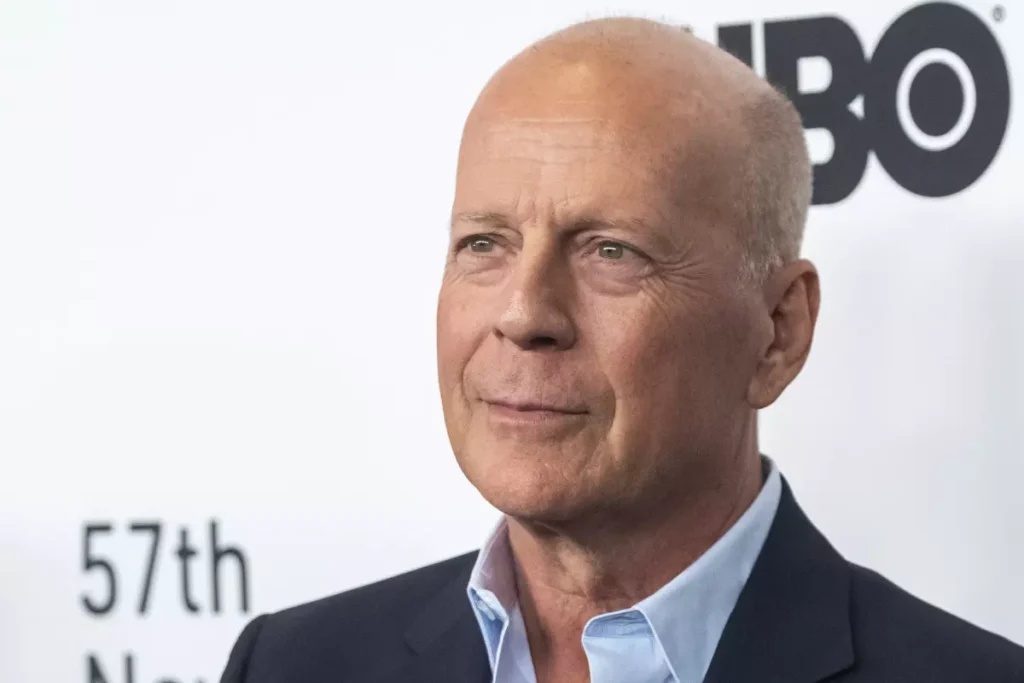
Walter Bruce Willis, born March 19, 1955, on a US military base in Idar-Oberstein, West Germany, is an American actor, producer, and musician. Raised in Carneys Point, New Jersey, he studied drama at Montclair State University before bartending in New York while auditioning, eventually landing the lead role of David Addison Jr. opposite Cybill Shepherd on ABC’s Moonlighting, which made him a star. His 1988 breakthrough as John McClane in Die Hard redefined the action genre and launched a franchise that ran for five films, and he went on to headline an extraordinarily broad and commercially successful filmography spanning Pulp Fiction, 12 Monkeys, The Fifth Element, Armageddon, The Sixth Sense, and Unbreakable, with his films collectively grossing between $2.6 and $3 billion domestically. Beyond acting, he co-founded production company Cheyenne Enterprises in 2000, was an early investor and promoter of the Planet Hollywood restaurant chain alongside Arnold Schwarzenegger and Sylvester Stallone, and became the face of Sobieski Vodka in 2009 in exchange for an equity stake in the brand. He was married to actress Demi Moore from 1987 to 2000, with whom he has three daughters, and has been married to model Emma Heming since 2009, with whom he has two more daughters. In March 2022, his family announced he was stepping away from acting following a diagnosis of aphasia, and in February 2023 disclosed that his condition had progressed to frontotemporal dementia.
1. Early Career
Willis’s earnings through his transition from bartending to Moonlighting stardom reflect his rapid rise once the show made him a household name, supplemented by a notable early endorsement deal.
- Moonlighting and early film work (1980-1987): ~$2M
- Seagram’s Golden Wine Cooler, confirmed endorsement deal paid over two years (1986-1988): ~$6M
Phase total: ~$8M.
2. Breakthrough Blockbuster Era
Willis’s transition from television star to action icon happened almost immediately, anchored by his confirmed $5 million salary for the original Die Hard and a string of well-documented, escalating paydays through the early 1990s, including a famously modest $800,000 for Pulp Fiction, which he took at scale plus a profit participation rather than his going rate given the project’s prestige.
- Die Hard, confirmed salary (1988): ~$5M
- Look Who’s Talking and Look Who’s Talking Too, confirmed voice salary, $10M per film (1989-1990): ~$20M
- Die Hard 2, estimated salary (1990): ~$7M
- The Last Boy Scout, confirmed salary (1991): ~$14M
- Hudson Hawk, Death Becomes Her, and other film work (1991-1993): ~$15M
- Pulp Fiction, confirmed reduced salary taken for prestige (1994): ~$0.8M
Phase total: ~$61.8M.
3. Action Peak
This stretch represents Willis at the height of his conventional action-star earning power, with three individually confirmed paydays in the $15 to $16.5 million range bracketing a run of well-regarded genre films.
- Die Hard: With a Vengeance, confirmed salary (1995): ~$15M
- Last Man Standing, confirmed salary (1996): ~$16.5M
- 12 Monkeys, The Fifth Element, and other film work (1995-1997): ~$20M
- Armageddon, confirmed salary (1998): ~$14.8M
Phase total: ~$66.3M.
4. The Sixth Sense and Millennium Peak
This is the single most consequential stretch of Willis’s career financially. His deal for The Sixth Sense combined a $14 million base salary with a profit participation structure that, given the film’s unexpected billion-dollar-adjacent cultural and commercial success, brought his total earnings from the film to a widely and consistently reported $114 million, among the largest single-film paydays in Hollywood history at the time.
- The Sixth Sense, confirmed base salary plus profit participation, total (1999): ~$114M
- Unbreakable, confirmed salary (2000): ~$20M
- The Kid, confirmed salary (2000): ~$20M
- Other film work (2000-2001): ~$15M
Phase total: ~$169M.
5. Continued A-List Era
Willis remained a bankable A-list lead through the 2000s and into the early 2010s, with a confirmed $22.5 million payday for Hart’s War and a confirmed $25 million salary for Live Free or Die Hard, bracketing a broad slate of genre and ensemble work including Sin City, Grindhouse, 16 Blocks, and the Red and Expendables franchises, and closing with his fifth and final Die Hard appearance.
- Hart’s War, confirmed salary (2002): ~$22.5M
- Sin City, Grindhouse, 16 Blocks, and other film work (2002-2006): ~$40M
- Live Free or Die Hard, confirmed salary (2007): ~$25M
- Red, RED 2, The Expendables franchise, and Looper (2010-2012): ~$40M
- A Good Day to Die Hard, estimated salary given the studio declined to disclose the figure, consistent with reporting suggesting a fee near his prior Die Hard rate (2013): ~$22M
Phase total: ~$149.5M.
6. Late Career
Willis’s final phase as a working actor included his return as David Dunn in Glass, closing out the Unbreakable trilogy, followed by a widely reported run of roughly two dozen lower-budget, direct-to-video action films between 2012 and 2022, each reportedly paying modest, flat upfront fees for a small number of shooting days, before his family’s March 2022 announcement that he was retiring from acting.
- Glass, confirmed salary (2019): ~$10M
- Direct-to-video film cycle, approximately twenty-five films at reported modest, flat fees each (2012-2022): ~$22M
Phase total: ~$32M.
7. Representation
Willis’s film, television, and endorsement income has been managed through standard Hollywood talent representation across his career, including longtime manager and later Cheyenne Enterprises business partner Arnold Rifkin. A blended representation rate of 13 percent, covering agent, manager, and legal fees, is applied across his combined entertainment career earnings.
Representation (13% blended on $486.6M combined gross): -$63.26M.
8. Tax
Willis has maintained residences across California, Idaho, and New York over his career. An effective rate of 42 percent is applied, consistent with established Hollywood talent using loan-out company structures.
Tax (42% blended on $423.34M post-representation): -$177.8M.
Combined gross across early career ($8M), the breakthrough blockbuster era ($61.8M), the action peak ($66.3M), the Sixth Sense and millennium peak ($169M), the continued A-list era ($149.5M), and late career work ($32M) totals $486.6M. After representation (-$63.26M) and tax (-$177.8M), approximately $245.54M remains before lifestyle burn.
9. Lifestyle Burn
Willis was married to Demi Moore from 1987 to 2000, with whom he has three daughters, and has been married to Emma Heming since 2009, with whom he has two more daughters, supporting a large blended family across multiple decades. His real estate footprint has been extensive, spanning California, New York, Idaho, and the Turks and Caicos, and he has maintained a private jet. His family’s public disclosures regarding his 2022 aphasia diagnosis and 2023 frontotemporal dementia diagnosis are reflected here only in the general elevation of recent-era spending consistent with a large, multi-generational household, without speculation beyond what has been publicly stated.
- Early career (1980-1994, 15 years): ~$500K/yr consumed = $7.5M
- Action and Sixth Sense peak, first marriage and family (1995-2001, 7 years): ~$3M/yr consumed = $21M
- Continued A-list era, divorce and remarriage (2002-2010, 9 years): ~$2.5M/yr consumed = $22.5M
- Late career, second family and expanded household (2011-2022, 12 years): ~$3M/yr consumed = $36M
Total lifestyle burn: ~$87M. Available to accumulate: ~$158.54M.
This burn figure represents approximately 36 percent of Willis’s post-representation, post-tax entertainment income, reflecting a genuinely large, multi-decade household spanning two marriages, five children, and an extensive multi-state real estate footprint.
10. Real Estate
Willis’s real estate history includes a documented loss on his most significant single transaction: his Sun Valley, Idaho compound, purchased for $15 million, was later sold for $5.5 million, a loss of $9.5 million. His Central Park West penthouse in Manhattan sold for $17.75 million in 2018, but no purchase price has been disclosed to pair with that figure. His primary Bedford Corners, New York residence was purchased for $12 million with no disclosed current value, and his Turks and Caicos estate has no disclosed purchase price. The documented loss is not subtracted here, and the remaining properties are held at cost or excluded given the lack of a documented purchase-to-current-value pairing.
Real estate appreciation: $0 (one documented loss, not subtracted; remaining properties lack a documented purchase-to-current-value pairing).
11. Business Ventures (Unvalued)
Willis holds business interests without sufficient disclosed information to support even a conservative estimate. He co-founded production company Cheyenne Enterprises in 2000 alongside longtime manager Arnold Rifkin, but stepped back to let Rifkin run the company solely after 2007, leaving his current ownership stake, if any, unclear. He was an early promoter and equity participant in Planet Hollywood alongside Schwarzenegger and Stallone, but the chain has a well-documented history of financial distress and multiple bankruptcy filings since the 1990s, making any current value highly uncertain. In 2009, he became the face of Sobieski Vodka in exchange for a confirmed 3.3 percent equity stake in the brand’s parent company, Belvedere SA, a genuinely disclosed equity arrangement, but Belvedere is a privately held company with no public financials or valuation available to size the stake. All three are counted at $0, but are flagged here since a disclosed valuation for any of them, particularly the Sobieski stake, would represent a further addition to this figure.
Business ventures: $0 (identified, insufficient data for even a conservative estimate).
12. Wealth Management
No disciplined investment program or wealth manager has been publicly documented for Willis beyond his direct operating stakes. Default applies.
Wealth Management: None reported ($0).
Net Worth Waterfall
| Line Item | Amount |
|---|---|
| Early career (1980-1988) | +$8M |
| Breakthrough blockbuster era (1988-1994) | +$61.8M |
| Action peak (1995-1998) | +$66.3M |
| The Sixth Sense and millennium peak (1999-2001) | +$169M |
| Continued A-list era (2002-2013) | +$149.5M |
| Late career (2012-2022) | +$32M |
| Less: representation (13% blended on $486.6M combined gross) | -$63.26M |
| Less: tax (42% blended) | -$177.8M |
| Less: lifestyle burn (era-scaled, consumed only) | -$87M |
| Available to accumulate | +$158.54M |
| Real estate | $0 |
| Business ventures (Cheyenne, Planet Hollywood, Sobieski Vodka) | $0 (unvalued) |
| Wealth Management | $0 |
| Total Net Worth | ~$158.54M → $160M |
Our calculation: $160 Million.
Why Our Figure Differs From Consensus
Celebrity Net Worth places Bruce Willis at $250 million, a figure multiple sources note has held remarkably stable since approximately 2010. Our independent build lands lower, at approximately $160 million, built almost entirely from Willis’s own confirmed, individually sourced paydays across a four-decade career rather than a static long-held consensus figure. The centerpiece of this calculation is the extraordinary Sixth Sense deal, a confirmed $114 million total that alone makes up nearly a quarter of his lifetime gross earnings, alongside a genuinely dense run of $14 to $25 million confirmed paydays across the 1990s and 2000s. What separates our figure from CNW’s is largely lifestyle burn and taxation applied consistently across a career supporting two marriages and five children, and the absence of a valued business stake: his Cheyenne Enterprises position is unclear following his 2007 exit from day-to-day involvement, Planet Hollywood’s value is deeply uncertain given its repeated bankruptcies, and his real, disclosed 3.3 percent Sobieski Vodka equity stake cannot be sized given the company’s private financials. If any of these three holdings is ever disclosed with real figures, this calculation would move higher.
The Action Star Whose Sixth Sense Deal Still Defines His Fortune
Bruce Willis built one of the most financially unusual careers in modern Hollywood, not because of a single franchise but because of a single, extraordinary negotiation. The Sixth Sense wasn’t expected to be anything more than a modest horror film when Willis signed on, and the profit participation structure his team negotiated, rather than a bigger flat fee, turned out to be one of the most lucrative bets any actor has made on a single project. Everything else in his filmography, four Die Hard sequels, a decade of dependable action and ensemble work, a late-career run of direct-to-video films that quietly kept him working through the years leading up to his 2022 retirement, reads as a long, steady baseline around that one transformative deal. His family’s public candor about his diagnosis has shifted the conversation around his career from box office numbers to his health and legacy, but the honest math on his fortune still traces back to a horror movie nobody expected to make him $114 million.