$120 Million
Who He Is
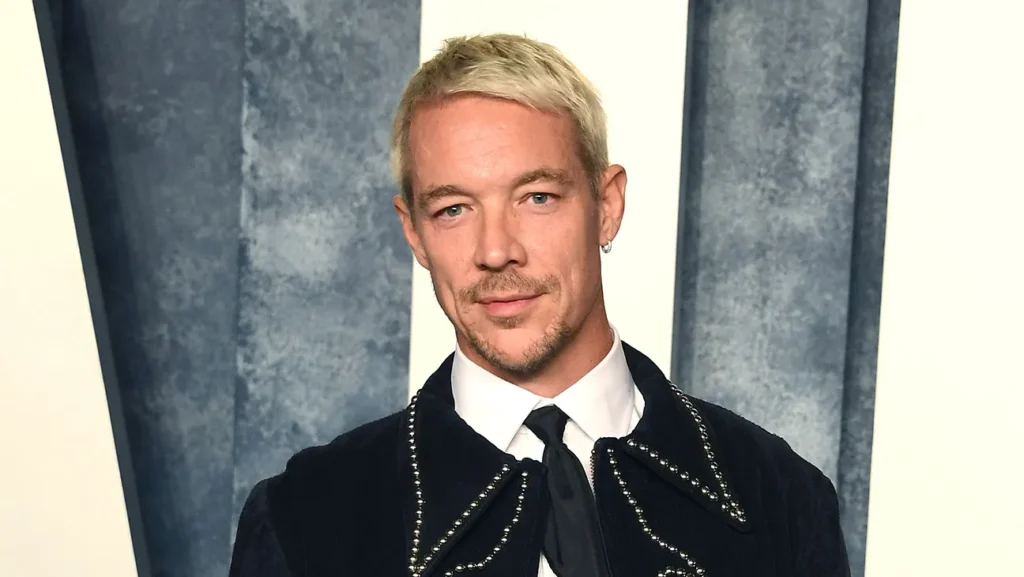
Thomas Wesley Pentz, born November 10, 1978, in Tupelo, Mississippi, and raised in Miami, Florida, performs as Diplo and is one of the most commercially successful and prolific producers in modern popular music. He began DJing while attending Temple University in Philadelphia in the late 1990s, founded the record label Mad Decent in 2006, and produced M.I.A.’s “Paper Planes” in 2007, the breakthrough credit that established him as a serious commercial force. He co-created the dancehall-influenced group Major Lazer, whose 2015 single “Lean On” became, at the time, the most-streamed song in Spotify history with more than 2.4 billion plays. He has also recorded as part of Jack Ü with Skrillex, LSD with Sia and Labrinth, and Silk City with Mark Ronson, and has produced or written for Beyoncé, Justin Bieber, Madonna, Britney Spears, Usher, M.I.A., and Major Lazer’s full catalog among dozens of others. He has won two Grammy Awards and has appeared on Forbes’s annual Highest-Paid DJs list in multiple years, with confirmed pre-tax earnings of $28.5 million in 2017 and $30 million in 2021. He plays an estimated 300 shows per year across club dates, festivals, and private events. He is a California resident, based in Malibu.
1. Touring and DJ Fees
Touring and live performance fees form the largest and most consistent component of Diplo’s income across two decades. He has maintained an unusually heavy schedule by industry standards, with multiple sources independently citing approximately 300 shows annually across club residencies, major festivals, and private bookings, a pace exceeding most touring DJs at his commercial tier. His early career fees were modest: one of his first booking agents recalled him splitting a bill for $150 a night in the mid-2000s before Mad Decent and “Paper Planes” established his reputation.
His earnings scaled substantially as Major Lazer and Jack Ü became globally dominant projects in the mid-2010s. Forbes’s Highest-Paid DJs list, which calculates pre-tax annual earnings across touring, streaming, endorsements, and label income combined, has placed Diplo in the top tier in multiple confirmed years: $28.5 million in 2017 and $30 million in 2021, with figures in the $20-30 million range cited for most years in between by Forbes-sourced reporting. Celebrity Net Worth and other outlets consistently cite a baseline of approximately $20 million in a typical touring year.
- Early career (2004-2012, building from club dates to Mad Decent-era bookings): ~$13.5M
- Rising era (2013-2016, Major Lazer and Jack Ü breakthrough): ~$48M
- Peak Forbes-documented era (2017-2022, confirmed annual figures of $25-30M): ~$162M
- Recent era (2023-2026, continued ~300-show schedule at CNW’s cited baseline): ~$80M
Career gross, all sources combined per Forbes methodology: ~$303.5M.
Forbes states its DJ earnings figures include income from live shows, endorsements, merchandise sales, recorded music sales, and external business ventures, calculated as gross pre-tax earnings before management, agent, or legal fee deductions. This means recorded music and streaming royalty income, as collected year to year, is already folded into the figures above. It does not mean Diplo’s catalog has no further value: the royalty income already received and the present-day sale value of his held catalog rights are two separate things, addressed next.
2. Production, Songwriting, and Catalog (Held Asset)
Diplo’s catalog as a producer and songwriter is one of the most commercially significant in contemporary pop and dance music. His key production and writing credits include M.I.A.’s “Paper Planes” (2007), Major Lazer’s “Lean On” featuring MØ and DJ Snake (2015), “Where Are Ü Now” with Skrillex and Justin Bieber (2015), which won the Grammy for Best Dance Recording, “Cold Water” with Major Lazer and Justin Bieber, and “Electricity” with Silk City and Dua Lipa, also a Grammy winner. He has additionally produced or contributed to tracks for Beyoncé’s Lemonade, Madonna’s Rebel Heart, Bruno Mars’s debut album, Chris Brown, Usher, and BLACKPINK, among many others.
“Lean On” illustrates both the scale and the limits of valuing this catalog precisely. The track became the most-streamed song in Spotify’s history at the time, and by the point it crossed 1.4 billion Spotify streams alone, the song had generated approximately $3.5 million in earnings on that platform, a figure that is split across all credited writers and performers, including DJ Snake, MØ, and Diplo’s Major Lazer co-creator Switch, not paid out to Diplo individually. Diplo’s personal share of any single song’s writer and producer royalties is one of several splits on most of his major credits, since he typically works alongside featured vocalists, co-producers, and additional credited writers rather than as sole author. This makes a precise per-song valuation impossible without disclosed split sheets, which are not public for his catalog.
What can be said with confidence: Diplo holds a real, multi-decade catalog of co-writing and co-production credits across dozens of commercially significant songs, several with billions of combined streams, and a songwriter’s share is never worth zero regardless of the difficulty in pricing it precisely. Given the fractional nature of most of his individual song splits, the breadth of his catalog across many songs rather than a small number of fully-owned hits, and the newer-to-active vintage of his biggest commercial successes (most major hits fall in the 10-15 year range as of 2026), a conservative held-catalog valuation applies a 9x multiple, at the lower end of the range appropriate for an active catalog of this age, against an estimated $2.5M per year in ongoing royalty income attributable to his personal share across his full catalog.
- Production and songwriting catalog, held asset (9x multiple on ~$2.5M/yr personal royalty share): ~$22.5M
This is a deliberately conservative estimate given the absence of disclosed split sheets; if Diplo’s actual personal royalty share across his catalog runs higher than the $2.5M/yr figure used here, which is plausible given the sheer number of billion-plus-stream credits to his name, this figure would move upward.
Separately, in March 2022 Diplo sold a 20 percent royalty stake in a single song, “Don’t Forget My Love,” through the blockchain platform Royal, across three tiers priced $99 to $9,999. A comparably structured prior drop on the same platform by another artist generated roughly $500,000 in primary sales; no total sale figure has been disclosed for Diplo’s specific drop, and the transaction covers one song rather than his broader catalog, so it is not counted as a separate line.
3. Mad Decent and Label Ventures
Diplo founded Mad Decent in 2006, initially in Philadelphia before relocating to Los Angeles in 2010. The label has signed and released music from Major Lazer, Baauer (whose “Harlem Shake” became a global viral phenomenon in 2013), Dillon Francis, Rusko, TroyBoi, and dozens of other electronic and dance artists, and it operates the long-running Mad Decent Block Party concert series. No revenue, profit, or valuation figures for Mad Decent have ever been publicly disclosed. A former signed artist, Poppy, described the label in a 2019 NME interview as “not really a functioning label” and “more of a tax write-off” after departing for Sumerian Records, a characterization that further argues against assigning the label any speculative value. Mad Decent is excluded from the waterfall as an asset with no disclosed financials.
- Mad Decent label: excluded (no disclosed revenue, profit, or valuation; publicly characterized by a former artist as not commercially substantial)
4. Endorsements and Brand Partnerships
Diplo has maintained brand partnerships with Calvin Klein, Crocs (including a signature Classic Clog and sandal line with glow-in-the-dark charms), and Gentle Monster eyewear, among others. None of these partnerships have disclosed dollar values, and per-deal endorsement income at his tier is already captured within the combined Forbes annual earnings figures above, which explicitly include endorsement income in their total. No separate endorsement line is added here to avoid double-counting income already reflected in the touring and earnings figure.
5. Investments
Diplo is a limited partner in Torch Capital, a venture capital firm co-backed by iHeartMedia executive Bob Pittman, having joined the firm’s $200 million second fund in 2023. Torch Capital has invested in consumer-facing startups including the social audio platform Stationhead, NFT infrastructure company CXIP Labs, and cryptocurrency payments company MoonPay, among others. Diplo’s specific dollar commitment to the fund and his resulting ownership stake have not been publicly disclosed; participation as one of multiple limited partners in a venture fund does not equate to direct, attributable equity in the underlying portfolio companies. Without a disclosed personal commitment size or stake, this is excluded from the waterfall as an asset of unknown value rather than estimated.
- Torch Capital LP stake and underlying portfolio company exposure: excluded (undisclosed commitment size and ownership stake)
6. Representation
Diplo operates with an unusually independent structure relative to most artists at his commercial tier, owning and running his own label rather than working purely through a major label relationship, and his touring is handled through standard booking agency representation. A blended representation rate of 15 percent is applied across his combined career earnings, lower than the 20-25 percent more typical of artists without an ownership stake in their own label and business infrastructure.
Representation (15% blended on $303.5M combined gross): -$45.5M.
7. Tax
Diplo is a California resident based in Malibu. California’s top marginal state income tax rate is 13.3 percent, among the highest in the United States, combining with the federal top rate to produce an effective combined rate in the high 40s for sustained high earners at his income level.
Tax (47% on $258M post-representation): -$121.25M.
Combined gross across all documented earnings sources totals $303.5M. After representation (-$45.5M) and tax (-$121.25M), approximately $136.75M remains before lifestyle burn.
8. Lifestyle Burn
Diplo has maintained a high-travel, high-visibility lifestyle consistent with his roughly 300-show annual schedule, including frequent private jet use widely documented across his own social media and cited by multiple outlets as evidence of his touring intensity. Consumed spending, travel, private jet charters, staff, and a documented taste for designer fashion scales with his earnings across each career phase; property purchases are excluded here as real estate, not consumed burn.
- Early career (2004-2012, 9 years): ~$300K/yr consumed = $2.7M
- Rising era (2013-2016, 4 years): ~$1.5M/yr consumed = $6M
- Peak era (2017-2022, 6 years, heaviest private jet and touring intensity): ~$3.5M/yr consumed = $21M
- Recent era (2023-2026, 4 years): ~$2.5M/yr consumed = $10M
Total lifestyle burn: ~$39.7M. Available to accumulate: ~$97M.
9. Real Estate
Diplo’s real estate history includes two well-documented transactions. He purchased a home in Los Angeles’s Beachwood Canyon, below the Hollywood sign, in 2016 for $2.425 million, and sold it in 2021 for $2.8 million, a confirmed gain of $375,000 over five years. In November 2020 he purchased a Balinese-inspired Malibu estate previously owned by musician Kid Rock for approximately $13.15-13.2 million; Kid Rock had purchased the same property in 2006 for $11.6 million and sold it in 2017 for $9.5 million before Diplo’s 2020 purchase. No current appraisal or resale value has been publicly disclosed for the Malibu property, so no appreciation gain is claimed on it; it is treated as a held asset at its documented purchase price rather than assigned a speculative current value.
- Beachwood Canyon home, documented purchase-to-sale gain (2016-2021): +$375K
- Malibu estate, held at documented $13.15M purchase price, no disclosed current value: no gain claimed
Real estate appreciation: +$375K (documented gain only).
10. Wealth Management
No disciplined investment program or wealth manager has been publicly documented for Diplo beyond his disclosed limited-partner position in Torch Capital, which is excluded as undisclosed. Default applies for any further wealth management line.
Wealth Management: None reported ($0).
Net Worth Waterfall
| Line Item | Amount |
|---|---|
| Career earnings, all sources combined per Forbes methodology (2004-2026) | +$303.5M |
| Less: representation (15% blended) | -$45.5M |
| Less: tax (47% effective, California resident) | -$121.25M |
| Less: lifestyle burn (era-scaled, consumed only) | -$39.7M |
| Available to accumulate | +$97M |
| Production and songwriting catalog, held asset (9x multiple) | +$22.5M |
| Real estate appreciation (Beachwood Canyon, documented gain) | +$375K |
| Mad Decent label | $0 (undisclosed) |
| Torch Capital LP stake and portfolio exposure | $0 (undisclosed) |
| Royal NFT royalty sale (single song, partial stake) | $0 (immaterial) |
| Wealth Management | $0 |
| Total Net Worth | ~$120M |
Our calculation: $120 Million.
Why Our Figure Differs From Consensus
Celebrity Net Worth places Diplo at $70 million. Our independent calculation produces approximately $120 million, materially above consensus, and the difference comes from two factors. First, building his career earnings from Forbes’s own documented Highest-Paid DJs figures across multiple confirmed years, including $28.5 million in 2017 and $30 million in 2021, produces a larger accumulated base than extrapolating from a single flat “$20 million in an average touring year” baseline, which is the figure CNW cites elsewhere in its own profile of him. Second, and previously underweighted in this calculation, Diplo’s catalog as a producer and co-writer on dozens of commercially significant songs, several with billions of combined streams, is a held asset distinct from the royalty income already collected and counted in his annual earnings; that catalog carries real present-day value even though the fractional nature of his typical song splits makes it impossible to price with precision absent disclosed split sheets. Working against a higher figure: Mad Decent, his record label, carries no disclosed financials and was publicly described by a former signed artist as functioning more as a tax write-off than a commercially substantial business, so it is excluded rather than assigned a speculative value. His Torch Capital venture investment and his various brand partnerships with Calvin Klein, Crocs, and Gentle Monster similarly carry no disclosed dollar figures and are excluded for the same reason. California’s high effective tax rate on his earnings is also a meaningful constraint not always reflected in flat-rate net worth estimates.
The Producer Who Built an Empire Out of Other People’s Songs
Diplo’s name appears on some of the most-streamed songs in the history of recorded music, yet most casual listeners couldn’t pick his voice out of a lineup, because he rarely sings on any of them. That is, in a sense, the entire model: “Paper Planes,” “Lean On,” “Where Are Ü Now,” “Cold Water,” “Electricity,” each one belongs to the featured vocalist in the public imagination while Diplo collects a producer’s and songwriter’s share that compounds quietly in the background. The $150-a-night DJ splitting bills with RJD2 in the mid-2000s became the architect behind the most-streamed song Spotify had ever hosted within a decade, and Forbes has confirmed pre-tax earnings north of $28 million in some individual years along the way. The 300 shows a year and the private jets get the headlines, but a meaningful share of his $120 million has always been the songs other people are remembered for singing.