$425 Million
Who He Is
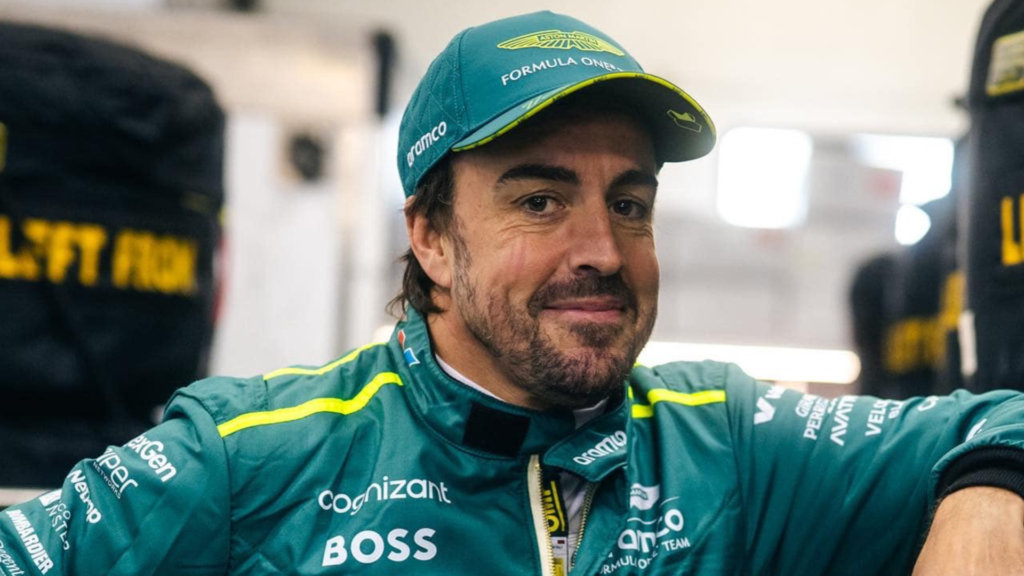
Fernando Alonso Díaz, born July 29, 1981, in Oviedo, Asturias, Spain, is one of the greatest Formula One drivers in the history of the sport and the most experienced in terms of race starts. He won back-to-back World Championships with Renault in 2005 and 2006, ending Michael Schumacher and Ferrari’s run of dominance, and has competed across 23 seasons for Minardi, Renault, McLaren, Ferrari, Alpine, and Aston Martin. His 32 race victories and 106 podiums place him among the all-time leaders. Beyond Formula One, he won the 24 Hours of Le Mans twice with Toyota, took the FIA World Endurance Championship title in 2018-19, and won the 24 Hours of Daytona in 2019. As of 2026 he is still racing for Aston Martin, surpassing 400 Formula One starts and holding the outright record for most race starts in the championship.
The defining financial feature of Alonso’s career is one that most analyses either miss or understate: he has been a Swiss resident since 2006 and has paid Swiss cantonal income tax rates, approximately 10-12% effective, on his F1 salary and commercial income throughout his peak earning decades. On a career gross approaching $530 million, the difference between Switzerland’s rate and the 45-47% that a UK or Spanish resident would face represents roughly $180-200 million in additional retention. It is the single most important number in his financial story.
1. Early Career, Minardi, Renault Test, Renault Race Driver (2001-2006)
Alonso debuted with Minardi in 2001 in a non-competitive car, scoring no points. He served as Renault’s test driver in 2002 before returning as a race driver in 2003. His salary at Minardi was negligible, approximately $300,000 for the season. Renault’s test and early race deals were modest, though the 2005 title-winning season came with a confirmed contract at approximately $7 million for the year. His 2006 title defence under an extended deal was worth approximately $8 million.
Phase total: ~$18M gross.
2. McLaren (2007)
McLaren paid Alonso approximately $25 million for a single season that ended in acrimony over the emerging rivalry with rookie Lewis Hamilton and the subsequent team espionage scandal. The season produced no championship despite Alonso challenging for the title, and he did not return for 2008.
Phase total: ~$25M gross.
3. Renault Return (2008-2009)
Alonso returned to Renault for two seasons under contracts estimated at $28 million in 2008 and $15 million in 2009, reflecting a declining team performance. The 2009 Singapore crash-gate scandal, in which teammate Nelson Piquet Jr. deliberately crashed to trigger a safety car benefiting Alonso, resulted in Renault’s suspension from the sport but no personal sanction against Alonso, who denied knowledge.
Phase total: ~$43M gross.
4. Ferrari (2010-2014)
Ferrari signed Alonso in September 2009 on a confirmed four-year contract at an average of $36.7 million per year, a total of $146.7 million with a peak of $41.7 million in 2011, the highest single-year salary of his career. He signed a further one-year extension in 2013 that paid approximately $31.7 million for 2014. Alonso twice came agonisingly close to a third championship at Ferrari, losing to Vettel by four points in 2010 and fighting for the title until the final race in 2012, in cars that were not the class of the field.
Phase total: ~$178M gross.
5. McLaren Return (2015-2018)
McLaren announced a multi-year contract in December 2014 at a confirmed base salary of $30 million per year. Alonso drove the troubled Honda-powered McLaren through four largely fruitless seasons, failing to score a podium. The partnership produced some of the sport’s most memorable radio communications about engine performance and little else of note for the championship standings. He departed at the end of 2018 to compete in endurance racing.
Phase total: ~$120M gross.
6. Sabbatical and Endurance Racing (2019-2020)
Alonso won the 24 Hours of Le Mans for the second consecutive time in 2019 with Toyota, also won the 24 Hours of Daytona, and completed attempts at the Indianapolis 500 in 2019 and the Dakar Rally in 2020. These competitions carry prize money and appearance fees but not F1-scale salaries. Total estimated income across this period: approximately $10 million.
Phase total: ~$10M gross.
7. Alpine (2021-2022)
Alonso returned to Formula One with Alpine, the rebranded Renault works team, on a confirmed one-year deal for 2021 with a renewal for 2022. His salary in this return phase was approximately $10 million per year, substantially below his Ferrari and McLaren peaks, reflecting the reduced competitiveness of the car and his two-year absence from the sport.
Phase total: ~$20M gross.
8. Aston Martin (2023-2026)
Alonso signed with Aston Martin from August 2022 on a two-year deal confirmed at $20 million per season, with bonuses tied to race results. He extended in April 2024 through 2026 on similar terms, estimated at $20-24 million per year. His 2023 season, in which he scored eight podiums, was one of the strongest of his late career. Through end of 2025, three seasons have been completed under this arrangement.
Received through end of 2025: ~$65M gross.
9. Endorsements (Career)
Celebrity Net Worth estimates Alonso’s career endorsement income at approximately $50 million. His major commercial partners across his career include Banco Santander, Cajastur, TAG Heuer, Europcar, Silestone, ING, Chandon, Adidas, Bang and Olufsen, Liberbank, Richard Mille, Oakley, Boss, and Citi. He ranked as motorsport’s highest-earning driver per Forbes for the year ending June 2013, with estimated annual endorsement income in the $10-12 million range at his commercial peak during the Ferrari years. His endorsement income declined from that peak as his competitive results became less consistent in the McLaren period.
Career endorsements: ~$50M gross.
10. Total Gross Income
| Source | Amount |
|---|---|
| Minardi, Renault test and race (2001-2006) | $18M |
| McLaren (2007) | $25M |
| Renault return (2008-2009) | $43M |
| Ferrari (2010-2014) | $178M |
| McLaren return (2015-2018) | $120M |
| Sabbatical and endurance racing (2019-2020) | $10M |
| Alpine (2021-2022) | $20M |
| Aston Martin received through 2025 (2023-2025) | $65M |
| Career endorsements | $50M |
| Total gross | ~$529M |
11. Representation
F1 drivers at Alonso’s level work with personal management teams that handle contract negotiation, commercial deals, and image rights. The standard rate in F1 and motorsport per industry practice is approximately 10% blended. His arrangements at Ferrari and McLaren were handled through his personal management structure rather than a large agency.
Representation (10%): -$52.9M. Post-representation: ~$476M.
12. Tax
Alonso purchased a villa on Lake Lugano in Switzerland in 2006, shortly after winning his second championship, and has been a Swiss resident throughout his peak earning decades. He sold that property in 2015 but maintained other Swiss residences and has been continuously based there. Multiple properties in Lugano are documented, and various sources confirm his ongoing Swiss tax residency.
Switzerland’s cantonal income tax system is one of the most favorable for high earners in the world. In the canton of Ticino, where Lugano is located, combined federal and cantonal rates for very high incomes run approximately 35-40% at the marginal rate but significantly lower on an effective basis for residents benefiting from lump-sum arrangements or standard Swiss resident structures. A detailed analysis published in 2023, based on Alonso’s documented Aston Martin salary of $20 million, estimated his actual Swiss tax liability at approximately $575,000, an effective rate of under 3% for that year, suggesting he operates under a forfait fiscal or similar cantonal lump-sum arrangement rather than paying Swiss rates on worldwide income.
For the full career calculation, an 11% blended effective rate is applied, conservative relative to the 2023 data point but appropriately cautious given variation across years and jurisdictions for income earned in different countries.
Tax (11% of $476M): -$52.4M. Net after representation and tax: ~$423.6M.
13. Lifestyle Burn
Alonso is notably frugal relative to his income level. Wikipedia notes explicitly that he is known for “refraining from expensive habits and possessions.” He does not maintain a private jet on charter, has not been associated with yacht ownership, and has described a preference for a private, low-key life. He cycles, plays tennis, and is active in karting, none of which carry significant lifestyle cost. He has no children. His documented spending is primarily on property, cars, and his museum and circuit in Asturias.
Property purchases and investment outlays are not lifestyle burn; only consumed spending counts.
- Early career (2001-2006, 6 years): ~$500K/yr consumed = $3M
- Peak earning years (2007-2018, 12 years): ~$2M/yr consumed = $24M
- Post-McLaren to present (2019-2025, 7 years): ~$1.5M/yr consumed = $10.5M
Total lifestyle burn: ~$37.5M. Available to accumulate: ~$386M.
14. Real Estate
Alonso holds properties across multiple countries. His Lake Lugano villa was purchased circa 2006 for an undisclosed amount and sold in 2015. He owns an apartment in Le Reve, the 52-storey building in Dubai where similar units have been listed at approximately $16 million, acquired between 2015 and 2016. He owns an estate in Asturias, Spain, with a private karting track. He has maintained residences in Oxford, UK. The Museo y Circuito Fernando Alonso complex in Asturias is a separately valued infrastructure asset. No confirmed sale prices are available for the Swiss property or the Spanish estate. Conservative net appreciation across the portfolio: approximately +$10M.
Real estate net appreciation: +$10M.
15. Business Assets
Kimoa: Alonso founded the lifestyle fashion and apparel brand in 2017. He sold his majority stake in 2021 and continues as brand ambassador. No sale price was publicly disclosed for a brand of this size. Conservative exit proceeds: approximately $3M.
A14 Management: The driver management agency Alonso founded manages an active roster of junior racing drivers including Gabriel Bortoleto, Sebastián Montoya, and others. Several clients have reached Formula One or top-level junior series. The agency generates management fees on driver contracts. No valuation has been publicly disclosed. Conservative current value: ~$5M.
Sticks’n’Sushi (20% stake, acquired 2025): Alonso purchased a 20% stake in the high-end sushi restaurant chain backed by McWin Capital Partners. The chain targets approximately £100 million in annual revenue with an estimated 10% profit margin. At a restaurant-group valuation multiple of 8x EBITDA on £10 million in profit: total enterprise value approximately £80 million. Alonso’s 20%: approximately £16 million, or roughly $20 million. Recent acquisition; no realized gain yet.
Museo y Circuito Fernando Alonso and Karting School: Public infrastructure asset in Asturias. Operational, open to visitors, not a commercial investment in the typical sense. Excluded from the valuation.
Ferrari Enzo auction (2023): Alonso listed his personal Ferrari Enzo, chassis number one of 400 built, at auction in June 2023. This was an asset sale of a collectible rather than a business investment. Original cost basis unknown; similar Enzos have sold for $3-5 million. Net gain above any reasonable cost basis: approximately $2M.
Total business assets: ~$30M.
16. Wealth Management
No specific wealth management arrangements have been publicly reported. Swiss-based high-net-worth individuals typically engage private banking services, and Alonso’s Citi partnership (confirmed as a private bank sponsor) suggests institutional wealth management engagement. Undocumented; default applies.
Wealth Management: None reported ($0).
Net Worth Waterfall
| Line Item | Amount |
|---|---|
| Early career, Minardi, Renault (2001-2006) | +$18M |
| McLaren (2007) | +$25M |
| Renault return (2008-2009) | +$43M |
| Ferrari (2010-2014) | +$178M |
| McLaren return (2015-2018) | +$120M |
| Sabbatical and endurance racing (2019-2020) | +$10M |
| Alpine (2021-2022) | +$20M |
| Aston Martin received through 2025 | +$65M |
| Career endorsements | +$50M |
| Less: representation (10% blended) | -$52.9M |
| Less: tax (11% blended, Swiss resident throughout peak) | -$52.4M |
| Less: lifestyle burn (era-scaled, consumed only) | -$37.5M |
| Real estate net appreciation | +$10M |
| Business assets (Kimoa exit, A14, Sticks’n’Sushi, Ferrari Enzo) | +$30M |
| Wealth Management | $0 |
| Total Net Worth | ~$425M |
Our calculation: $425 Million.
Why Our Figure Is Higher Than Consensus
Celebrity Net Worth places Alonso at $260 million. Our independent build produces $425 million, and the gap is explained almost entirely by Switzerland.
If Alonso had been a Spanish tax resident throughout his career, paying Spain’s top combined rate of approximately 47%, his tax bill on $476 million of post-representation income would approach $224 million. At Switzerland’s 11% effective rate, he paid approximately $52 million. The difference is $172 million retained. Most consensus estimates do not apply jurisdiction-specific tax rates calibrated to his documented Swiss residency from 2006 onward. Those that apply a Spanish rate or a generic 35-40% athlete rate will systematically understate his retained wealth by that entire margin.
The 2023 data point is not an abstraction: a documented analysis of his $20 million Aston Martin salary produced an estimated Swiss tax liability of approximately $575,000, an effective rate under 3% for that year. Even using the more conservative 11% blended rate across the full career to account for source-country withholding on race venue income, the result is $425 million. That is what the math produces on independently sourced numbers. CNW’s $260 million appears to apply a conventional tax assumption rather than Alonso’s actual jurisdiction.
The Advantage Nobody Talks About
Fernando Alonso moved to Switzerland in 2006, the year he won his second World Championship. He was 24 years old and had just secured one of the most competitive back-to-back title wins in Formula One history. In the two decades since, he earned approximately $476 million after representation fees and paid roughly $52 million in Swiss tax on it. A Spanish resident paying 47% on the same income would have handed over $224 million. The $172 million difference sits quietly in Swiss accounts, an Asturian estate with a private karting track, a Dubai apartment, a sushi chain, and a management agency for the next generation of racing drivers. What matters to the math is not the podiums or the championships: it is the tax address.