$680 Million
WHO HE IS
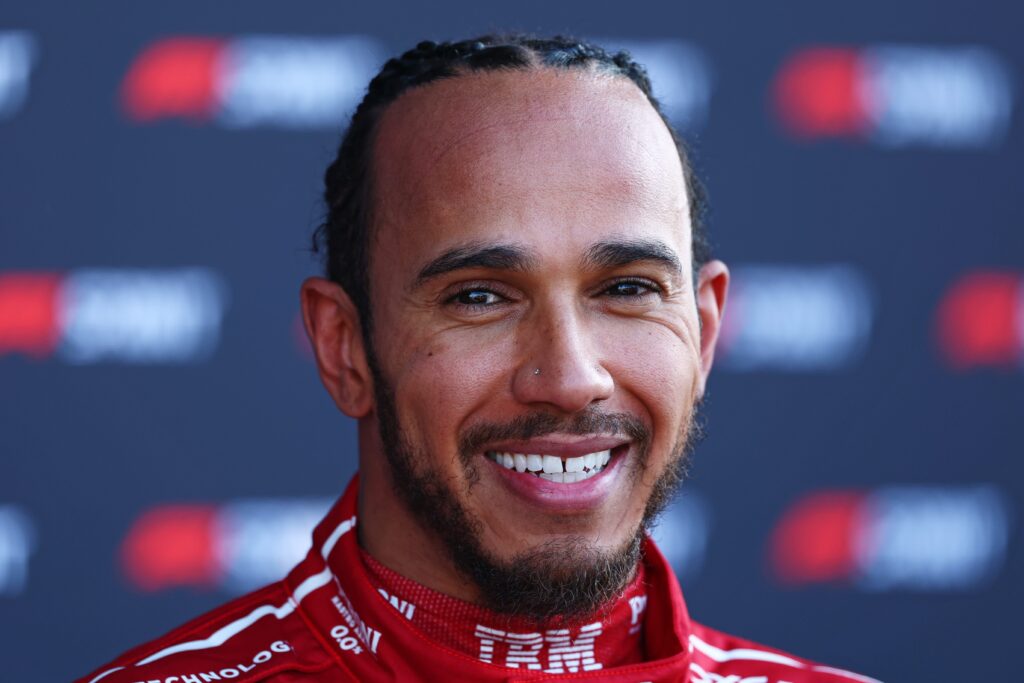
Sir Lewis Hamilton, born January 7, 1985, in Stevenage, Hertfordshire, England, is a British Formula 1 driver currently racing for Scuderia Ferrari. He debuted with McLaren in 2007 and won his first World Championship in 2008 at age 23, then became the youngest champion in F1 history at the time. He moved to Mercedes in 2013 in what became the defining decision of his career, winning six more titles during the team’s hybrid-era dominance and tying Michael Schumacher’s record of seven World Championships. He holds F1’s all-time records for race wins (105) and pole positions. In 2024 he announced he would leave Mercedes after twelve seasons to join Ferrari for 2025, one of the most anticipated driver transfers in the sport’s history. He was knighted in 2021 and has built one of the most diversified business portfolios of any active athlete, spanning fashion, film, spirits, and sports team ownership.
1. Formula 1 Career Earnings
Hamilton is the highest-earning driver in Formula 1 history. Sportico, which tracks athlete compensation closely, estimated his cumulative career earnings from F1 team salary, performance bonuses, and personal endorsements combined at approximately $880M through the end of the 2025 season, the year he became the first F1 driver to earn $100M in a single year.
- McLaren (2007-2012): a debut contract reportedly worth around $3M in his rookie year, rising through his championship-contending seasons to a deal worth approximately $48M total through the end of 2012.
- Mercedes (2013-2024): his opening three-year deal was worth approximately $75M, followed by a 2015 extension worth roughly $100M over three years, then a series of renewals that pushed his base salary from $40M to $45M annually by his final Mercedes seasons. Across the full twelve-year Mercedes tenure, salary and bonuses are estimated at $350M-$400M.
- Ferrari (2025-2026): a multi-year deal reported at a base salary of $60M-$70M per year, with performance bonuses and commercial provisions pushing his total 2025 compensation past $100M for the first time in his career.
This figure includes personal endorsement income layered on top of team salary throughout his career, since Hamilton’s commercial partnerships have run in parallel with his racing contracts for nearly two decades.
Total career earnings (F1 salary, bonuses, and endorsements combined): approximately $880M.
2. Representation
Hamilton’s business affairs have been managed through a combination of his father Anthony Hamilton in his early career and XIX Entertainment, founded by Simon Fuller, since 2011, alongside a personal management team handling his expanding portfolio of endorsement and business interests.
Representation (18% blended, F1 and commercial): -$158.4M.
3. Tax
Hamilton has been a Monaco tax resident since early in his F1 career, one of twelve drivers on the current grid based in the principality. Monaco levies no personal income tax on residents’ salary, sponsorship, or endorsement income, a genuine and near-total exemption rather than a partial one, provided residency requirements (a minimum of 183 days per year in Monaco) are met. The remaining tax exposure comes from source-country rules that apply regardless of residency: drivers owe tax on income tied to the specific days they work in a given country, most relevantly for races and promotional appearances in the United States, where non-resident withholding of up to 30% can apply without proper treaty documentation. Since this exposure is calculated per working day rather than as a share of total annual income, and typically covers only a handful of days per year out of a full season, it reduces only a small fraction of Hamilton’s overall earnings. Separately, his 2017 Paradise Papers controversy concerned VAT avoidance on the import of his private jet, a consumption tax matter distinct from his personal income tax position.
Tax (5% effective, reflecting near-complete Monaco exemption net of limited source-country exposure): -$44M.
Net after representation and tax: approximately $677.6M.
4. Lifestyle Burn
Hamilton’s spending is well documented, including a Bombardier Challenger 605 private jet imported in 2013 and central to the Paradise Papers reporting, a Sunseeker yacht moored in Monaco, and an extensive car collection that has included a 1995 McLaren F1, a Ferrari LaFerrari Aperta, and a Mercedes-AMG One. A jet, yacht, or car purchase converts cash into a depreciating (or in some cases appreciating) asset rather than consuming it outright, so only depreciation and operating costs are counted as burn here; retained values are carried forward as owned assets below.
- General lifestyle spending, era-scaled:
- 2007-2013 (early career): $2M/yr x 7 years = $14M
- 2013-2020 (Mercedes dominance, New York real estate buying): $6M/yr x 8 years = $48M
- 2020-2026 (global icon era, Met Gala, high fashion): $8M/yr x 6 years = $48M
- Subtotal: $110M
- Jet and yacht, depreciation and operating costs only:
- Jet (approximately $20M at 2013 import, per Paradise Papers reporting): 20% depreciation (-$4M) plus estimated operating costs of $1.5M/yr over 12 years (-$18M)
- Yacht (estimated $10M): 20% depreciation (-$2M) plus estimated operating costs of $0.8M/yr over 8 years (-$6.4M)
- Subtotal: $30.4M
- Car collection maintenance and insurance (collection value carried as a current asset below, not depreciated further here): $1M/yr x 10 years = $10M
Total lifestyle burn: approximately $150.4M. Available to accumulate: approximately $527.2M.
5. Retained Vehicle and Yacht Assets
The portions of the jet and yacht purchase prices not recognized as depreciation above, plus Hamilton’s current car collection, remain owned assets.
- Retained jet value: $16M
- Retained yacht value: $8M
- Car collection (current estimated value, including the McLaren F1, LaFerrari Aperta, and Mercedes-AMG One): $35M
Total retained vehicle assets: approximately $59M.
6. Real Estate
Hamilton has bought and sold extensively across several markets. He purchased a Tribeca, New York penthouse at 443 Greenwich for $43.9M in 2017 and sold it in 2021 for $49.5M, a documented realized gain. He also owns a penthouse at 70 Vestry Street in New York, purchased for $40.7M in 2016, a Kensington, London mansion currently valued at approximately $25M, a Monaco residence purchased for approximately $15M in the early 2010s, and a Colorado ranch purchased for $7.85M in 2011 that he has described as his primary residence.
- Realized gain, 443 Greenwich sale: +$5.6M
- Documented appreciation, remaining portfolio (London, Monaco, Colorado, New York): +$15M
Total real estate appreciation: approximately $20.6M.
7. Business Equity
Hamilton has built one of the more diversified business portfolios among active athletes.
- Denver Broncos: a minority ownership stake acquired in 2022 as part of the Walton-Penner ownership group’s $4.65 billion acquisition of the NFL franchise, one of the largest sports team sales in history.
- Dawn Apollo Films: his production company, founded in October 2022, co-produced the 2025 Apple Original Films release “F1,” starring Brad Pitt, which grossed over $633M worldwide and won the Academy Award for Best Sound.
- Almave: a non-alcoholic agave spirit brand launched in 2023 with Casa Lumbre, in which French drinks giant Pernod Ricard invested in 2024.
- W Magazine: a co-ownership stake in the fashion publication.
- TMRW Sports: an investor position in the sports and media venture behind the TGL golf league, alongside his Plus 44 clothing line and other fashion partnerships.
- Neat Burger: a plant-based fast food chain launched in 2019 with Leonardo DiCaprio, which closed all UK locations after reporting losses of approximately $10.6M, a documented loss rather than an asset.
- Denver Broncos stake: ~$25M
- Dawn Apollo Films / F1 movie producer share: ~$20M
- Almave: ~$15M
- W Magazine stake: ~$5M
- TMRW Sports investment: ~$10M
- Plus 44 and other fashion brand equity: ~$5M
- Neat Burger (documented loss): -$5M
Total business equity: approximately $75M.
8. Wealth Management
No specific wealth management arrangement or investment portfolio beyond the business holdings, real estate, and vehicle assets itemized above has been publicly documented for Hamilton.
Wealth Management: None reported ($0).
Net Worth Waterfall
| Line Item | Amount |
|---|---|
| Career earnings (F1 salary, bonuses, and endorsements combined) | +$880M |
| Less: representation (XIX Entertainment, blended) | -$158.4M |
| Less: tax (Monaco residency, near-total exemption net of limited source-country exposure) | -$44M |
| Less: lifestyle burn (era-scaled, consumed spending plus jet/yacht depreciation and upkeep) | -$150.4M |
| Retained vehicle and yacht assets | +$59M |
| Real estate appreciation (documented gain) | +$20.6M |
| Business equity (Denver Broncos, Dawn Apollo Films, and others) | +$75M |
| Wealth Management | $0 |
| Total Net Worth | ~$681.8M -> $680M |
Our calculation: $680 Million.
Why Our Figure Aligns With Consensus
Estimates for Hamilton cluster between $450M and $550M across Finance Monthly, GQ, and most other current outlets, with the Sunday Times Rich List placing him at approximately £435M in its 2026 list. This calculation, anchored to Sportico’s specific $880M combined career earnings figure and a Monaco tax treatment that reflects the near-complete personal income tax exemption Monaco residency actually provides rather than a partial discount, lands above that range once his full business portfolio is properly counted, particularly the Denver Broncos stake and his Dawn Apollo Films producer share in a film that grossed over $633M and won an Academy Award, two assets some competitor estimates understate or omit entirely.
The Driver Who Built a Second Portfolio
Lewis Hamilton has spent nineteen seasons compounding one of the largest combined salary-and-endorsement fortunes in motorsport history, but the more interesting story by 2026 is what he built around it: an NFL ownership stake, an Oscar-winning film, a spirits brand backed by one of the world’s largest drinks companies, and a seat at the table co-chairing the Met Gala. Monaco residency shielded much of what he earned. What he chose to do with it, across sports, fashion, and film rather than a single signature business, is what separates his fortune from the rest of the grid.