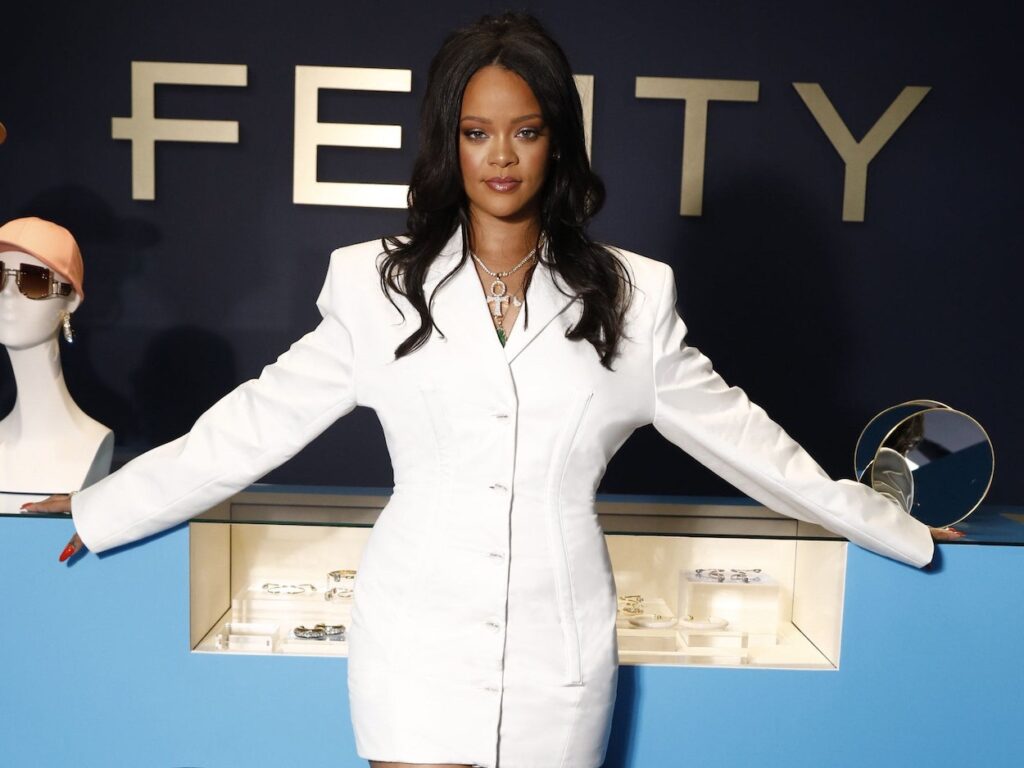
In September 2017, Fenty Beauty launched inside Sephora stores with something no major cosmetics brand had ever offered at scale: forty shades of foundation in a single collection, built specifically to serve skin tones the industry had spent decades ignoring.
It worked immediately. Within weeks, Fenty Beauty’s Pro Filt’R Soft Matte Longwear Foundation was selling out at Sephora locations across the country, and competitors were scrambling to expand their own shade ranges to keep up. TIME named it one of the best inventions of the year. By the end of 2018, the brand had generated $570 million in revenue in its first full year on shelves.
Nine years later, the company that helped build it is trying to sell its half.
The Kendo Partnership
Fenty Beauty was never a solo venture. Rihanna developed the brand alongside Kendo Brands, the in-house beauty incubator owned by LVMH, the French luxury conglomerate behind Louis Vuitton, Dior, and Moët Hennessy. The arrangement split ownership 50/50: Rihanna retained creative control over the brand, while LVMH provided the manufacturing infrastructure, retail relationships, and global distribution network that let a debut cosmetics line reach dozens of countries within its first year.
At the time, LVMH chairman Bernard Arnault framed the partnership as more than a licensing deal, describing Rihanna as a genuine business leader who had earned a lasting place within the LVMH portfolio.
Fenty Beauty Revenue, First Full Year (2018): $570 Million
The Billionaire-Making Brand
The growth continued. Fenty Beauty expanded into skincare in 2020 and launched a fragrance line the following year. By 2021, Forbes had done the math and reached a conclusion that surprised people who thought of Rihanna primarily as a musician: her 50 percent stake in Fenty Beauty had made her a billionaire, and it wasn’t particularly close. Forbes valued the brand at $2.8 billion that year, putting Rihanna’s half at roughly $1.4 billion, more than the entirety of her music career had generated across two decades of recording and touring.
The brand kept building. Fenty Beauty entered haircare in 2024 and opened an exclusive body care line at Ulta Beauty in 2025. Its bestsellers, including the Gloss Bomb Universal Lip Luminizer and Match Stix Contour Skinstick, became fixtures of prestige beauty counters, most of it priced in the accessible $20 to $40 range that helped the brand reach a wider customer base than most luxury-adjacent cosmetics lines.
Fenty Beauty Valuation Peak (2021, Forbes estimate): $2.8 Billion
The Plateau
Growth this explosive rarely holds. The disruption that made Fenty Beauty a phenomenon in 2017, the forty-shade foundation range that no competitor had matched, became less of an advantage once every major beauty brand rushed to expand their own shade offerings in response. By 2024, Fenty Beauty’s net sales had settled at approximately $450 million, down from the momentum of its earlier years, and analysts valuing the brand for a potential sale placed it at $1 billion to $2 billion, a meaningful step down from the $2.8 billion Forbes had cited at the brand’s peak just three years earlier.
The slowdown coincided with broader trouble at LVMH itself. The conglomerate’s first-quarter 2026 revenue fell 6 percent year over year to 19.1 billion euros, weighed down by softening luxury demand in China and the United States. Arnault responded by signaling a sharper focus on LVMH’s core holdings, Louis Vuitton, Dior, and Bulgari among them, while reviewing a longer list of brands that sat outside that inner circle.
Fenty Beauty Net Sales (2024): $450 Million
LVMH’s Portfolio Reset
Fenty Beauty turned out to be one of several brands on that list. In October 2025, LVMH retained the investment bank Evercore to explore options for its Fenty Beauty stake. By May 2026, the Financial Times was describing the review as part of the largest portfolio reset in the conglomerate’s nearly forty-year history, with JPMorgan analysts valuing the stake at up to 2.5 billion euros. Marc Jacobs, the beauty brands Make Up For Ever and Fresh, Joseph Phelps Vineyards, and the rum label Eminente were all part of the same review. Kendo Brands, the incubator that had built Fenty Beauty in the first place, had already sold another of its brands, KVD Beauty, to private equity firm Windsong Global the year before, and was reportedly evaluating a sale of its lipstick customization chain, Lip Lab, as well.
The brands under consideration, according to people familiar with the review, shared a common trait: they consumed management attention and capital without contributing proportionally to group earnings. Fenty Beauty, once the disruptor that reshaped an entire product category, now fit that description too.
Enter MarcyPen
The relationship between Rihanna and Jay-Z’s business interests did not begin with this sale. Rihanna signed her management deal with Jay-Z’s Roc Nation back in 2010, and when she launched her lingerie brand Savage X Fenty, Jay-Z’s investment firm, then called Marcy Venture Partners, participated in funding rounds for the company in both 2019 and 2022.
That firm has since evolved. In 2024, Marcy Venture Partners merged with Pendulum Opportunities, a Black-owned investment platform, to form MarcyPen Capital Partners, a roughly $1.1 billion investment firm founded by Jay-Z alongside Roc Nation co-founder Jay Brown, entrepreneur D’Rita Robinson, and Robbie Robinson, a former financial advisor to President Barack Obama. MarcyPen describes its focus as growth-stage consumer businesses that “create, move and lead culture,” and its existing portfolio includes makeup brand Merit Beauty and period care and skincare company Rael, alongside stakes in Wheels, Hungry Marketplace, Spatial LABS, and Quince.
MarcyPen’s typical check size runs $5 million to $15 million for minority stakes. A Fenty Beauty acquisition would dwarf anything the firm has attempted before, and by June 2026, multiple reports had named MarcyPen the leading contender to buy LVMH’s half of the brand, with the firm reportedly evaluating several financing structures and holding discussions with outside investors to assemble a deal that would represent the largest single transaction in its history.
MarcyPen Capital Partners Assets Under Management: $1.1 Billion
What a Deal Would Actually Mean
If it closes, the transaction does something unusual: it replaces a luxury conglomerate’s balance sheet with a firm built by people who already know the brand and the person behind it. MarcyPen isn’t a stranger stepping into Rihanna’s business the way LVMH once was. Its predecessor already backed Savage X Fenty twice. Its founder has represented Rihanna’s music career for sixteen years. Those existing ties give MarcyPen a genuine head start over a generic private equity buyer with no history with Rihanna at all, the kind of familiarity that speeds up diligence and trust on both sides of a deal this size.
For Rihanna, the outcome reframes what has already been the primary engine of her fortune. Forbes and Bloomberg estimate her net worth at roughly $1.4 billion, a figure RichPeek’s own analysis of her finances independently arrives at as well, with the Fenty Beauty stake accounting for most of it, more than her music catalog, more than her touring history, more than any single asset built during her recording career. A change in her co-owner doesn’t change what she owns. It changes who she’s building it with.
As of this writing, neither LVMH nor MarcyPen has confirmed a deal. LVMH did not respond to requests for comment on the discussions, and MarcyPen has declined to comment publicly on the talks. The brand that started as a bet on inclusivity that no major cosmetics company had been willing to make now sits at the center of a much more familiar story: two of the most recognizable names in entertainment, deciding what happens next to the thing one of them built.