$100 Million
Who He Is
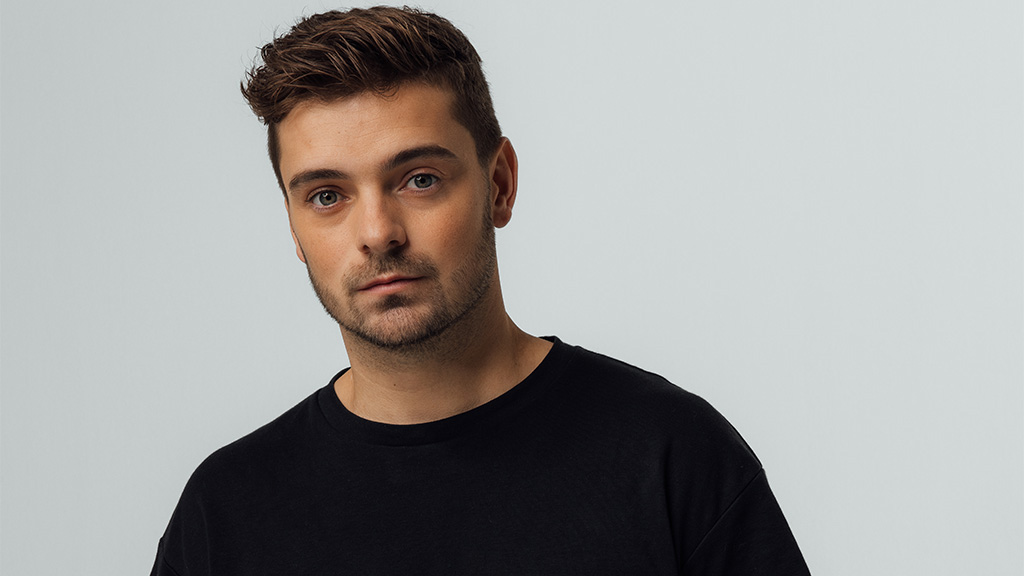
Martijn Gerard Garritsen, born May 14, 1996, in Amstelveen, Netherlands, performs as Martin Garrix and is one of the most commercially dominant DJs and producers in electronic dance music history. He began DJing at weddings as a child, enrolled at Utrecht’s Herman Brood Academie to study production, and was discovered by fellow Dutch DJ Tiesto before signing with Spinnin’ Records in 2012. His 2013 single “Animals” made him the youngest artist ever to reach number one on Beatport and established him as a global commercial force at 17 years old. He became the youngest DJ to headline Ultra Music Festival that same year. He has topped DJ Mag’s Top 100 DJs poll five times, in 2016, 2017, 2018, 2022, and 2024, tying David Guetta and Armin van Buuren for the most wins by a single DJ, and has appeared on Forbes’s Highest-Paid DJs list in multiple confirmed years, including $17 million in 2015, $17 million in 2016, $19.5 million in 2017, $13 million in 2018, and $19 million in 2019. He founded his own label, STMPD RCRDS, in 2016 after departing Spinnin’ Records, and later purchased and rebuilt a full recording studio complex in Amsterdam under the STMPD name. He remains a Dutch resident based in the Netherlands.
1. Touring, Streaming, and Combined Earnings
Garrix’s income is built primarily on a heavy touring and festival schedule, supplemented by streaming royalties and endorsement income, all captured together under the same combined-earnings methodology Forbes applies to its Highest-Paid DJs rankings each year. Forbes has confirmed his pre-tax combined earnings across five separate years: $17 million in 2015 through a mix of 116 live performances and endorsement deals, $17 million again in 2016, $19.5 million in 2017 from 120 performances, $13 million in 2018 on a reduced 90-show schedule, and $19 million in 2019. This five year documented stretch alone totals $85.5 million and reflects a level of earnings consistency few electronic artists have sustained.
Building outward from these confirmed years using the same combined methodology for his earlier breakout period and his post-2019 career, including the pandemic-era touring shutdown of 2020 and 2021 and his continued top-tier festival and residency schedule since:
- Breakout era (2013-2014, pre-Forbes-tracking years following “Animals” and his Ultra headline slot): ~$8M
- Forbes-confirmed peak years (2015-2019, documented combined figures): ~$85.5M
- Pandemic-era touring shutdown (2020-2021, minimal live income, continued streaming and label revenue): ~$6M
- Recovery and continued top-tier era (2022-2026, sustained Ushuaia Ibiza residency, Tomorrowland, and continued DJ Mag number one finishes at estimated $20-22M per year): ~$104M
Career gross, all sources combined per Forbes methodology: ~$203.5M.
This combined figure already includes streaming and recorded music royalty income as it was collected each year, consistent with how Forbes and other outlets calculate DJ earnings. Garrix’s position as an unusually hands-on writer and producer of his own catalog, distinct from DJs who primarily perform others’ productions, means his held songwriting and publishing asset carries real separate value, addressed next.
2. Songwriting and Publishing Catalog (Held Asset)
Unlike many touring DJs who primarily perform curated sets, Garrix is a credited writer and producer on the large majority of his own catalog, including “Animals,” “In the Name of Love” with Bebe Rexha, “Scared to Be Lonely” with Dua Lipa, and “High on Life” with Bonn, giving him a substantially stronger personal royalty position on his own hits than artists who rely more heavily on outside collaborators. His catalog spans more than a decade at full commercial scale, with several tracks holding billions of combined streams.
Given the newer-to-active vintage of his catalog, now roughly 10 to 13 years old at full commercial scale, and his unusually strong writer’s position across the majority of his own hits, a held-asset valuation applies a multiple appropriate for an active catalog with strong continued streaming performance against an estimated personal royalty share.
- Songwriting and publishing catalog, held asset (10x multiple on ~$2M/yr estimated personal royalty share): ~$20M
3. STMPD RCRDS and Studio Complex
Garrix founded STMPD RCRDS in 2016 as an independent platform label, releasing his own singles alongside music from a growing roster of signed artists. He later purchased Amsterdam’s FC Walvisch recording complex and rebuilt it into a full production facility branded as STMPD Studios, featuring eight rooms including one of only a handful of Dolby Atmos Premier Studio sound stages in the world, a facility that has hosted film and television post-production work in addition to music. No revenue, profit, or valuation figures have ever been publicly disclosed for either the label or the studio complex, and no purchase price for the underlying real estate has been reported. Both are excluded from the waterfall as ventures of unknown but likely meaningful value, rather than assigned a speculative figure.
- STMPD RCRDS label: excluded (no disclosed revenue, profit, or valuation)
- STMPD Studios recording complex: excluded (no disclosed purchase price or current valuation)
4. Endorsements
Garrix has maintained a steady if comparatively modest endorsement slate relative to some peers, with brand relationships including TAG Heuer beginning in 2015, Armani Exchange in 2017, Axe, for which he released a signature body spray in 2018 and served as a repeat campaign ambassador, and JBL Audio beginning in 2021. Per-deal dollar figures have not been publicly disclosed for any of these partnerships. Endorsement income at his tier is already captured within the combined Forbes annual earnings figures used in Section 1, which explicitly fold endorsement income into their totals, so no separate line is added here to avoid double-counting.
5. Representation
Garrix’s career has been managed through standard international booking and management representation across his touring, recording, and brand partnership income. A blended representation rate of 15 percent is applied across his combined career earnings, consistent with the rate typically used for artists who maintain significant personal control over their own label and business infrastructure.
Representation (15% blended on $203.5M combined gross): -$30.5M.
6. Tax
Garrix is a longtime resident of the Netherlands, which carries one of the higher top marginal income tax rates among major touring artists’ home countries, with a top bracket near 49.5 percent on higher income levels. A blended effective rate reflecting sustained high earnings under this structure is applied.
Tax (47% blended on $173M post-representation): -$81.3M.
Combined gross across touring, streaming, and endorsement income totals $203.5M. After representation (-$30.5M) and tax (-$81.3M), approximately $91.7M remains before lifestyle burn.
7. Lifestyle Burn
Garrix has built a reputation, including among industry peers, for a comparatively grounded personal lifestyle relative to his level of commercial success, with most public reporting emphasizing his continued focus on studio work over conspicuous spending. His documented consumed costs include touring-related travel, staff, and production support scaling with his career phase.
- Breakout era (2013-2015, 3 years): ~$200K/yr consumed = $0.6M
- Rising era (2016-2019, 4 years): ~$800K/yr consumed = $3.2M
- Recent era (2020-2026, 7 years): ~$1.5M/yr consumed = $10.5M
Total lifestyle burn: ~$14.3M. Available to accumulate: ~$77.4M.
8. Real Estate
Garrix owns a residence in the Amsterdam area; no purchase price, current valuation, or transaction date has been publicly disclosed for this property, making a documented-gain calculation impossible. Given the complete absence of disclosed figures, no real estate appreciation line is included.
- Amsterdam residence: excluded (no documented purchase price or current valuation)
Real estate appreciation: $0 (no documented transactions).
9. Wealth Management
No disciplined investment program or wealth manager has been publicly documented for Garrix. Default applies.
Wealth Management: None reported ($0).
Net Worth Waterfall
| Line Item | Amount |
|---|---|
| Touring, streaming, and combined earnings per Forbes methodology (2013-2026) | +$203.5M |
| Less: representation (15% blended) | -$30.5M |
| Less: tax (47% blended, Netherlands resident) | -$81.3M |
| Less: lifestyle burn (era-scaled, consumed only) | -$14.3M |
| Available to accumulate | +$77.4M |
| Songwriting and publishing catalog, held asset (10x multiple) | +$20M |
| STMPD RCRDS label | $0 (undisclosed) |
| STMPD Studios recording complex | $0 (undisclosed) |
| Real estate | $0 (no documented transactions) |
| Wealth Management | $0 |
| Total Net Worth | ~$97.4M → $100M |
Our calculation: $100 Million.
Why Our Figure Differs From Consensus
Celebrity Net Worth places Martin Garrix at $30 million. Our independent calculation produces approximately $100 million, dramatically above consensus, and the gap is explained by building his career earnings directly from Forbes’s own confirmed Highest-Paid DJs figures rather than a single flat estimate. Forbes has documented five separate years of Garrix’s combined pre-tax earnings, totaling $85.5 million between 2015 and 2019 alone, a figure that on its own already approaches three times CNW’s total stated net worth. His continued top-three DJ Mag finishes every year since 2015 and his ongoing high-value residencies at venues including Ushuaia Ibiza indicate sustained earning power well beyond that documented stretch. Working against an even higher figure: his self-owned label STMPD RCRDS and the full recording studio complex he purchased and rebuilt in Amsterdam both carry no disclosed financials and are excluded entirely rather than assigned speculative value, despite representing what is very likely a meaningful asset given the scale of the facility. His Amsterdam residence is similarly excluded given the absence of any disclosed purchase price. The Netherlands’ comparatively high top tax rate is also a real constraint on his accumulated wealth relative to touring artists based in lower-tax jurisdictions.
The Teenager Who Out-Earned the Adults in the Room
Martin Garrix was seventeen years old when “Animals” made him the youngest artist to top Beatport’s chart, and he has spent the decade since quietly building one of the most consistent earnings records in electronic music while the rest of the industry’s headlines went to louder names. Five separate years of Forbes-confirmed combined earnings, a documented $85.5 million stretch between 2015 and 2019, sit almost entirely uncounted in the $30 million figure most commonly attached to his name. He wrote and produced the songs that made him famous rather than simply performing them, bought and rebuilt an entire Amsterdam recording complex rather than renting studio time, and kept climbing DJ Mag’s rankings well into his late twenties while some of his 2013 peers faded from the conversation entirely. The distance between $30 million and $100 million is not speculation. It is five years of Forbes’s own reporting that nobody had added up.