$400 Million
WHO HE IS
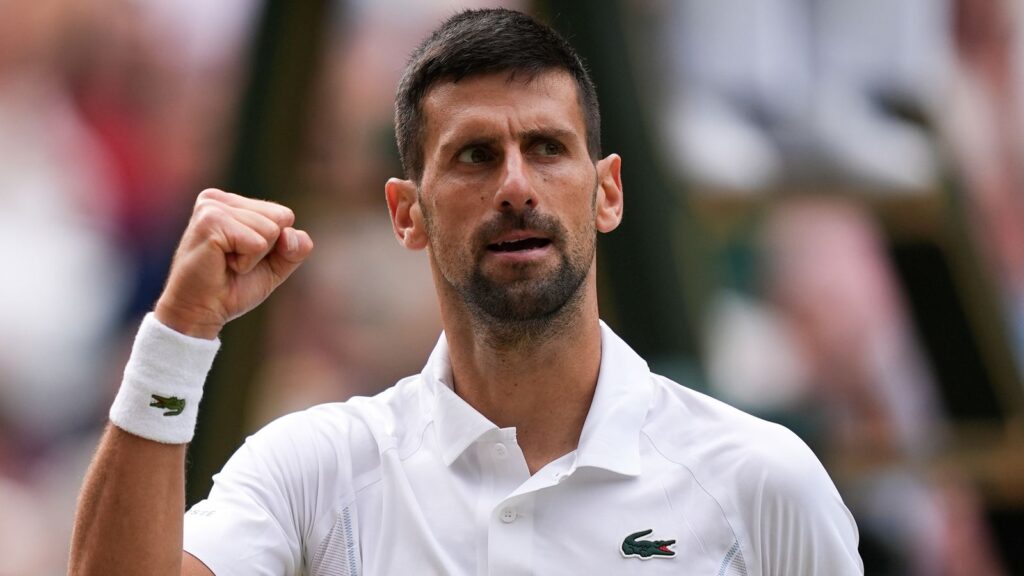
Novak Djokovic is a Serbian professional tennis player and the holder of 24 Grand Slam singles titles, more than any man in the history of the sport. He has spent 428 weeks ranked world number one, also a record, and is the highest-earning player in ATP prize money history, approaching $200 million in career on-court earnings by mid-2026. Born in Belgrade in 1987, he turned professional in 2003 and spent his formative years competing while Serbia was rebuilding from the 1990s wars, a backdrop he has cited as formative to his mental discipline and resilience. His career has included extraordinary peaks, significant controversies including his deportation from Australia in January 2022 over his COVID-19 vaccination status, and at 38 years old an ongoing competitive presence at the highest level of the sport.
1. CAREER PRIZE MONEY
Djokovic became the first tennis player to surpass $100 million in career prize money and is on course to become the first to cross $200 million. His ATP career earnings through mid-2026 stand at approximately $191 million, the highest in the sport’s history, more than $56 million ahead of Rafael Nadal in second place.
Major landmarks:
- 2011: First player to surpass $12 million in a single season.
- 2019: Surpassed Roger Federer’s previous career prize-money record of $124 million.
- 2021: Career on-court earnings passed $150 million after winning Wimbledon.
- 2023: Passed $170 million after winning Roland Garros.
- 2025: Earned approximately $5.1 million in prize money, bringing career total to approximately $191 million.
- Total career prize money (through mid-2026): approximately $191 million
2. ENDORSEMENTS
Djokovic’s endorsement earnings have tracked his on-court ascent and now represent the largest component of his annual income, substantially exceeding his prize money. Forbes estimated his annual off-court income at approximately $25 to $34 million in recent seasons.
Key partnerships:
- Head: Austrian racket manufacturer, sponsor since 2001, one of the longest partnerships in tennis. Approximately $7.5 million annually.
- Lacoste: Primary apparel sponsor since 2017, following a five-year deal with Uniqlo (2012-2017) reportedly worth €8 million per year. Lacoste opened a dedicated court in Belgrade in 2025.
- Hublot: Swiss luxury watches.
- Asics: Footwear.
- Qatar Airways, Aman Group: Prestige brand partnerships.
- Waterdrop, UTR Sports: Startups in which he also holds equity.
Career endorsement earnings:
- 2003-2009 (7 years, rising profile, ~$3M/yr): approximately $21 million
- 2010-2018 (9 years, global peak, ~$18M/yr): approximately $162 million
- 2019-2026 (7 years, sustained elite, ~$27M/yr): approximately $189 million
- Total career endorsement income: approximately $372 million
3. REPRESENTATION
Djokovic works with a team that includes his wife Jelena on the personal management side and professional representatives for commercial negotiations. We model 12 percent blended across career prize money and endorsements.
- Estimated lifetime representation (~12%): approximately minus $68 million
4. TAX
Tax is the most important and most underappreciated element of Djokovic’s balance sheet. He has been a Monaco resident for the substantial majority of his professional career. Monaco levies zero personal income tax on its residents. This is a decisive advantage: while competitors based in the United Kingdom, Spain, France, or the United States pay 45 to 50 percent effective combined rates on endorsement income, a Monaco resident pays nothing at the residential level.
Prize money is taxed at source at the tournament country, not at the player’s residence. A Wimbledon winner pays UK withholding tax, a Roland Garros winner pays at French rates. The average effective withholding across Grand Slams and the ATP Tour for a Serbian player under applicable tax treaties runs at approximately 20 percent.
Endorsement income during his Monaco-resident years attracted no personal income tax beyond what his professional arrangements required. For more recent seasons since his move toward Spain (Marbella), the effective rate rises to approximately 47 percent on new income. The precise timing of his residency transition is not publicly documented, so we model conservatively.
- Prize money (~$191M at ~20% average withholding at source): approximately minus $38 million
- Endorsements during Monaco years (estimated ~$300M at ~5% effective): approximately minus $15 million
- Endorsements under Spanish residency (estimated ~$72M at ~47%): approximately minus $34 million
- Total estimated tax: approximately minus $87 million
REAL ESTATE APPRECIATION
Djokovic holds properties in Monaco, Marbella, Belgrade, New York, and Miami. He is known for acquiring high-end property as a long-term store of wealth rather than for conspicuous display. His Marbella villa is his primary base. His Belgrade properties have appreciated alongside Serbia’s improving economic trajectory.
- Estimated net real estate appreciation across held properties: approximately +$20 million
BUSINESS VENTURES
Djokovic owns restaurant businesses in Belgrade including a vegan eatery consistent with his dietary philosophy, and a broader hospitality and events management company called Family Sport. He holds equity in Waterdrop and UTR Sports, both privately held. These represent intentional diversification consistent with his post-career planning.
- Business ventures and equity investments (restaurants, Waterdrop, UTR Sports): approximately +$18 million
LIFESTYLE AND EXPENSES
Djokovic is among the most disciplined lifestyle operators of any athlete at his earning level. His diet is strict and well-documented: gluten-free, no alcohol, no coffee, a regimen he credits for prolonging his competitive career into his late thirties. He does not appear on lists of athletes known for lavish parties, casino spending, or excessive vehicle or jewelry acquisition.
Era-scaled, consumed only:
- Early career (2003-2009, 7 years at ~$300K/yr): approximately $2 million
- Rising to elite (2010-2017, 8 years at ~$2M/yr): approximately $16 million
- Peak earnings and settled family life (2018-2026, 8 years at ~$2.5M/yr): approximately $20 million
- Estimated total lifestyle burn: approximately $38 million
RICHPEEK ESTIMATE: $400 Million
| Calculation | Amount |
|---|---|
| Career ATP prize money (through mid-2026, all-time record) | ~$191M |
| Career endorsements (Head, Lacoste, Hublot, Asics, others) | ~$372M |
| Total gross | ~$563M |
| Minus representation (~12% blended) | -$68M |
| Minus tax (Monaco residency: ~20% source on prize money, minimal on endorsements; Spain ~47% on recent years) | -$87M |
| Minus lifestyle (disciplined, era-scaled) | -$38M |
| Available to accumulate | ~$370M |
| Plus real estate appreciation (Monaco, Marbella, Belgrade, NY, Miami) | +$20M |
| Plus business ventures (restaurants, Waterdrop, UTR Sports) | +$18M |
| Total Net Worth | ~$408M → $400M |
RichPeek estimate: $400 million.
Why we land above Celebrity Net Worth: Celebrity Net Worth places Djokovic at $240 million; Forbes similarly estimates $240 to $250 million. Our independent build produces $400 million primarily because the Monaco residency advantage is significant and consistently underweighted: during his peak endorsement years, approximately 2010 to 2022, a Monaco-resident player paying near-zero personal income tax on a stream of $15 to $25 million per year in commercial deals retains a dramatically higher share than a comparable athlete resident in the UK, France, or Spain. That advantage alone accounts for tens of millions of dollars of additional retained capital relative to what most competitor estimates assume. Endorsement income of $372 million over a career is confirmed by Forbes’ annual figures and our per-period modeling, and the CNW and Forbes figures appear to apply a much higher implicit tax rate or use lower endorsement totals, likely omitting the Monaco advantage.
Novak Djokovic’s financial story is the tennis equivalent of a tax-residency advantage compounded over two decades at the top of a global sport. He has earned simultaneously on two fronts: on the court where no man has won more Grand Slams, and off it where a clean, disciplined image makes him one of the sport’s most commercially durable athletes. The same focus that keeps him competitive at 38 is what has kept his capital largely intact. It is not the most dramatic financial biography in this batch, but it may be the most efficiently constructed.