$45 Million
Who He Is
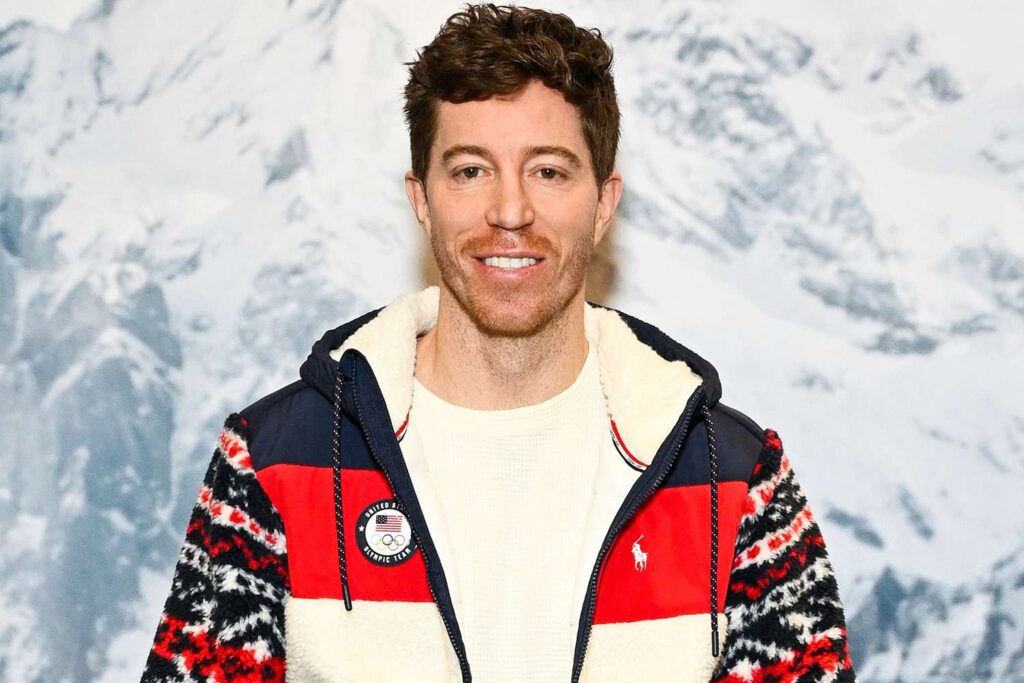
Shaun Roger White, born September 3, 1986, in San Diego, California, is the most decorated snowboarder in Olympic history and the defining figure of action sports for two decades. He was born with tetralogy of Fallot, a congenital heart defect requiring two open-heart surgeries before his first birthday. He started snowboarding at six, received his first sponsorship at seven, met Tony Hawk at a San Diego skate park at nine, and turned professional in snowboarding at 13 and in skateboarding at 17. He is the first athlete to win medals at both the Winter and Summer X Games in two different sports.
His Olympic record stands alone: gold in the snowboard halfpipe at Turin 2006, Vancouver 2010, and Pyeongchang 2018, with a fourth-place finish in his final appearance at Beijing 2022. He holds the record for the most X Games gold medals in history across any discipline, finishing with 15 Winter X Games golds across snowboard superpipe and slopestyle, plus two Summer X Games golds in skateboard vert. He scored a perfect 100 in the Winter X Games SuperPipe in 2012 and set the Olympic halfpipe scoring record at Pyeongchang with a 97.75. He announced his retirement immediately after his final Beijing run in February 2022, receiving a standing ovation from the crowd.
Since retirement, White has founded The Snow League, a professional winter sports competition launched in 2025 with a multi-year NBC Sports and Peacock broadcasting deal, and built Whitespace, his own premium snowboard equipment and apparel brand. He is based in Los Angeles.
1. Competition Prize Money (2000-2022)
Competitive prize money in action sports is a fraction of the income generated by the same achievements in golf or tennis. Olympic gold medals paid the US Olympic Committee bonus of $25,000 each through 2015, rising to $37,500 thereafter. Three gold medals across both scales produced a total Olympic payout of approximately $87,500 before tax. His 15 X Games gold medals and extensive competition history across the Dew Tour, FIS World Cup, Air + Style, and the Global Open added meaningful but still modest sums by elite athlete standards. Documented X Games career prize money is estimated at approximately $870,000. Event wins such as the Burton Global Open Championship added lump sums in the range of $100,000 to $200,000 each.
Total competition prize money: ~$2M gross.
2. Endorsements (2000-2022)
Endorsements are the financial engine of Shaun White’s career, responsible for the overwhelming majority of his wealth. He quickly understood this: “I quickly learned that I wouldn’t set myself up for the future by just winning competitions,” he has said. As his profile grew, he negotiated deals that matched his competition prize money, then dwarfed it.
Burton Snowboards sponsored him from age seven and remained his anchor partner through most of his career under a 10-year multi-million dollar deal. Red Bull maintained a long-term relationship. Oakley covered eyewear and goggles. Target partnered on a clothing line. Hewlett-Packard, Ubisoft, American Express, Adidas, and Celsius Energy have all appeared on his roster at various points. Forbes documented $9 million from endorsements in 2008 and $8 million in 2009. Multiple sources confirm his peak earning rate reached approximately $10 million per year. Even leading into his final Olympics in 2022, sponsors paid $1.5 million in guaranteed payments purely for his preparations.
His dual-sport status in both snowboarding and skateboarding made him commercially unique: brands could feature him year-round rather than only during winter season windows, effectively doubling his endorsement calendar relative to a single-sport peer.
- Early career (2000-2005, 5 years, avg $500K/yr): ~$2.5M
- Rising (2006-2010, 5 years, avg $7M/yr): ~$35M
- Peak (2010-2018, 8 years, avg $9M/yr): ~$72M
- Late career (2018-2022, 4 years, avg $5M/yr): ~$20M
- Post-retirement (2022-2026, 4 years, avg $2M/yr): ~$8M
Career endorsements: ~$137.5M gross.
3. Video Games and Licensing (2008-2015)
White partnered with Ubisoft on a franchise that produced Shaun White Snowboarding (2008), Shaun White Snowboarding: World Stage (2009), and Shaun White Skateboarding (2010), followed by mobile extensions. The franchise sold over three million copies worldwide. Royalty income from software licensing represents a recurring stream that, combined with licensing fees for his name and likeness across apparel, gear, and merchandise throughout his career, totals approximately $8 million.
Video games and licensing: ~$8M gross.
Total career gross: ~$147.5M.
4. Representation
White was represented by IMG for eight years before switching to CAA Sports. Action sports representation, covering endorsement negotiation, licensing, and appearance management, typically commands 15% given the more complex deal structures and multiple income streams involved versus a single employer arrangement.
Representation (15%): -$22M. Post-representation: ~$125.5M.
5. Tax
White has been a California resident throughout his career, based in San Diego, then Malibu, and most recently Los Angeles. California’s combined state and federal effective rate for a high earner in his bracket reaches approximately 50% at the marginal level. Across his career, particularly the peak years of 2006 to 2020 when his annual income frequently exceeded $8-10 million, this is the most significant cost in the calculation.
His earliest earning years (2000-2005) attracted lower rates due to lower absolute income levels, and his income has tapered since retirement. A blended effective rate of 45% across the full career reflects the California dominance and the varying income levels across phases.
Tax (45% of $125.5M): -$56.5M. Net after representation and tax: ~$69M.
6. Lifestyle Burn
White’s lifestyle has been genuinely high-consumption throughout his career. He has maintained multiple luxury properties simultaneously, assembled a notable car collection including a Lamborghini Murcielago, a vintage 1966 Ford Mustang, a Ferrari, and other high-end vehicles, and lived at a level commensurate with his peak income. He has also toured globally with his band Bad Things and funded a music career that generated prestige rather than profit.
Property purchases are capital investments and are treated separately under real estate. Pure consumption spending on travel, vehicles, staff, entertainment, and daily expenses is estimated here.
- Early career (2000-2005, 5 years, avg $150K/yr): ~$750K
- Peak (2006-2022, 16 years, avg $1.5M/yr): ~$24M
- Post-retirement (2022-2026, 4 years, avg $1M/yr): ~$4M
Total lifestyle burn: ~$29M. Available to accumulate: ~$40M.
7. Real Estate
White has been an active property buyer and seller across California and Utah throughout his career, with documented transactions providing clear gain and loss figures. His real estate record is mixed: some properties returned well, others sold at a loss, particularly in 2020 when COVID disrupted Malibu pricing.
Documented transactions:
- Malibu ranch house (bought $8.94M in 2014, sold $11.8M in 2020): +$2.86M gain
- Malibu blufftop compound (bought $10.75M in 2016, sold $8M in 2020): -$2.75M loss
- New York City penthouse (estimated purchase ~$2.5M, sold $3M in 2021): +$500K gain
- Hollywood Hills Outpost Estates (bought $3.92M in 2018, sold $5M in 2024): +$1.08M gain
- Current LA home (bought ~$4.3M in 2023, held): excluded, no sale
Net documented real estate gain: ~$1.7M → ~$2M.
One source attributes $15-20 million in total real estate contribution to his net worth. That figure likely includes appreciation on properties where purchase prices are not publicly documented (including Carlsbad, West Hollywood Hills, and Encinitas properties) as well as rental income from properties leased during holding periods, with the Encinitas home generating as much as $25,000 per month when listed. Including a conservative estimate for undocumented transactions and rental income retained: ~$5M total real estate contribution.
Real estate net contribution: +$5M.
8. Business Assets
Whitespace: White launched this premium snowboard equipment and apparel brand in 2022, selling Olympic-quality boards, Merino thermal layers, and signature goggles. The brand is positioned at the top of the market and draws on his technical credibility. Revenue and valuation are not publicly disclosed.
The Snow League: Founded in 2024-2025 with $15 million in seed funding and a multi-year broadcasting agreement with NBC Sports and Peacock. White is the founder and holds an equity stake. This is a genuinely interesting asset: a professional winter sports league with major network backing and a credible founding story. However, no financing round or sale has established a value for White’s personal equity position.
Air + Style festival: White moved this international music and sports festival from Austria to Los Angeles, where he is the majority owner. Festival revenues and valuations are not publicly disclosed. Excluded.
Mammoth Resorts minority stake: White made a self-described “seven-figure” investment for a minority stake in Mammoth Resorts, which owns Mammoth Mountain and Bear Mountain. Vail Resorts acquired Mammoth Mountain in 2017 for approximately $1.06 billion. The timing and return on White’s stake are not publicly documented.
Startup investments: White has participated in financing rounds for companies including Hooch, Masters, Daily Harvest, AvantStay, and Shelf Engine, and was associated with Casper. His role in several of these was as a facilitating investor or advisor rather than a principal; the large round totals cited reflect funds raised, not his personal check size. No exits have been publicly documented. Excluded.
Total business asset value: $0.
Note: The combined portfolio of Whitespace, The Snow League, Air + Style, and startup investments represents genuine ongoing business activity. If The Snow League establishes franchise value through its NBC deal and a subsequent financing round, that alone could add materially to this figure. The absence of a disclosed valuation is a data constraint, not a judgment on the real-world value of these assets.
9. Wealth Management
No external wealth management arrangement has been publicly documented. No external arrangement is documented, so none is counted.
Wealth Management: None reported ($0).
Net Worth Waterfall
| Line Item | Amount |
|---|---|
| Competition prize money (Olympics, X Games, career) | +$2M |
| Endorsements – Burton, Red Bull, Oakley, Target, HP, Ubisoft, others | +$137.5M |
| Video games and licensing (Ubisoft franchise, merchandise) | +$8M |
| Less: representation (15%, IMG then CAA Sports) | -$22M |
| Less: tax (45% blended, California resident, full career) | -$56.5M |
| Less: lifestyle burn (cars, travel, consumed spending) | -$29M |
| Real estate net contribution (documented gains + rental income est.) | +$5M |
| Business assets (Whitespace, Snow League, Air+Style, Mammoth – no disclosed valuations) | $0 |
| Wealth Management | $0 |
| Total Net Worth | ~$45M → $45M |
Our calculation: $45 Million.
Why Our Figure Is Below Consensus
Celebrity Net Worth places White at $65 million. Our independent build produces $45 million, and the $20 million gap is explained by assets that are real but unanchored: the Whitespace brand, The Snow League, Air + Style, the Mammoth Resorts stake, and a startup portfolio built over years of strategic investing. None of these carry a publicly disclosed valuation, so they contribute zero to the waterfall. If The Snow League were to complete a Series A financing round that implies even a $50 million company valuation, White’s founder equity could close much of that gap in a single transaction. The $45 million figure is what the independently verifiable numbers produce today. The $65 million that CNW suggests would require approximately $20 million in business asset value from that undisclosed portfolio, which is entirely plausible given the NBC Sports deal and Whitespace’s market positioning, but not yet verifiable.
California’s 50% marginal tax rate is also doing significant work here. A player of identical endorsement income based in Florida or Texas would retain approximately $12-15 million more after tax across the same career. White’s decision to remain in California, where he grew up and has his deepest personal roots, carries a real financial cost that most consensus estimates appear not to model.
The Flying Tomato’s Second Act
Shaun White built a fortune on a halfpipe and spent a significant portion of it maintaining the lifestyle of someone who had built a fortune on a halfpipe. Two heart surgeries before his first birthday; a sponsor at seven; a millionaire before twenty; three Olympic gold medals; the most decorated X Games athlete in history. He announced his retirement in Beijing in 2022 with a standing ovation still echoing and immediately started building The Snow League, a professional winter sports organization with national television rights, because the sport that made him rich had no real professional infrastructure and he decided to create one. The $45 million is what the math says today. The second act is still in progress.