$450 Million
WHO HE IS
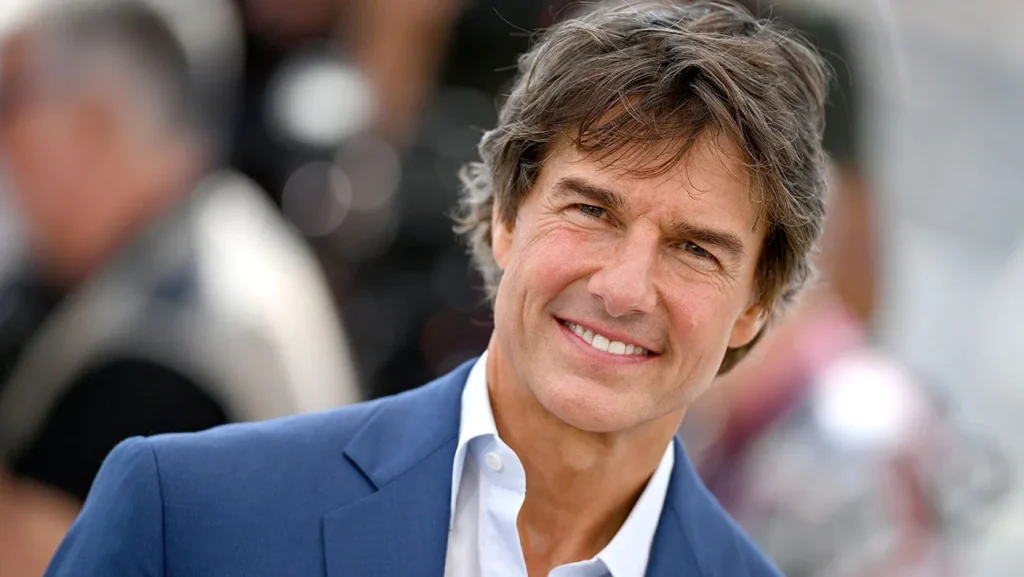
Thomas Cruise Mapother IV was born on July 3, 1962, in Syracuse, New York, and moved frequently throughout a difficult childhood before landing his first film role in 1981’s Endless Love. His breakout came two years later with Risky Business, and by the mid 1980s he was a certified box office draw following Top Gun, a role that established the persona of daring, charismatic leading man he has built his career around for four decades. Cruise became one of Hollywood’s most bankable stars through the 1990s in The Firm, Jerry Maguire, and 1996’s Mission: Impossible, the first installment of a franchise that has since grossed more than $4 billion worldwide and become the defining showcase for his insistence on performing his own increasingly dangerous stunts. His career built to a new commercial peak in 2022 with Top Gun: Maverick, which became the highest grossing film of his career and one of the biggest box office successes of the decade. Cruise has been married three times, to actresses Mimi Rogers, Nicole Kidman, and Katie Holmes, and has been a prominent and financially supportive member of the Church of Scientology for more than three decades.
1. Film Career, Early Years
Cruise’s fee climbed from scale wages to seven figures within just a few years of his breakout, as Risky Business and Top Gun established him as a genuine box office draw.
- Endless Love, Taps, The Outsiders, Losin’ It, and other early roles (1981-1982): ~$0.5M
- Risky Business, confirmed salary (1983): $75K
- Legend, confirmed salary (1985): $500K
- Top Gun, confirmed salary (1986): $2M
Phase total: ~$3.075M.
2. Film Career, Rising Stardom
Through the back half of the 1980s and into the early 1990s, Cruise’s fee climbed steadily as he built a run of commercial and critical hits.
- Color of Money, Cocktail, Rain Man, Days of Thunder, and Born on the Fourth of July, combined (1987-1990): ~$10M
- Far and Away, confirmed salary (1992): $13M
- A Few Good Men, confirmed salary (1992): $12.5M
Phase total: ~$35.5M.
3. Film Career, 1990s Peak
This decade produced Cruise’s emergence as one of the highest paid actors in the world, anchored by the first Mission: Impossible film and a landmark backend deal that established the template for the rest of his career.
- The Firm, confirmed salary (1993): $12M
- Interview with the Vampire, confirmed salary (1994): $15M
- Mission: Impossible, salary plus profit percentage points (1996): $70M
- Jerry Maguire, confirmed salary (1996): $20M
- Eyes Wide Shut, confirmed salary (1999): $20M
Phase total: $137M.
4. Film Career, 2000s
Cruise’s willingness to forgo a fixed salary in favor of gross profit points became the defining feature of his compensation structure this decade, producing his largest single film paydays.
- Mission: Impossible II, profit sharing arrangement in place of a set salary (2000): $100M
- Mission: Impossible III, salary plus backend (2006): $75M
- War of the Worlds, 20 percent of gross profits (2005): $100M
- Vanilla Sky, salary plus 30% of profits, confirmed (2001): $20M
- Minority Report, confirmed salary (2002): $25M
- The Last Samurai, salary plus profit points, confirmed (2003): $25M
- Collateral (2004): ~$20M
- Valkyrie, salary plus profit percentage points, confirmed (2008): $20M
Phase total: $385M.
5. Film Career, 2010s
Cruise continued anchoring the Mission: Impossible franchise through this decade while maintaining a steady slate of original action vehicles.
- Mission: Impossible Ghost Protocol, salary plus backend (2011): ~$60M
- Mission: Impossible Rogue Nation, salary plus backend (2015): ~$50M
- Mission: Impossible Fallout, salary plus backend (2018): ~$100M
- Knight and Day, Jack Reacher, Oblivion, Edge of Tomorrow, Jack Reacher: Never Go Back, The Mummy, and American Made, combined (2010-2017): ~$105M
Phase total: $315M.
6. Film Career, Recent Era
Cruise’s Top Gun: Maverick payday stands as the largest single film salary of his career, driven by an aggressive first dollar gross backend structure on a film that became a genuine cultural event.
- Top Gun: Maverick, upfront salary plus over 10 percent of first dollar gross on a film that grossed $1.49 billion worldwide (2022): $100M
- Mission: Impossible Dead Reckoning Part One, salary plus backend (2023): ~$60M
- Mission: Impossible The Final Reckoning, salary plus backend (2025): ~$70M
Phase total: $230M.
7. Endorsements
Cruise has done relatively little traditional brand endorsement work compared to his fame level, keeping his public commercial presence tied almost entirely to his films.
- Selective brand partnerships across the career: ~$5M
Phase total: $5M.
8. Combined Entertainment Gross
Early years ($3.075M) plus rising stardom ($35.5M) plus 1990s peak ($137M) plus 2000s ($385M) plus 2010s ($315M) plus recent era ($230M) plus endorsements ($5M) equals $1.111 billion gross entertainment income.
9. Representation
Representation across Cruise’s acting and endorsement income, covering agent, manager, and legal fees, is applied at a blended 13 percent, standard for a full Hollywood team.
Representation (13% on $1.111B): -$144.37M.
10. Tax
Cruise is a longtime California resident. Established entertainment talent typically achieves an effective tax rate below California’s roughly 50 percent combined marginal rate through loan-out company structures, bringing the effective rate to approximately 42 percent.
Tax (42% on $966.2M post-representation income): -$405.8M.
Post-tax entertainment income: ~$560.4M.
11. Lifestyle Burn
Cruise’s consumed spending includes three marriages, a documented child support arrangement following his divorce from Katie Holmes, an extensive personal aviation habit involving multiple owned aircraft and Navy jet flight training costs for his films, and more than three decades of financial support for the Church of Scientology. Cruise has never publicly disclosed his contributions to the church, and journalistic estimates of the total range widely, but the relationship is consistently described as a genuine and substantial financial commitment rather than a nominal one.
- Early career (1981-1985, 5 years): ~$150K/yr consumed = $0.75M
- Rising fame, marriages to Mimi Rogers and Nicole Kidman (1986-2000, 15 years): ~$1.5M/yr consumed = $22.5M
- Katie Holmes marriage and divorce, high profile Scientology era, child support (2001-2012, 12 years): ~$3M/yr consumed = $36M
- Post-divorce era, continued Scientology commitment and aviation habit (2013-2026, 14 years): ~$2.5M/yr consumed = $35M
- Cumulative Church of Scientology contributions across the career, conservative estimate given undisclosed exact figures: $30M
Total lifestyle burn: ~$124.25M. Available to accumulate: ~$436.15M.
12. Real Estate
Cruise’s Telluride, Colorado ranch, sold for $39.5M in 2021, was custom built by Cruise beginning in the early 1990s rather than purchased at a documented market price, so there is no clean cost basis to calculate a gain against the sale price. His Beverly Hills residence has been reported as worth more than $20M, but no original purchase price has been disclosed. Absent a documented purchase-to-sale or purchase-to-current-value pairing for any property in his portfolio, real estate is excluded from this calculation rather than estimated.
Real estate appreciation: $0.
13. Business Equity Held
Cruise has operated production entities across his career, most notably Cruise/Wagner Productions with former partner Paula Wagner, primarily to structure his own film backend deals rather than to produce a broad slate of projects for other stars. The value generated through this structure is already captured in the per-film backend figures counted above, so no separate business equity value is added here to avoid double counting the same underlying income.
Business equity held: not applicable, captured in film backend deals above.
14. Wealth Management
No disciplined outside investment program has been publicly documented for Cruise. Default applies.
Wealth Management: None reported ($0).
Net Worth Waterfall
| Line Item | Amount |
|---|---|
| Early years (1981-1986) | +$3.075M |
| Rising stardom (1987-1992) | +$35.5M |
| 1990s peak | +$137M |
| 2000s film career | +$385M |
| 2010s film career | +$315M |
| Recent era film career (2022-2025) | +$230M |
| Endorsements | +$5M |
| Less: representation (13% on $1.111B entertainment gross) | -$144.37M |
| Less: tax (42% blended, California resident) | -$405.8M |
| Less: lifestyle burn (era-scaled, consumed only) | -$124.25M |
| Available to accumulate | +$436.15M |
| Real estate appreciation | $0 |
| Business equity held | $0, captured above |
| Wealth Management | $0 |
| Total Net Worth | $436.15M → $450M |
Our calculation: $450 Million.
Why Our Figure Differs From Consensus
Celebrity Net Worth places Tom Cruise at $600 million. Our independent calculation lands at $450 million, and the gap traces mainly to lifestyle burn and the absence of any documented real estate gains, two categories that pull in opposite directions from most other entertainer profiles. Cruise’s confirmed backend deals are unusually well documented for an actor of his generation, with reported nine figure paydays on Mission: Impossible II, War of the Worlds, Mission: Impossible Fallout, and Top Gun: Maverick each independently sourced rather than estimated, alongside confirmed mid-decade paydays on Vanilla Sky, Minority Report, The Last Samurai, and Valkyrie, so the gross income side of this calculation is not conservative. The larger source of divergence is the consumed spending side. Three marriages, a documented child support arrangement, an extensive personal aviation habit, and more than three decades of financial support for the Church of Scientology, a commitment multiple sources describe as substantial though never publicly disclosed in exact figures, add up to a lifestyle burn well above what a comparably paid but more conventionally private actor would show. Working in the other direction, this calculation excludes real estate entirely, since Cruise’s Telluride ranch was custom built rather than purchased at a documented price and his Beverly Hills home carries no disclosed original cost, meaning any appreciation on either property is real but unquantifiable here.
The Actor Who Turned Risk Into a Compensation Strategy
Tom Cruise’s financial story is inseparable from a negotiating instinct he settled on early and never abandoned: trade a smaller guaranteed salary for a real cut of what a film actually earns. That bet paid off spectacularly on Mission: Impossible II, where forgoing a set salary for profit points delivered a $100 million payday that made him the highest paid actor in the world, and it paid off again on Top Gun: Maverick more than two decades later, when a similar structure turned a legacy sequel into his single largest single film payday ever. Few actors of his generation have been willing to accept that much personal financial risk on whether a movie works, and fewer still have done it as consistently or as profitably. That willingness to bet on himself extends into his physical commitment to the films themselves, performing stunts that would end most actors’ careers, a form of risk tolerance that runs through both his on screen choices and his contract negotiations alike. Four decades after Risky Business, Cruise remains one of the only movie stars whose presence alone can still be counted on to open a film, and his paychecks continue to reflect exactly that scarcity.es.