$240 Million
Who He Is
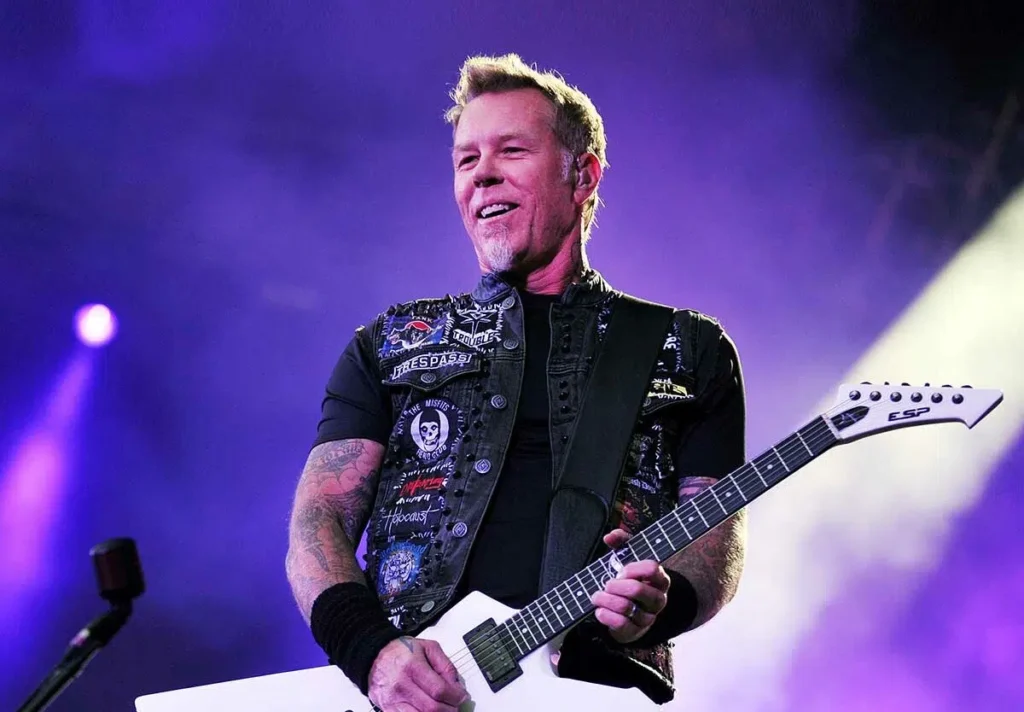
James Alan Hetfield, born August 3, 1963, in Downey, California, is the co-founder, lead vocalist, rhythm guitarist, and primary songwriter of Metallica, the highest-grossing heavy metal band in history. He formed the band in 1981 after answering drummer Lars Ulrich’s newspaper ad, and the two have remained Metallica’s constant creative core through four decades, eleven studio albums, and lineup changes that saw bassists Ron McGovney, Cliff Burton (who died in a 1986 tour bus accident), and Jason Newsted give way to current bassist Robert Trujillo, who joined in 2003, while guitarist Dave Mustaine was replaced by Kirk Hammett in 1983 before going on to found Megadeth. Metallica’s 1991 self-titled album, known as the Black Album, has sold more than 20 million copies in the United States alone and over 31 million worldwide, making it the best-selling album of the Nielsen SoundScan era. The band has sold more than 150 million albums worldwide, won nine Grammy Awards, and was inducted into the Rock and Roll Hall of Fame in 2009. Metallica has owned 100 percent of its master recordings since November 2012 through its own label, Blackened Recordings, an arrangement nearly unprecedented for a band of its commercial scale. Hetfield relocated from Marin County, California, to Vail, Colorado, in 2017. He has been managed by Q Prime’s Cliff Burnstein and Peter Mensch since 1984.
1. Touring (1983-2026)
Touring is the largest single income source for any member of Metallica, and the band’s box office grosses are extensively documented by Billboard Boxscore and Wikipedia’s concert tour archives. Critically, these figures are box office revenue collected from ticket sales, not personal income; stadium-scale touring production, staging, crew, and venue costs typically consume approximately 38 percent of gross before any split reaches the band, consistent with the production-cost treatment applied to other stadium-scale touring acts.
The band’s revenue split has also changed over time. Since Robert Trujillo joined in 2003, Metallica has operated as a full four-way partnership, with touring, merchandise, and recording income pooled and divided equally among Hetfield, Ulrich, Hammett, and Trujillo, 25 percent each, regardless of individual songwriting contribution. This is distinct from the band’s earlier history: bassist Jason Newsted, who played with Metallica from 1986 to 2001, was a salaried band employee rather than a full equity partner, meaning Hetfield’s effective personal share of the band’s income during that 15-year stretch, the era of the Black Album and Metallica’s commercial breakthrough, was higher than the 25 percent that applies today.
Documented box office figures: the band’s first decade-plus of touring through the late 1980s built steadily smaller grosses as a rising thrash act; the 1991-2001 period, anchored by the Wherever We May Roam, Poor Touring Me, and Summer Sanitarium tours, coincided with the band’s commercial peak following the Black Album; the 2000s decade alone grossed over $227 million from 187 reported shows; the World Magnetic Tour (2008-2010) grossed $217 million; the WorldWired Tour (2016-2019) grossed $430 million from 139 shows and over 4.1 million attendees; and the M72 World Tour (2023-2026, ongoing) had grossed $517.5 million from 70 shows as of December 2025, with a 2026 European stadium leg still to come, making it one of the highest-grossing tours of the 2020s.
- 1983-1990 box office (pre-stardom, smaller venues), Hetfield’s personal share at an elevated rate reflecting Newsted-era salary structure (not yet joined): ~$2.8M
- 1991-2001 box office (Black Album era through Newsted’s tenure, elevated personal share): ~$102.3M
- 2003-2007 box office (Trujillo joins, equal four-way split begins): ~$18.6M
- 2008-2010 box office (World Magnetic Tour, documented $217M, equal split): ~$33.6M
- 2011-2015 box office (Big 4 Tour and smaller touring years, equal split): ~$12.4M
- 2016-2019 box office (WorldWired Tour, documented $430M, equal split): ~$66.7M
- 2023-2026 box office (M72 World Tour, documented $517.5M+ through 2025 plus 2026 European leg, equal split): ~$86.8M
Hetfield’s personal touring income, net of production costs and reflecting his actual band-revenue share across eras: ~$323.2M.
As a cross-check: Forbes confirmed Metallica’s band-wide pre-tax earnings at $68.5 million in 2019, the heart of the WorldWired Tour. A 25 percent share of that figure is approximately $17.1 million, closely consistent with the average annual personal touring income implied by the WorldWired-era figure above.
2. Recorded Music Royalties
Separate from the touring figures above, Hetfield has collected royalty income from recorded music sales and streaming across more than four decades and 150 million albums sold worldwide. The Black Album alone, certified 20x Platinum domestically with over 31 million copies sold worldwide on physical formats, has generated sustained royalty income that, per bandmate Jason Newsted, could plausibly sustain a band member for life on its own. Royalty income from recorded music is collected separately from the band’s touring revenue pool, and Hetfield’s personal share of this income runs higher than his 25 percent touring share, since songwriting and publishing royalties are concentrated in Hetfield and Ulrich rather than split evenly across all four members, a distinction explored fully in the catalog section that follows.
- Recorded music royalty income, cumulative across career (distinct from catalog asset value): ~$85M
3. Songwriting and Master Recordings Catalog (Held Asset)
This is the area most often collapsed into a single “music royalties” line by competitor estimates, and it requires separating two genuinely different things: royalty income already collected, and the present-day value of the catalog itself as a held, sellable asset.
Two distinct rights are in play. First, master recording ownership: Metallica has owned 100 percent of its masters since November 2012, when a 1994 joint venture provision with Warner Music Group expired and the band launched its own label, Blackened Recordings. This is described consistently as a band-wide asset, owned jointly by the four-member entity, and is treated here as split equally, 25 percent each, consistent with the band’s general partnership structure. Second, songwriting and publishing credit: this is concentrated specifically in Hetfield and Ulrich, the band’s founding and constant songwriting team, rather than split four ways. Kirk Hammett has been excluded from songwriting credits on substantial portions of the catalog, including the entirety of 2016’s Hardwired… to Self-Destruct, and Robert Trujillo has only a single co-writing credit since joining in 2003. Death Magnetic (2008) is the one album crediting all four members equally; the rest of the catalog credits Hetfield and Ulrich as the primary or sole writers, occasionally joined by Cliff Burton or Dave Mustaine on early albums before their respective departures.
No comparable transaction exists for Metallica’s full catalog, since the band has not sold it. But adjacent transactions establish a credible valuation range: in January 2021, producer Bob Rock, who is not even a band member, sold his producer’s points on just 43 songs, including only a portion of one Metallica album (the Black Album), to Hipgnosis Songs Fund for an undisclosed but clearly material sum. In the broader 2024 catalog sale market, KISS sold its full catalog, name, logo, and likeness rights for $300 million, and Pink Floyd sold its recorded rights to Sony for $400 million. Metallica’s catalog, spanning eleven studio albums, 150 million in worldwide sales, and a still-touring, still-commercially-dominant active business, is conservatively comparable in scale to these legacy transactions, while it has never actually traded hands. A full-catalog enterprise value of approximately $350 million is used here as a conservative reference point, below Pink Floyd’s $400 million and roughly in line with KISS’s $300 million given Metallica’s larger and more actively touring catalog offsetting the fact that some of its commercial peak years are more recent and therefore less proven as a legacy asset than Pink Floyd’s.
Applying Hetfield’s actual ownership structure rather than a flat split: master recordings are modeled as 60 percent of total catalog value (recorded music typically dominates modern catalog valuations) at his 25 percent band-equal share, and publishing is modeled as 40 percent of total catalog value at his approximately 37.5 percent personal share, reflecting his concentrated but not sole songwriting credit alongside Ulrich.
- Master recordings, Hetfield’s 25% band-equal share of estimated $210M master value: ~$52.5M
- Songwriting and publishing, Hetfield’s ~37.5% concentrated share of estimated $140M publishing value: ~$52.5M
Total catalog asset value: ~$105M.
4. Business Ventures
Hetfield co-founded Blackened American Whiskey in 2018 alongside master distiller Rob Dietrich and Sweet Amber Distilling Co., which now distributes the brand in more than 36 states, and later extended the brand into a cigar line with Drew Estate. No revenue figures, profit margins, or ownership percentage for Hetfield personally in Blackened American Whiskey have ever been publicly disclosed; the venture is structured as a collaboration with an outside distilling company rather than a wholly Hetfield-owned business.
Hetfield has also made several personal angel investments outside of band-level ventures. He was a seed and Series A investor in The Virtual Reality Company, a Hollywood VR production studio also backed by Steven Spielberg, contributing to funding rounds in 2015 and 2016 that totaled $25 million; his individual investment size and resulting equity stake were not disclosed. He made an angel investment in the short-form video platform Triller in December 2021 and exited that position in October 2024, per Pitchbook and CBInsights data; neither the investment size nor the exit value has been disclosed. In 2020, he was reported to have joined the Worldwired Music IP Fund, an intellectual property acquisition venture targeting classic rock catalogs; Variety reported the fund’s total assets under management at launch in the $300-500 million range, but this is the fund’s total size, not Hetfield’s personal commitment or stake.
Separately, at the band level rather than Hetfield individually, Metallica acquired a controlling stake in Furnace Record Pressing, one of the largest vinyl pressing plants in the United States, in March 2023, through its affiliated investment platform Black Squirrel Partners. The deal was confirmed by Variety and Music Business Worldwide as being for an undisclosed sum. As a band-level acquisition split across four members rather than a Hetfield-specific holding, and with no disclosed transaction value to even apportion, this is excluded here.
None of these positions carry a disclosed investment size, ownership percentage, or exit value precise enough to model responsibly. They are real and documented, and collectively suggest meaningful additional upside that a fuller disclosure could reveal, but assigning a number to any of them would be a guess rather than a calculation.
- The Virtual Reality Company (2015-2016 angel/Series A): excluded (undisclosed investment size and stake)
- Triller (2021 angel investment, 2024 exit): excluded (undisclosed investment and exit size)
- Worldwired Music IP Fund stake: excluded (undisclosed personal commitment size)
- Furnace Record Pressing (band-level, via Black Squirrel Partners): excluded (undisclosed deal value, band-level rather than personal holding)
- Blackened American Whiskey and Blackened cigars: excluded (undisclosed Hetfield ownership percentage and financials)
5. Representation
Metallica has been managed by Cliff Burnstein and Peter Mensch of Q Prime since 1984, one of the longest continuous artist-management relationships in rock music. A blended representation rate of 15 percent is applied across touring, recorded music, and other personal earnings, consistent with a long-tenured single management relationship for an act of Metallica’s commercial scale and negotiating leverage.
Representation (15% blended on $423.2M combined gross): -$63.5M.
6. Tax
Hetfield was a California resident, based in Marin County, for the substantial majority of his career, before relocating to Vail, Colorado, in 2017. California’s top marginal state rate of 13.3 percent, among the highest in the country, applied to the bulk of his career earnings, including the entire Black Album era and most of Metallica’s commercial peak. Colorado’s flat state income tax rate of 4.4 percent is dramatically lower. Approximately 85 percent of his career income is attributed to his California-resident years and 15 percent to his Colorado-resident years since 2017, given the relocation occurred only nine years ago relative to a four-decade career.
Tax (48% effective on California-era income, 40% effective on Colorado-era income): -$168.3M combined.
Combined gross across touring and recorded music royalties totals $423.2M. After representation (-$63.5M) and tax (-$168.3M), approximately $191.4M remains before lifestyle burn.
7. Lifestyle Burn
Hetfield’s documented lifestyle, while clearly that of a wealthy rock star, does not show the hallmarks of extreme excess common to acts at his commercial tier. He has no documented yacht or personal jet fleet. His large land holdings in Marin County were substantially placed under conservation easements and donated to land trusts rather than developed or monetized, which is the opposite of consumed spending. His most visible personal asset, a custom car and motorcycle collection valued at $3.2 million, was built gradually over decades and functions more as an appreciating collection than ongoing burn; only depreciation and maintenance on it count as consumed spending here, not its full value. He has spoken publicly about preferring hunting, fishing, and beekeeping to a flashier public lifestyle, and underwent two stints in rehabilitation for alcohol addiction, in 2001 and 2019, both of which carried real treatment costs and lost touring income rather than discretionary spending.
- 1983-1990 (8 years, pre-stardom): ~$250K/yr consumed = $2M
- 1991-2001 (11 years, Black Album wealth arrives, but no documented shift to lavish public spending): ~$1.2M/yr consumed = $13.2M
- 2003-2010 (8 years, established wealth, ranch and car collection upkeep): ~$1.8M/yr consumed = $14.4M
- 2011-2022 (12 years, continued car collection costs, 2019 rehab and associated lost touring income, family costs): ~$2.2M/yr consumed = $26.4M
- 2023-2026 (4 years, settled Vail lifestyle): ~$1.8M/yr consumed = $7.2M
Total lifestyle burn: ~$63.2M. Available to accumulate: ~$128.2M.
8. Real Estate
Hetfield’s real estate history includes several California properties with documented sale prices but undisclosed purchase prices, including a Novato, California estate sold in 2003 for approximately $3.4 million and a San Rafael property sold around 2012 for approximately $4 million; without documented purchase prices for either, no appreciation gain can be claimed on them. He previously owned a 1,150-acre ranch in Lucas Valley, Marin County, known as Rocking H Ranch, much of which he placed under conservation easements with the Marin Agricultural Land Trust and Marin County Open Space District following a public dispute over trail access; he retains roughly 50 acres of this land, with no current market value disclosed for the retained portion.
His current primary residence, an 11,509-square-foot estate in Vail, Colorado, was purchased in 2017 for a documented $23 million and is currently estimated at approximately $27.5 million, a confirmed gain of $4.5 million. A 20-acre parcel of land in Graham County, Arizona, purchased in 1998, was sold to Rosemont Copper Company in 2021 for $1.2 million; no original purchase price has been documented for this parcel, so no gain is claimed.
- Vail, Colorado estate, documented purchase-to-current-estimate gain (2017-2026): +$4.5M
- Novato and San Rafael, California properties: excluded (no documented purchase prices)
- Arizona land parcel: excluded (no documented purchase price)
- Retained Marin County ranch acreage: excluded (no disclosed current value)
Real estate appreciation: +$4.5M (documented gain only).
9. Wealth Management
No disciplined personal investment program or wealth manager has been publicly documented for Hetfield beyond the Worldwired Music IP Fund participation, which is excluded as undisclosed. Default applies.
Wealth Management: None reported ($0).
Net Worth Waterfall
| Line Item | Amount |
|---|---|
| Touring, personal income net of production costs and band-share by era (1983-2026) | +$323.2M |
| Recorded music royalty income, cumulative (distinct from catalog asset) | +$85M |
| Less: representation (15% blended) | -$63.5M |
| Less: tax (California-era 48%, Colorado-era 40%, blended) | -$168.3M |
| Less: lifestyle burn (case-specific, consumed only) | -$63.2M |
| Available to accumulate | +$128.2M |
| Catalog asset: master recordings (25% band-equal share) | +$52.5M |
| Catalog asset: songwriting and publishing (~37.5% concentrated share) | +$52.5M |
| Real estate appreciation (Vail estate, documented gain) | +$4.5M |
| The Virtual Reality Company stake | $0 (undisclosed) |
| Triller angel investment and exit | $0 (undisclosed) |
| Worldwired Music IP Fund stake | $0 (undisclosed) |
| Furnace Record Pressing (band-level holding) | $0 (undisclosed) |
| Blackened American Whiskey and cigars | $0 (undisclosed) |
| Wealth Management | $0 |
| Total Net Worth | ~$237.7M → $240M |
Our calculation: $240 Million.
Why Our Figure Differs From Consensus
Celebrity Net Worth places Hetfield at $300 million. Our independent calculation produces approximately $240 million, below consensus, and the gap is best explained by treating Metallica’s documented box office grosses as box office, not personal income. The M72 World Tour’s $517.5 million and WorldWired’s $430 million are ticket revenue collected from fans before stadium-scale production costs, typically around 38 percent of gross, and before the resulting net is split among four band members under the equal-partnership structure in place since 2003. A figure built directly from headline tour grosses without these deductions would overstate Hetfield’s actual personal income by a wide margin. We separately credit Hetfield with a catalog asset, his share of Metallica’s master recordings (owned outright since 2012) and his concentrated songwriting and publishing position alongside Lars Ulrich, valued conservatively against comparable recent catalog transactions like KISS’s $300 million sale and Pink Floyd’s $400 million sale, since Metallica has never sold its own catalog and no direct transaction value exists to cite. California’s high effective tax rate across the bulk of his career, only recently reduced by his 2017 move to Colorado, is also a meaningful and frequently underweighted constraint. Hetfield’s personal angel investments in The Virtual Reality Company and Triller, his stake in the Worldwired Music IP Fund, the band-level acquisition of Furnace Record Pressing, and his stake in Blackened American Whiskey all carry no disclosed financials and are excluded entirely rather than assigned speculative value; collectively they represent the largest source of plausible upside to this figure if any of their terms were ever made public.
The Songwriter Who Built an Empire on Riffs He Still Owns
James Hetfield spent the first decade of Metallica’s existence answering to a record label that owned every tape the band ever made, and he spent the years since methodically taking that control back: a 1994 contract clause that returned the masters in 2012, a homegrown label built to hold them, a songwriting partnership with Lars Ulrich concentrated enough that Kirk Hammett, the band’s lead guitarist for over four decades, doesn’t have a writing credit on their most recent album cycle. The Black Album alone sold more copies in the United States than almost any record in the history of Nielsen SoundScan, and Hetfield still owns a piece of what it generates today, not because a label decided to be generous, but because the band fought a labor-code lawsuit and waited out a contract clause to get there. The $240 million is not the headline number some trackers report, but it reflects what stadium box office actually becomes once production costs, a four-way split, and four decades of California’s top tax bracket take their share, and what’s left over once you account for a catalog he never had to sell to keep.