$115 Million
WHO HE IS
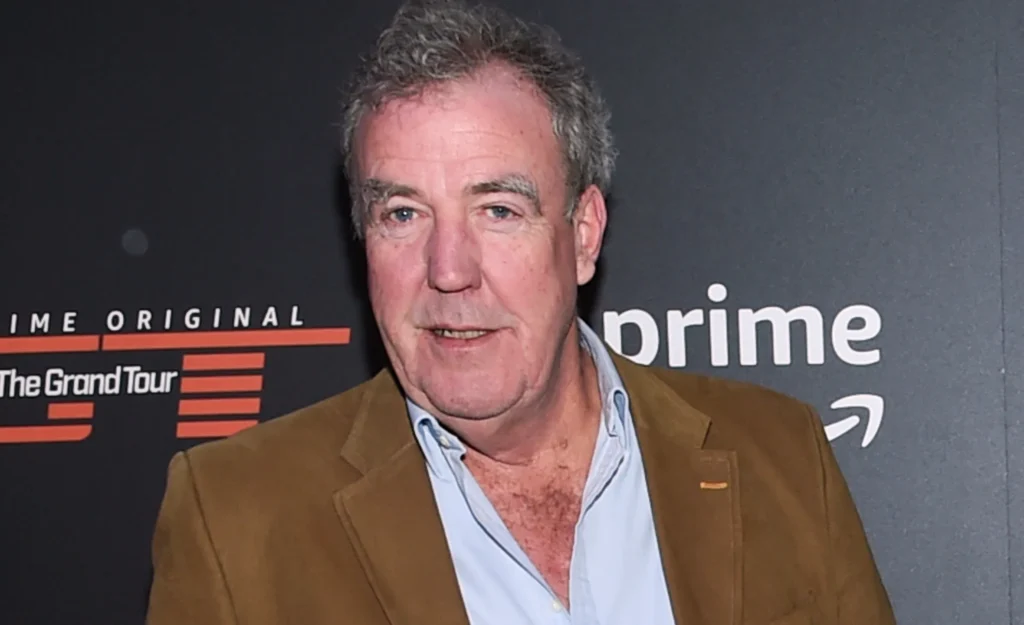
Jeremy Charles Robert Clarkson was born on April 11, 1960, in Doncaster, England, and was expelled from Repton School for smoking, drinking, and other infractions. His first job was selling Paddington Bear toys for his parents, who held the toy’s worldwide licensing rights, before he became a motoring journalist at the Rotherham Advertiser. He first appeared on the BBC’s Top Gear in 1988 and became the face of its 2002 relaunch alongside Richard Hammond and James May, turning it into the most-watched factual television programme in the world, broadcast in more than 100 countries. He was suspended and then not renewed by the BBC in 2015 after punching a Top Gear producer during a location shoot dispute over catering, prompting him, Hammond, May, and executive producer Andy Wilman to form the production company W. Chump & Sons and launch The Grand Tour on Amazon Prime Video in 2016. He has hosted Who Wants to Be a Millionaire? on ITV since 2018, writes weekly columns for The Sunday Times and The Sun, and since 2021 has starred in the Amazon Prime series Clarkson’s Farm, chronicling his ownership of the 1,000-acre Diddly Squat Farm in the Cotswolds, which he purchased in 2008. The show’s success turned the farm into a national tourist destination and launched the Diddly Squat Farm Shop, the Hawkstone beer and cider brand, and, in 2024, the pub The Farmer’s Dog. He has been married three times and has three children with second wife Frances Cain; his current partner is Lisa Hogan, who appears regularly on Clarkson’s Farm. In June 2026, during the final episodes of the show’s fifth series, Clarkson revealed he had been diagnosed with an aggressive but early-caught form of prostate cancer.
1. Top Gear and Bedder 6 (1988-2015)
Clarkson’s BBC presenting salary for Top Gear ran to a reported £1M annually at the show’s peak, a figure that understates his real earnings from the franchise. Clarkson co-founded Bedder 6 with executive producer Andy Wilman, a production company holding a 30% stake in Top Gear’s commercial rights, covering international syndication, DVD sales, merchandise, and licensing. Bedder 6 reportedly generated over £149M in revenue in 2012 alone, and in most years at the show’s peak, Clarkson’s combined salary and Bedder 6 dividends totaled around £10M annually. In 2013, BBC Worldwide bought out the remaining private stakes in Bedder 6 to take full control of the franchise; Clarkson reportedly earned more than £14M that year, including approximately £8.4M from the direct sale of his shares.
- Top Gear salary and early Bedder 6 dividends, build-out years (2002-2008, 6 years): ~£2M/yr = £12M
- Top Gear salary and Bedder 6 dividends, peak years (2008-2012, 4 years): ~£7M/yr = £28M
- Bedder 6 buyout year, combined salary, dividends, and share sale (2013): £14M
- Top Gear salary, final BBC seasons post-buyout (2014-2015, 2 years): £1M/yr = £2M
Top Gear and Bedder 6 earnings: £56M gross.
2. The Grand Tour, Amazon Prime Video (2016-2024)
Following his BBC exit, Clarkson, Hammond, and May signed with Amazon Prime Video for The Grand Tour under a deal reportedly worth around £160M across the show’s run for all three presenters combined. Clarkson’s individual annual take as host and executive producer has been reported in the £10M-£15M range.
- The Grand Tour hosting and producing fee (2016-2024, 9 years): ~£12M/yr = £108M
The Grand Tour earnings: £108M gross.
3. Clarkson’s Farm, Amazon Prime Video (2021-Present)
Clarkson’s Farm debuted in June 2021 as a documentary following Clarkson’s attempt to run Diddly Squat Farm himself after his previous tenant farmer retired. No official per-episode fee has been confirmed, but reports have suggested a rate of up to £200,000 per episode, which across an eight-episode series would total roughly £1.6M per series.
- Clarkson’s Farm hosting and producing fee, five series (2021-2025): ~£1.6M/series = £8M
Clarkson’s Farm earnings: £8M gross.
4. Who Wants to Be a Millionaire?, ITV (2018-Present)
Clarkson has hosted the ITV quiz show revival since 2018, along with its 2026 spin-off Millionaire Hot Seat, reportedly earning around £3M annually.
- Who Wants to Be a Millionaire? hosting fee (2018-2026, 8 years): £3M/yr = £24M
Who Wants to Be a Millionaire? earnings: £24M gross.
5. Newspaper Columns
Clarkson has written weekly columns for The Sunday Times and The Sun for decades, along with the Toronto Star, generating a steady if comparatively modest income relative to his television fees.
- Newspaper column income (2000-2025, 25 years): ~£300K/yr = £7.5M
Newspaper column earnings: £7.5M gross.
6. Book Royalties
Clarkson has authored dozens of books over his career, including the World According to Clarkson essay collections and, more recently, farming memoirs tied to Clarkson’s Farm, with total sales reported in the millions of copies.
- Book royalties, career total: £15M
Book royalty earnings: £15M gross.
7. Speaking Engagements
Clarkson commands corporate speaking and personal appearance fees reported at approximately £25,000 per engagement.
- Speaking engagement income, career total: £2.25M
Speaking engagement earnings: £2.25M gross.
8. Diddly Squat Farm Shop, Hawkstone, and The Farmer’s Dog
Beyond his television fee for Clarkson’s Farm, the businesses the show spawned generate independent retail income. The Diddly Squat Farm Shop, run by Lisa Hogan, draws large weekly crowds and sells farm produce and branded merchandise. The Hawkstone beer and cider brand has expanded into national supermarket distribution through Waitrose, Sainsbury’s, and Co-op. The Farmer’s Dog, a pub opened in a converted 15th-century barn near Burford in August 2024, employs more than 140 staff. Traditional farming itself has been famously unprofitable, with Clarkson reporting just £144 in profit after costs in the farm’s first year, but the surrounding commercial operations are real and growing businesses distinct from that farming loss.
- Combined Diddly Squat Farm Shop, Hawkstone, and Farmer’s Dog business profit (2021-2026): £5M
Farm business earnings: £5M gross.
9. Representation
Standard UK entertainment representation applies across Clarkson’s television, publishing, and speaking income.
- Representation on all income streams (12% x £225.75M): -£27.09M
Total representation: -£27.09M.
10. Tax
Clarkson has been a UK resident throughout his career. We use approximately 47% effective, consistent with UK income tax rules, which, unlike the US, do not permit loan-out company mitigation under IR35.
- Tax on all income, net of representation (47% x £198.66M): -£93.37M
Total tax: -£93.37M.
11. Lifestyle Burn
Clarkson has been married three times, maintains a well-documented luxury and classic car collection separate from the vehicles used on his shows, and has funded the buildout of Diddly Squat Farm’s shop, pub, and brewing operations from personal wealth alongside show revenue.
- Early Top Gear years, building fame (1988-2002, 14 years): ~£150K/yr = £2.1M
- Peak Top Gear era, established wealth and car collecting (2002-2015, 13 years): ~£500K/yr = £6.5M
- Grand Tour and Farm era, established mega-wealth (2015-2026, 11 years): ~£700K/yr = £7.7M
Total lifestyle burn: ~£16.3M.
12. Real Estate
Clarkson purchased Diddly Squat Farm, then known as Curdle Hill Farm, in 2008 for approximately £4.45M. The property has since become a commercially operating farm shop and tourism site whose land values in the Cotswolds have likely risen substantially, but no reliable current valuation for the working property has been documented, so we count no gain on it. He purchased The Windmill pub near Burford for under £1M in 2024, reopening it as The Farmer’s Dog; this is a recent purchase with no gain to date. He also holds a holiday home on the Isle of Man, for which no purchase price has been documented.
- No documented, realized real estate gains found
Real estate gain: £0.
13. Wealth Management
We found no independently documented investment portfolio for Clarkson beyond the business ventures already priced above.
Wealth Management: None reliably documented (£0).
Net Worth Waterfall
| Line Item | Amount (GBP) | Amount (USD, ~1.27) |
|---|---|---|
| Top Gear and Bedder 6 earnings (1988-2015) | +£56M | +$71.12M |
| The Grand Tour earnings (2016-2024) | +£108M | +$137.16M |
| Clarkson’s Farm earnings (2021-2025) | +£8M | +$10.16M |
| Who Wants to Be a Millionaire? earnings (2018-2026) | +£24M | +$30.48M |
| Newspaper column earnings | +£7.5M | +$9.53M |
| Book royalty earnings | +£15M | +$19.05M |
| Speaking engagement earnings | +£2.25M | +$2.86M |
| Farm business earnings (Shop, Hawkstone, Farmer’s Dog) | +£5M | +$6.35M |
| Less: representation | -£27.09M | -$34.4M |
| Less: tax | -£93.37M | -$118.58M |
| Less: lifestyle burn (era-scaled, consumed only) | -£16.3M | -$20.7M |
| Real estate gain | £0 | $0 |
| Wealth Management | £0 | $0 |
| Raw Total | £88.99M | $113.02M |
| Total Net Worth (rounded) | £90M | $115M |
Why Our Figure Differs From Consensus
Our build lands at $115M, above the $70M-$80M range most trackers cite, including Celebrity Net Worth’s $80M figure. The gap comes from accumulation rather than any single missed asset: most competitor write-ups mention Clarkson’s Grand Tour deal as “£10-15M annually” and his Bedder 6 windfall as a one-time £8.4M-£21M payday, but few carry those figures across the full multi-year runs they actually cover. Nine years of Grand Tour income at even a conservative £12M annual rate totals £108M on its own, more than most trackers’ entire net worth estimate. Similarly, decades of steady newspaper column income and dozens of books sold in the millions of copies are often waved off as “modest” without ever being accumulated into a career total. We also decline to credit any unrealized appreciation on Diddly Squat Farm itself, despite its obvious rise in commercial value since Clarkson’s Farm became a hit, because no documented current valuation or sale exists for the working property.
The Motoring Journalist Who Became a Farmer
Jeremy Clarkson’s fortune traces an unusually clean arc for British television: a BBC salary that was never the real story, a savvy equity stake in his own show’s commercial rights that paid out in the tens of millions when the BBC finally bought him out, a near-decade of top-tier streaming money that followed him out the door, and, almost by accident, a farming show built on the premise that the land would make “diddly squat” that instead became the most-watched British original on its platform. Few entertainers have turned a workplace altercation into a second and third act this lucrative; fewer still have done it while insisting the whole time that none of it was the plan.p.