$1.3 Billion
RichPeek counterfactual: what the King would be worth if he were alive today. This is a deliberately fictional estimate, built with the same line-by-line method we use for everyone else.
WHO HE IS
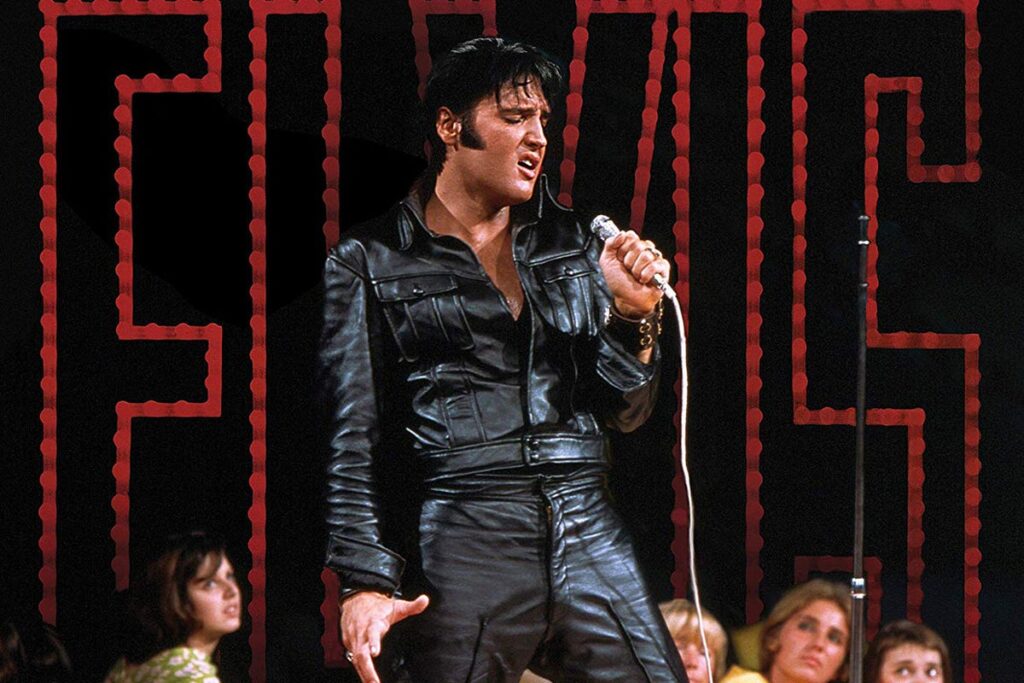
Born January 8, 1935 in Tupelo, Mississippi, Elvis Aaron Presley would turn 91 this year, and in our telling he is very much still here, holding court at Graceland as the living patriarch of American popular music. The premise of this piece is simple. Elvis did not die in that Memphis bathroom in 1977. He survived, he got healthy, and somewhere in the years that followed he did the one thing he never managed in real life: he parted ways with Colonel Tom Parker and took control of his own career. Everything that follows flows from that single decision, because the most expensive relationship of Elvis Presley’s life was not a wife, a habit, or a bad film deal. It was his manager.
In reality, Elvis sold more than a billion records, transformed three different decades of popular culture, and died with a net worth of only about $5 million, a sum so small relative to what he earned that it has become a cautionary tale in its own right. The living Elvis we are imagining made all the same music, but he kept the masters, fired the man taking half of everything, never sold a single share of his own name, and spent the streaming era as a fully owned global catalog rather than a licensed afterlife. The result is a fortune that finally matches the legend.
1. RECORDED MUSIC AND THE MASTERS HE FOUGHT TO OWN
This is the heart of the entire estimate, and it is also the single biggest break from real history. The actual Elvis never owned his masters. RCA did. He recorded under deals struck in the 1950s by a manager who valued an upfront check over long-term ownership, which is precisely why the real Presley estate spent decades collecting only a slice of the money his recordings generated.
The living Elvis we are modeling clawed those recordings back. In a world where he ran his own business, the Elvis master catalog becomes one of the most valuable bodies of recorded music ever held by a single living artist, comparable to what Bruce Springsteen and Bob Dylan sold their catalogs for, except larger, older, and more globally embedded.
Lifetime recorded-music income, counting the rock and roll explosion, the soundtrack years, the 1968 comeback, the seventies, and a full streaming-era afterlife in which the songs never stopped, lands enormous.
- Estimated lifetime recorded-music royalties, artist share with full master ownership: approximately $1.05B
- Estimated lifetime songwriting and publishing royalties on the catalog he co-controls: approximately $400M
2. THE STAGE, FROM VEGAS TO THE SPHERE
Live performance was always where Elvis was most himself, and it is where a living King would have printed money for sixty years. The real Elvis was trapped in an exhausting Las Vegas residency by a manager who, as an undocumented immigrant from the Netherlands, reportedly refused to let his client tour internationally for fear of his own deportation. The living Elvis tours the world.
He plays the original International and Hilton residencies, the global stadium runs the real Elvis was denied, the nostalgia circuit through the 1990s and 2000s, and, in the modern era, the kind of residency the Sphere in Las Vegas was practically built for. A 91-year-old Elvis no longer performs nightly, but the catalog of decades of touring income is colossal.
- Estimated net lifetime touring and residency income: approximately $1.1B
3. HOLLYWOOD
Elvis made 31 films, most of them formulaic musicals churned out on Parker’s instruction because they were cheap to produce and quick to monetize. He was paid well, up to $1 million a picture plus a share of profits at his peak, which was extraordinary money for the 1960s. The tragedy of the real story is that he wanted serious roles, was offered the lead that eventually went to others in major dramatic films, and was steered away from all of it.
Our living Elvis still makes the lucrative musicals early, then pivots to the dramatic career he always wanted, plus decades of cameo appearances, documentary participation, and a knowing role in the kind of prestige biopic that, in reality, Baz Luhrmann made about him without him.
- Estimated lifetime film and television income: approximately $200M
4. THE GLOBAL BRAND
Elvis is not a musician who has a brand. Elvis is a brand that happens to make music. The silhouette, the jumpsuit, the sunglasses, the sneer, the “thank you very much,” all of it is instantly licensable in a way almost no other figure on earth can match. In reality this machine was sold off to outside companies. In our version he owns all of it and licenses it himself.
- Estimated lifetime endorsement, licensing, and brand income: approximately $450M
5. THE COLONEL PARKER LINE (REPRESENTATION)
Here is the number that defines the whole story. Following our individualized representation rule, we do not apply a flat management percentage to Elvis. We apply the rate a sane, modern team would charge a living superstar, roughly 15% blended across management, agency, and legal, which on his gross career earnings comes to about $480 million.
Now hold that figure next to reality. Colonel Tom Parker took 50%. On the same career, Parker’s cut would have been roughly $1.6 billion. The single most profitable decision in this entire fictional life is not a hit record or a sold-out residency. It is the day Elvis fires his manager. That one act is worth well over a billion dollars to him, and it is the reason the living King is a billionaire while the real one died with five million.
- Representation, modeled at a modern 15%: approximately minus $480M
6. TAX
Elvis was famously, almost stubbornly, honest about taxes. He refused the shelters and loopholes his accountants begged him to use, insisting that paying his full share was patriotic. A living Elvis based at Graceland gets one real structural advantage that we always flag: Tennessee levies no state income tax on earned income, a genuine edge over a California or New York resident. Against that, his peak earning decades ran straight through an era of brutal top federal marginal rates that reached as high as 70 to 90%.
Blended across his whole career, and assuming he keeps just enough of his patriotic stubbornness to never play games, we model an effective rate of about 45%.
- Tax, approximately 45% blended: approximately minus $1.22B
REAL ESTATE: GRACELAND
Elvis bought Graceland in 1957 for $102,500, a 13.8-acre estate in the Whitehaven neighborhood of Memphis. In reality, the property stayed in the family even after the business was sold, and it became one of the most visited private homes in America, drawing more than 600,000 visitors a year, second only to the White House among house museums in the United States.
The living Elvis never sells, never licenses, never gives up an inch of it. He owns the mansion, the surrounding land, the across-the-street entertainment complex that grew up around it, the Heartbreak Hotel, and the entire visitor operation outright. As a piece of real estate attached to a working tourism business, with nearly seventy years of appreciation on land he bought for the price of a modest house, this is a serious asset.
- Estimated value of Graceland and the surrounding owned property and operations: approximately +$200M
BUSINESS VENTURES: THE EMPIRE HE NEVER SOLD
In the real world, Elvis Presley Enterprises was built by Priscilla after his death, sold 85% to CKX in 2005 for around $100 million, and eventually ended up inside Authentic Brands Group in a deal reported near $145 million, with the family left holding just 15%. Hundreds of millions of dollars in value that bears Elvis Presley’s name today flows to people who are not named Presley.
The living Elvis owns 100% of it. Every licensing deal, every merchandise line, every fragrance, every slot-machine and theme-restaurant tie-in, every anniversary product cycle runs through a company he controls completely. We value his wholly owned global licensing and brand-management arm, the thing outsiders paid nine figures for a piece of, at the high end of what a fully owned, well-run Elvis business would command.
- Estimated value of the wholly owned Elvis brand and licensing business: approximately +$100M
LIFESTYLE AND EXPENSES
Let us be honest about the man. Elvis spent money the way a fire spends oxygen. He bought Cadillacs for strangers, gifted jewelry and jets, kept a permanent entourage on the payroll, maintained airplanes and a fleet of cars, and treated generosity as a personality trait rather than a budget line. Even a healthier, sharper, business-savvy Elvis does not suddenly become frugal, because the spending was never about poor judgment, it was about who he was.
We place him at the extreme tier of lifestyle burn, roughly $22 million a year across a six-decade adult life, which lands at a staggering total. This is the line that keeps even a living King from being worth far more, and it is entirely in character.
- Lifestyle burn, roughly $22M per year across his adult life: approximately minus $1.32B
RICHPEEK ESTIMATE: $1.3 Billion
| Calculation | Amount |
|---|---|
| Lifetime gross career earnings (1954 to 2026) | ~$3.2B |
| Minus representation (~15%, the post-Parker rate) | -$480M |
| Minus tax (~45% blended, Tennessee charges no state income tax) | -$1.22B |
| Minus lifestyle burn (~$22M/yr, the King lived like the King) | -$1.32B |
| Available to accumulate | ~$175M |
| Plus modeled investment compounding (~6% real, over decades) | +$100M |
| Plus value of the owned master-recording catalog | +$550M |
| Plus co-publishing catalog (650+ compositions) | +$175M |
| Plus Graceland and surrounding owned property | +$200M |
| Plus the wholly owned Elvis brand and licensing business | +$100M |
| Total Net Worth, if he were alive today | ~$1.3B |
We land at $1.3 billion.
Why this is not the number you see anywhere else:
Every figure attached to Elvis in the press is one of two things, and neither is his net worth. The first is the roughly $5 million he was actually worth when he died, a real and tragic number. The second is the Forbes posthumous earnings figure, which lands in the headlines every Halloween, around $50 million in a strong recent year and about $17 million in a quieter one. Following our most important rule about Forbes, those are annual estate earnings, not net worth, and the running $1.2 billion total Forbes credits to Elvis is the sum of twenty-five years of those annual hauls, again not a net worth. We are not measuring any of that. We are measuring a living man’s balance sheet in a world where he kept what he made, and that is why our $1.3 billion has no equivalent on any list you will find. It is the figure that exists only if the King never sold the throne.
The most expensive man Elvis ever met:
Strip away the jumpsuits and the mythology and the financial story of Elvis Presley reduces to one brutal comparison. The real Elvis earned a fortune and died with almost none of it, because half went to a manager and most of the rest went to the tax man and the open-handed generosity that defined him. The Elvis we have imagined did everything the same except keep one man out of his life, and that single change is the difference between five million dollars and one and a third billion. His onetime son-in-law Michael Jackson, who married Lisa Marie in 1994, became the highest-earning dead celebrity in history precisely because he understood the thing Elvis never got to act on, that the masters and the publishing are the whole game. Paul McCartney built a billion-dollar fortune on the same insight. The cruel joke of Elvis Presley is that he had more raw commercial power than any of them and saw the smallest share of it. Give him back his ownership and his good sense, and the King does not just return to the building. He buys the building, the street, and the city block.