$525 Million
WHO HE IS
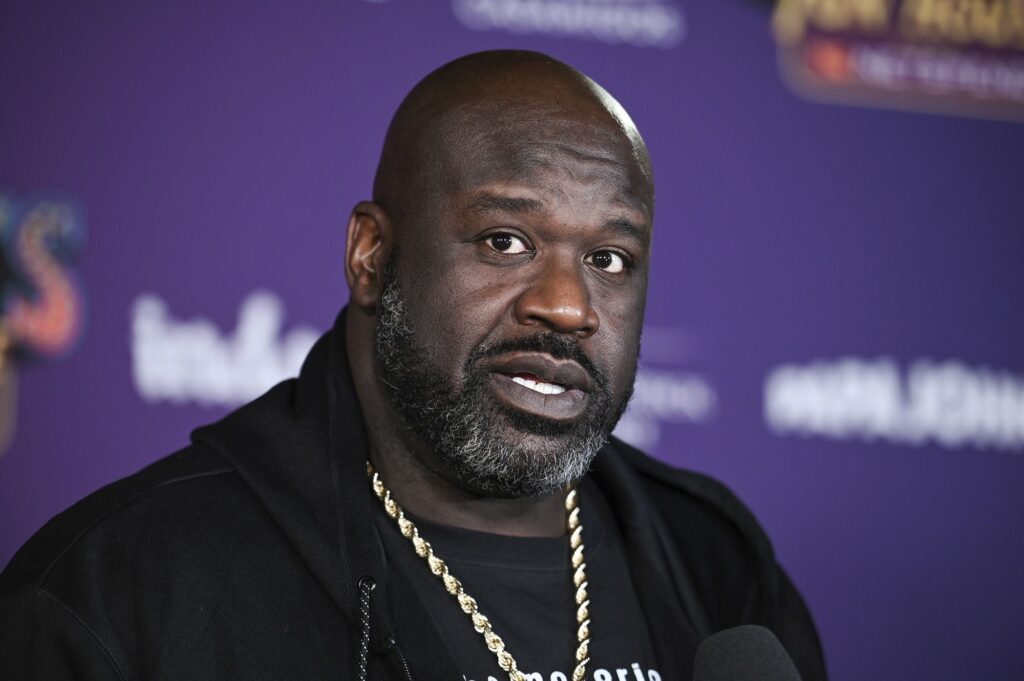
Shaquille Rashaun O’Neal, born March 6, 1972, in Newark, New Jersey, is one of the most dominant centers in basketball history: a four-time NBA champion, three-time Finals MVP, and 15-time All-Star across a 19-season career (1992-2011) spent primarily with the Orlando Magic, Los Angeles Lakers, and Miami Heat. He is also, by a wide margin, the most successful post-career business builder among the athletes profiled in this series, having converted both his playing earnings and his personal brand into a genuinely diversified portfolio spanning restaurant franchising, private equity, venture investing, and television.
O’Neal has been open about the philosophy behind it: invest in things ordinary people actually use and understand, avoid anything he can’t explain to his own family, and treat every deal as protection against the day the fame fades. That approach has produced results ranging from a legendary early Google investment to becoming the second-largest individual shareholder in Authentic Brands Group, the brand management conglomerate behind Reebok, Forever 21, and dozens of other names. He currently serves as an analyst on TNT’s “Inside the NBA” and as President of Basketball at Reebok.
1. NBA Career Salary (1992-2011)
O’Neal’s 19-season NBA salary is well documented and consistent across sources at $292,198,327, rising from roughly $3M in his 1992 rookie season with Orlando to a peak of approximately $27M during his prime years with Miami, before tapering to $1.3M in his final campaign with Boston in 2010-11.
NBA salary: $292.2M gross.
2. Off-Court Income (1992-2026)
This category spans an unusually long and diverse stretch: playing-era endorsements (Reebok, Pepsi, early Icy Hot and Gold Bond deals), a genuine second career in entertainment (rap albums, film roles including “Kazaam,” DJ Diesel touring), and a post-retirement media and endorsement empire built around his TNT analyst role, his Papa John’s board compensation, and his current position as President of Basketball at Reebok. Published post-retirement annual earnings estimates range from $60M to $95M in recent years, reflecting the scale this has grown to.
- 1992-2000 (rookie fame, Reebok, early entertainment ventures): ~$2M/yr = $16M
- 2000-2011 (prime playing years, expanding endorsement roster): ~$6M/yr = $66M
- 2011-2019 (early retirement, TNT role established, endorsement portfolio matures): ~$12M/yr = $96M
- 2019-2026 (TNT, Reebok presidency, Papa John’s, current endorsement roster): ~$35M/yr = $245M
Off-court income (1992-2026): ~$423M gross.
3. Representation
Much of O’Neal’s post-retirement income comes from self-negotiated business partnerships and equity arrangements rather than traditional agent-brokered endorsement deals, which lowers the effective blended representation rate relative to a still-active player. We apply the standard capped 4% NBA agent rate to salary and a lower-than-typical rate to off-court income reflecting his largely self-directed business career.
- NBA salary (4% of $292.2M): -$11.7M
- Off-court income (8% of $423M): -$33.8M
Total representation: -$45.5M. Post-representation gross: ~$669.7M.
4. Tax
O’Neal’s career spanned no-income-tax states (Florida, for both Orlando and Miami) and high-tax California during his prime Lakers years, when his salary was largest. We apply a blended effective rate reflecting this mix.
Tax (44% effective): -$294.7M. Net after representation and tax: ~$375M.
5. Lifestyle Burn
O’Neal has never hidden his enjoyment of personal spending, an extensive shoe, watch, and car collection, and famously large personal purchases, even while describing a disciplined investment philosophy for the money he doesn’t spend. He has been candid that his children won’t inherit significant wealth without earning it themselves, a stance that reflects real financial discipline even alongside visible personal consumption.
- 1992-2000 (rookie years, famously large early spending): ~$4M/yr = $32M
- 2000-2011 (prime earning years, Lakers-era lifestyle): ~$8M/yr = $88M
- 2011-2026 (retirement, business-focused but still substantial personal spending): ~$6M/yr = $90M
Total lifestyle burn: ~$210M. Available to accumulate: ~$165M.
6. Five Guys (Realized Business Exit)
At one point, O’Neal owned 155 Five Guys franchise locations, representing roughly 10% of the entire chain, not as a passive investor but as an operating franchisee who found the locations, signed the leases, and ran the operations through his own management team. He sold the full portfolio in 2016 for a reported $80M to $100M.
This is where we need to be careful rather than simply crediting the full sale price. Unlike his Authentic Brands Group equity, which originated from trading away brand and royalty rights rather than cash, building out 155 franchise locations required real capital deployed over years: franchise fees, construction, equipment, and working capital, all funded from his salary earnings, which are already reflected in his accumulated cash above. Crediting the full sale price without netting that investment out would double-count it. Five Guys franchise buildout costs in the era he was acquiring locations typically ran in the $400,000 to $500,000 range per unit; at a conservative $400,000 average across 155 locations, that implies a total invested capital base of roughly $62M. Against a $90M sale price (the midpoint of the reported range), that leaves a real gain of approximately $28M before tax.
Five Guys exit (2016, ~$28M gain, after tax): ~$21M.
7. Sacramento Kings (Realized Gain)
O’Neal paid $5M for a 1% stake in the Sacramento Kings in 2013. He sold the stake in early 2022 to become the primary endorser of online gambling company WynnBET, reportedly for $11M, a modest but real, fully realized gain.
Sacramento Kings stake, net gain after tax: ~$4.6M.
8. Authentic Brands Group Equity
This is the single largest and most unusual asset in O’Neal’s portfolio. In December 2015, Authentic Brands Group (ABG) purchased the rights to manage O’Neal’s name, likeness, and marketing in a standard brand-licensing deal. According to ABG founder Jamie Salter, O’Neal then made an unusual counter-proposal: rather than taking the cash proceeds, he asked to reinvest them directly into ABG equity, a decision that made him the second-largest individual shareholder in the company. Because this stake originated from trading away future brand-royalty rights rather than deploying previously-earned and already-taxed salary cash, we treat it differently from a standard portfolio stock purchase and credit close to its full current value rather than applying a cost-basis discount.
ABG’s valuation has climbed steadily: $12.7 billion in a November 2021 stake sale to CVC Capital and HPS Investment Partners, and $20 billion following a January 2023 funding round, with continued brand acquisitions since (Reebok’s revenue reportedly reaching $5 billion, the $1.4 billion Guess acquisition in early 2026, and a $750 million-plus Lee Jeans deal in May 2026) suggesting further growth in the company’s overall value. O’Neal’s exact ownership percentage has never been disclosed, though industry analysis has noted that even a 1% stake would be worth roughly $200M at the 2023 valuation. Given his specific distinction as the second-largest individual shareholder (a notable position in a company otherwise dominated by institutional private equity owners) and ABG’s continued growth since 2023, we apply a conservative estimate toward the higher end of a plausible range.
Authentic Brands Group equity: ~$220M.
9. Big Chicken
O’Neal’s current primary growth venture, co-founded with JRS Hospitality and ABG, has scaled from a single location to more than 40 open as of early 2026, with over 350 in active development, a 234% year-over-year unit growth rate and, notably, zero location closures in three years of franchising, versus an industry average 3-year failure rate of roughly 10%. In March 2025, Craveworthy Brands, a multi-concept restaurant platform, came in as a managing partner and investor, taking operational control of training, supply chain, and culinary development at scale, addressing the central risk of any franchise system scaling quickly. O’Neal remains the largest individual stakeholder, though his share is diluted by JRS Hospitality, ABG, and Craveworthy Brands as co-owners. Given the brand’s early stage relative to comparable fast-casual IPOs (Shake Shack went public with 62 locations at a $561M valuation), we apply a conservative current valuation reflecting a business still mostly in its growth-pipeline phase rather than realized scale.
Big Chicken (diluted stake, conservative): ~$40M.
10. Venture Investments: Google, Ring, Vitamin Water, and Others
O’Neal has one of the more legitimately impressive early-stage investment track records of any athlete. In 1999, at 27 years old, he wrote a $250,000 check to a startup called Google, years before its 2004 IPO. He took an equity stake in Vitamin Water’s parent company before Coca-Cola acquired it in 2007 for over $4 billion. He became an early investor in home security company Ring after installing a system in his own house and personally tracking down the company’s CEO, and profited substantially when Amazon acquired Ring for over $1 billion in 2018. More recently, he has backed Lyft, Krispy Kreme, AI literacy platform Edsoma (as lead investor), and Campus, an online community college backed by OpenAI CEO Sam Altman. None of these positions carry disclosed current stake sizes or values, and it’s unclear how much of the Google and Vitamin Water positions, if any, he still holds decades later. We apply a conservative aggregate gain-only estimate across this group rather than attempting to size positions with no disclosed figures, even though the individual stories (particularly Google) suggest real upside beyond what we’re crediting here.
Venture investment portfolio (conservative aggregate): ~$60M.
11. Papa John’s Atlanta Franchises
O’Neal joined Papa John’s board in 2019 amid a brand crisis, in a deal that included $8.25M in compensation over three years (split between cash and stock) for use of his name and likeness, already reflected in the off-court income line above, separate personal investment of $840,000 for a 30% stake in a 9-unit Atlanta franchise group, and recognition as the first African American member of the company’s board. He continues to own these 9 locations. Netting out his disclosed $840,000 cash investment from an estimated current value of these locations:
Papa John’s Atlanta franchises (net of original investment): ~$7M.
12. Real Estate
O’Neal founded The O’Neal Group in 2006, a real estate investment vehicle whose first project was The Met Miami, a 1,000-plus unit residential high-rise. He holds additional stakes in residential and commercial properties without individually disclosed values. Given the lack of specific purchase price data across this portfolio, we apply a conservative gain-only estimate.
Real estate appreciation: ~$10M.
13. FTX (Disclosed Loss)
O’Neal became a paid spokesperson for cryptocurrency exchange FTX in 2021 and held a personal equity stake in the company. When FTX collapsed into bankruptcy in November 2022, that stake, along with billions of dollars belonging to other investors and customers, was wiped out entirely. We disclose this explicitly rather than omitting it: this was a real, documented loss, and it is not credited any value here.
FTX: $0 (total loss, disclosed for completeness).
14. Wealth Management
O’Neal’s wealth-building strategy is, in effect, the direct business and venture investing itemized above rather than a separate passive market portfolio; no distinct wealth management mandate with disclosed returns beyond those specific holdings was found in available sourcing.
Wealth Management: None reported beyond items captured above ($0).
Net Worth Waterfall
| Line Item | Amount |
|---|---|
| NBA salary (1992-2011) | +$292.2M |
| Off-court income (1992-2026) | +$423M |
| Less: representation (4% NBA / 8% off-court) | -$45.5M |
| Less: tax (44% effective) | -$294.7M |
| Less: lifestyle burn (era-scaled) | -$210M |
| Five Guys exit (2016, net of estimated buildout capital, after tax) | +$21M |
| Sacramento Kings stake (net gain, after tax) | +$4.6M |
| Authentic Brands Group equity | +$220M |
| Big Chicken (diluted stake) | +$40M |
| Venture investments (Google, Ring, Vitamin Water, and others) | +$60M |
| Papa John’s Atlanta franchises (net of original investment) | +$7M |
| Real estate appreciation | +$10M |
| FTX | $0 |
| Wealth Management | $0 |
| Total Net Worth | ~$527.6M -> $525 Million |
Why Our Figure Differs From Consensus
Celebrity Net Worth places O’Neal at $500M, and Charles Barkley has publicly sparred with him on-air, estimating his fortune closer to $700M, both short of the billionaire status O’Neal has claimed for himself in interviews. Our figure lands close to Celebrity Net Worth’s estimate, slightly above it, and the gap traces almost entirely to his Authentic Brands Group equity, an asset most generic trackers appear to underweight or omit specifics on. ABG’s valuation, confirmed at “over $20 billion” in reporting as recent as early 2026 with no more specific, higher figure available despite continued major acquisitions since (the Guess deal, the Lee Jeans deal, and the pending Care Bears IP acquisition), combined with O’Neal’s specific, sourced distinction as the company’s second-largest individual shareholder, supports a meaningfully larger figure than a passive brand-licensing arrangement would. Working against a higher total, we applied real rigor to his Five Guys exit rather than crediting the full sale price: building out 155 franchise locations required substantial real capital over the years, and only the gain above that invested capital, not the total sale proceeds, represents new wealth. We are similarly conservative on his older venture bets (Google, Ring, Vitamin Water) given the total absence of disclosed current position sizes, and we explicitly disclose the FTX collapse as a real loss rather than omitting an uncomfortable data point, consistent with treating his portfolio the way we’d treat any other athlete’s: crediting real wins and real losses alike rather than only the flattering parts.
The Man Who Stopped Being the Asset
There’s a clean way to describe the arc of Shaquille O’Neal’s business career: he spent nineteen years being the product other companies paid to put their name next to, and then he spent the next fifteen buying the companies. Reebok signed him as a rookie in 1992 for what was then its biggest endorsement deal ever. Three decades later, he sits in a corner office as Reebok’s President of Basketball, employed by the private equity conglomerate he chose to become a shareholder in instead of just cashing a check. The Google bet, the Ring instinct, the 155 Five Guys locations run like an actual business rather than a tax write-off, none of it reads like luck. It reads like a very large man who spent two decades getting paid to be looked at, and decided the better trade was to start owning the things everyone else was looking at instead.