$300 Million
RichPeek counterfactual: what the most influential rapper in history would be worth if he were alive today. This is a deliberately fictional estimate, built with the same line-by-line method we use for everyone else.
WHO HE IS
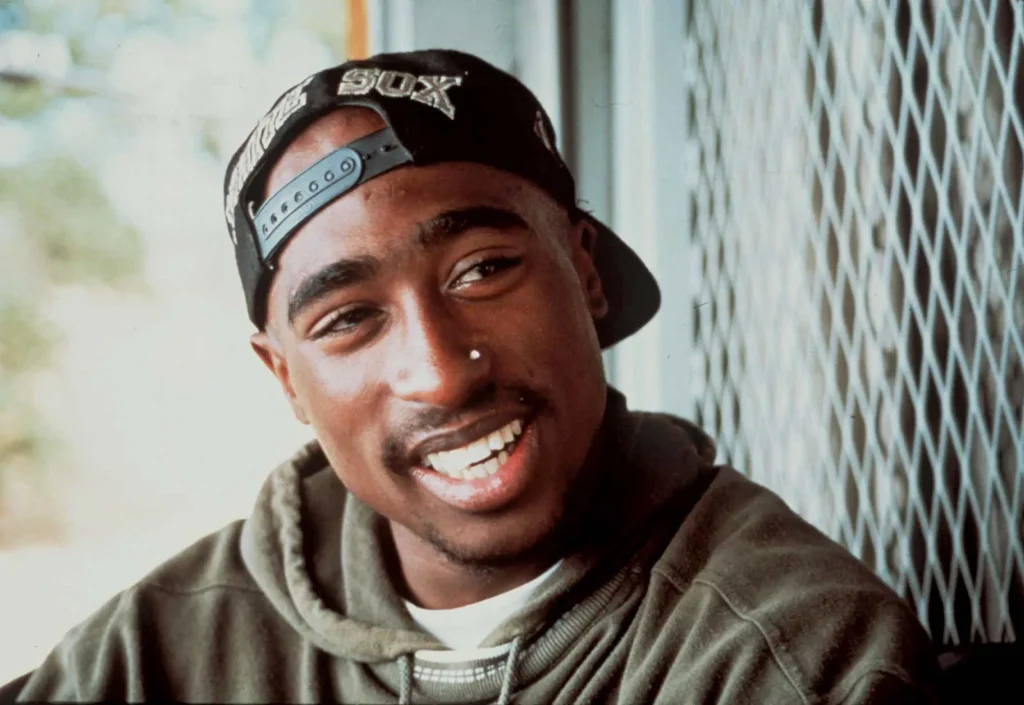
Born June 16, 1971 in East Harlem, New York, Tupac Amaru Shakur would turn 53 this year, and in our telling he survived the drive-by shooting on Flamingo Road in Las Vegas on September 7, 1996, that killed him six days later at age 25.
What follows from that survival is one of the most interesting counterfactuals in this entire series, because 1996 was not the end of Tupac’s creative output. It was, by every measure, its peak. He recorded over 150 unreleased songs in the final year of his life alone, material that Death Row and later his estate drip-released for decades. He had plans that were documented: his own label, his own film production company, a transition toward acting he had already begun with credible roles in Juice, Poetic Justice, and Above the Rim. He was 25 years old and he was operating at a pace that would have been unsustainable regardless of what happened in Las Vegas.
The living Tupac of our scenario survived, served no additional prison time, and had to make choices. The most important of those choices is the one about Death Row Records. Suge Knight’s label was his platform and his prison simultaneously: the commercial engine that produced All Eyez on Me and the environment that put him in the car on Flamingo Road. In our version, he exits Death Row in 1997, starts his own operation, and builds the second half of a career that has more in common with Jay-Z than with what the 1996 version of him looked like.
1. RECORDED MUSIC: THE CATALOG HE ACTUALLY OWN AND THE DECADES HE KEPT RECORDING
Tupac’s catalog presents an unusual accounting challenge even in the real world, because Death Row owned so much of his peak material. The label situation is the most financially important fact in his biography after the shooting itself: he recorded at Death Row under circumstances that gave the label extensive ownership rights, which is why the estate’s relationship with that material has been complicated for thirty years.
In our scenario, a living Tupac’s first act is legal and financial: extracting himself from the Death Row contract, negotiating the rights he can negotiate, and establishing clean ownership of everything recorded after 1997 through his own label. The pre-1997 Death Row catalog is a long-term legal battle he wins incrementally, the way artists like Taylor Swift have forced the industry to reckon with retroactive control.
His solo career after Death Row produces an artist who is 26, 27, 28 years old and has already made some of the most acclaimed rap albums in history. The 2000s see him operate as an elder statesman of hip-hop while being, in reality, barely thirty years old. He influences the generation that produces Kendrick Lamar, J. Cole, and Drake, not posthumously but in real time, as a living peer and mentor.
The rapper multiple for catalog valuation is lower than the pop and rock tier, as our methodology notes, and correctly so: streaming conversions on rap catalogs run below comparable rock catalogs. We apply a 10-12x multiple on his writer and performer share of the annual net publisher’s share, reflecting a newer-era catalog with strong but not legacy-tier streaming.
- Estimated lifetime recording royalties and new release income, 1991 to 2026: approximately $285M
- Estimated current value of held songwriting and master catalog share, post-Death Row: approximately +$85M
2. TOURING: THE CIRCUIT HE NEVER GOT TO RUN
Tupac barely toured in real life. His career was so compressed, four years from breakthrough to death, and so consumed by legal problems, prison, and the Death Row situation, that a sustained touring career never materialized. He did shows. He performed. But the arena and stadium touring that generates the real money in a musician’s career was always something that existed in the future he did not get to reach.
In our scenario, that future arrives. A living Tupac in his late twenties and thirties is one of the most anticipated live performers in hip-hop history, building a touring infrastructure during the exact decade when hip-hop was converting from a genre with modest live revenues to one capable of filling stadiums. By the time he is in his forties, he is doing what Jay-Z did: commanding per-night grosses that put him in the upper tier of all live music, not just rap.
He does not tour at the relentless pace of a pop act. He tours deliberately, with production values and cultural weight that justify premium pricing. We model a modest but consistent touring career from 1998 onwards, weighted toward the later years when hip-hop’s live market matured.
- Estimated net lifetime touring income, 1998 to 2026: approximately $175M
3. ACTING: THE CAREER THAT WAS ALREADY WORKING
This is the most underdiscussed element of Tupac’s actual talent portfolio, because acting seemed like a side project at the time and was clearly becoming something more significant. His performance in Juice is genuinely accomplished. Poetic Justice, Above the Rim, and Gridlock’d showed range. He had been cast in roles that were going to demonstrate something.
In our version, Tupac’s acting career does not stay secondary. He follows the template that Will Smith, Ice Cube, and later Donald Glover and Childish Gambino demonstrated: a rapper who crosses into serious film work and sustains both careers simultaneously. By his early thirties he is credibly appearing in major studio films. By his forties he is producing as well as acting, through the film production company he had publicly discussed starting before his death.
We do not model him becoming a $50 million-per-picture actor. We model him as a consistent mid-tier film presence with strong producing credits, which at his level of name recognition still generates meaningful income across three decades.
- Estimated lifetime film and television income: approximately $120M
4. THE MAKAVELI LABEL AND BUSINESS VENTURES
Tupac had publicly discussed starting his own label, which he planned to call Makaveli Records, in the weeks before his death. He had the commercial leverage to do it: All Eyez on Me had sold four million copies in its first week, a record at the time. The business infrastructure was never built because he did not survive to build it.
In our scenario, Makaveli Records launches in 1997 and signs a distribution deal with a major rather than operating as a Death Row vanity imprint. Over the following decade it becomes a real hip-hop independent, signing and developing artists from the West Coast and beyond. We do not model it as a Death Row or Bad Boy-sized operation. We model it as a profitable independent label with a catalog value by 2026 that reflects twenty-plus years of catalog accumulation.
He also, in this version, invests in the tech and media companies that were available to artists of his generation who had capital and foresight. Dr. Dre, his closest musical peer in the Death Row era, built a $700 million fortune primarily through Beats Electronics. We do not project that Tupac duplicates Dre’s exact trajectory, but we project that a living Tupac with investment capital and industry relationships participates in at least some of the same ecosystem.
- Estimated value of Makaveli Records catalog and label operations: approximately +$65M
- Estimated value of other business and investment portfolio: approximately +$35M
5. ENDORSEMENTS AND THE CULTURAL BRAND
A living Tupac at 53 carries one of the most culturally significant personal brands in American music. His combination of artistic credibility, political consciousness, and commercial reach generates endorsement interest from every category that wants to associate with authenticity at scale. We model a moderate endorsement income, consistent with an artist who is selective about commercial associations but not immune to the commercial value of his name.
- Estimated lifetime endorsement and brand income: approximately $60M
6. REPRESENTATION
Tupac’s management and legal representation in real life was deeply entangled with the Death Row situation. Suge Knight was not a manager in any conventional sense. Exiting that situation and rebuilding with professional representation is the first financial act of the living Tupac’s post-1996 career.
We model a blended representation rate of 20% for the post-Death Row career, reflecting the standard music industry rate for an artist at his commercial level operating through proper professional channels.
- Representation at approximately 20% blended: approximately minus $148M
7. TAX
Tupac was a California resident throughout his career, and in our scenario he remains one. California plus federal gives him the most punishing tax environment in the United States for entertainment income, approximately 42% effective on major entertainment earnings using a loan-out structure.
We also note the complication of his prison income years, the early career income, and the Death Row period: much of the pre-1997 income was structured in ways that did not favor his tax position. Post-Death Row, with proper structuring, he normalizes to the 42% California effective rate.
- Tax, approximately 42% blended, California resident throughout: approximately minus $294M
8. REAL ESTATE
Tupac did not accumulate significant real estate in his brief career. He was 25 when he died and had spent significant portions of the preceding four years in legal trouble and prison. A living Tupac in his late twenties begins accumulating property in the California market, one of the strongest in the country across the 2000s and 2010s despite the 2008 correction.
We model modest real estate holdings beginning in the late 1990s, with appreciation tracked on documented purchase prices.
- Real estate appreciation on California property holdings: approximately +$20M
LIFESTYLE AND EXPENSES
Tupac spent money freely when he had it and did not have it when he did not. The Death Row era was simultaneously his most commercially successful and his most financially precarious, because so much of the income was controlled by the label structure. A living Tupac in his own operation is more financially stable, but he is not frugal. He is generous to family, to friends from before the money, and to causes that mattered to him throughout his life.
We model his lifestyle burn at $3 million a year across his adult post-1996 career, reflecting a comfortable but not extravagant life by the standards of his commercial success.
- Lifestyle burn, approximately $3M per year across approximately 30 years: approximately minus $90M
RICHPEEK ESTIMATE: $300 Million
| Calculation | Amount |
|---|---|
| Lifetime gross career earnings (1991 to 2026) | ~$740M |
| Minus representation (~20% blended) | -$148M |
| Minus tax (~42% blended, California throughout) | -$294M |
| Minus lifestyle burn (~$3M/yr across approximately 30 years) | -$90M |
| Available to accumulate | ~$208M |
| Wealth management (moderate, some documented investment intent) | +$15M |
| Plus held songwriting and master catalog, post-Death Row | +$85M |
| Plus Makaveli Records catalog and business value | +$65M |
| Plus other investment portfolio | +$35M |
| Plus real estate appreciation on California holdings | +$20M |
| Total Net Worth, if he were alive today | ~$300M |
We land at $300 million.
Why this is not the number you see anywhere else:
There is no comparable net worth figure to put beside this one. What exists in the real world is an estate valuation that has never been publicly disclosed in full and an ongoing catalog licensing operation whose income flows to rights holders at varying removes from the Shakur family.
Our calculation is constrained by two real factors that no amount of counterfactual optimism can fully overcome. The first is the Death Row catalog: a large portion of his best work is owned by an entity he was trying to leave, and the legal and financial cost of reclaiming it, even partially, absorbs real resources over real years. The second is the compression of his output: four years of recording, even at his pace, is a smaller commercial base than the careers of Lennon or Jackson or Mercury, and the rap catalog multiple is lower than the pop and rock equivalents.
What pushes the number to $300 million is the acting career he was already building, the label he was planning, and the thirty years of touring, business activity, and investment compounding that his peers in the industry used to build comparable fortunes. Thirty years is a long time. Dr. Dre built most of his wealth in the twenty years after he left Death Row. A living Tupac had the same starting point, the same industry, and arguably the same level of cultural authority. The difference is that he would have been doing it at 30, not 50.
The rapper who would have changed the conversation:
Hip-hop’s critical and cultural conversation across the 2000s and 2010s was shaped by his absence as much as by anyone’s presence. Kendrick Lamar has described him as the primary influence on his own work. J. Cole, Drake, and nearly every major rapper of the streaming era has engaged with his catalog as a foundational text. The living Tupac at 53 is not a nostalgic figure. He is the person those artists were responding to, still in the room, still releasing music, still making arguments about what the genre is for. The $300 million is the financial shadow of a career that would have been more interesting than almost any other in hip-hop history. The money is real. It is also, for him, almost certainly beside the point.